TOP-RATED
Atlanta Criminal Defense
Law Firm
Atlanta Criminal Defense
Law Firm





Three factors drive Georgia drug possession penalties. These are the drug's schedule, the quantity, and what purpose the State says the drugs were for. Georgia sorts illegal drugs into five schedules, and the schedule a substance sits in drives the penalty range. For Schedule I and Schedule II narcotics, Georgia law sets sentencing tiers by weight. Less than 1 gram of a solid substance, or less than 1 milliliter of a liquid, carries 1 to 3 years. A charge for possession of a controlled substance 1 to 4 grams carries 1 to 8 years. Between 4 and 28 grams, the exposure rises to 1 to 15 years. These are statutory ranges, not forecasts. A judge works inside the range. Schedule II non-narcotics and substances in Schedules III through V follow a separate track. Schedule III, IV, and V possession carries 1 to 3 years, and 1 to 5 years on a third or subsequent conviction, while Schedule II non-narcotics are tiered by weight up to 1 to 15 years. Above the top possession tier, the case is no longer a possession case at all. The State charges drug trafficking. Intent to distribute is a separate charge under Georgia law. Prosecutors usually point to packaging, digital scales, multiple phones, or cash when they upgrade a simple possession case.
Drug possession jail time in Georgia depends on the drug's schedule and weight. For Schedule I and Schedule II narcotics, felony sentences range from 1 to 3 years at the lowest tier up to 1 to 15 years for quantities between 4 and 28 grams. Possession with intent to distribute carries 5 to 30 years. Amounts above the trafficking threshold trigger mandatory minimum prison terms. Judges may probate part or all of a felony sentence, which means a portion is served under supervision rather than behind bars.
Callers often use "jail" and "prison" as though they mean the same thing, but in Georgia the distinction matters. County jail is where people are held before trial or after a misdemeanor conviction. Sentences are typically 12 months or less. State prison is where the Georgia Department of Corrections houses people serving felony sentences. A felony drug possession conviction generally results in a state prison sentence rather than county jail time. Even when a judge probates most of the sentence, the underlying commitment is to state prison. Understanding this difference helps set realistic expectations about what a conviction means.
Questions about drug possession jail time come first in most cases. Most callers want to know how much jail time drug possession carries in Georgia. A felony possession conviction in Georgia carries a prison sentence rather than county jail time. Judicial probation allows a judge to probate all or part of that sentence. Many possession sentences are served on probation. The sentence imposed and the time served are not the same. If a court imposes five years and probates four, the person serves the confinement part. The rest remains as backup time. A later violation can put that balance back in play. First-time simple possession cases without aggravating facts are often candidates for probation, diversion, or first offender treatment. Confinement is less common. That depends on the county, the judge, and the person's history. Repeat offenses push the other way. So do cases involving weapons, larger weights, or an alleged school zone drug violation. Misdemeanor marijuana possession is different. Possession of one ounce or less carries up to 12 months in county jail, a fine of up to $1,000, or both. In our experience handling possession cases in Fulton, DeKalb, Gwinnett, and Cobb County courts, a sentence turns on two things. The first is the person's record. The second is what happened during the stop. The substance itself matters less.
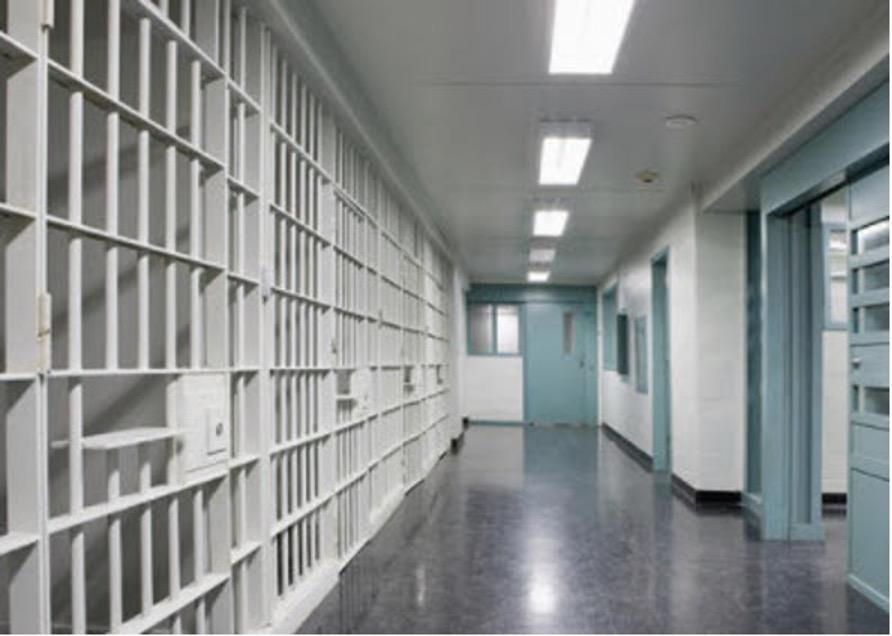
The sentence is only part of what a drug conviction costs. Collateral consequences follow a person long after the court file closes. Several of them are automatic. Georgia suspends driving privileges after a conviction for driving under the influence of a controlled substance or marijuana. A possession conviction that involved no driving no longer triggers that automatic suspension. State licensing boards may suspend or deny professional licenses. A drug conviction can also affect eligibility for some federal benefit programs. A felony conviction of any kind strips the right to possess a firearm under state and federal law. For non-citizens, the stakes are higher still. A controlled substance conviction is generally a deportable offense. Narrow exceptions exist. The consequences depend heavily on immigration status and the specific charge. Non-citizens should work with both criminal and immigration counsel before resolving a case. Housing is another pressure point. Public housing authorities and subsidized housing programs may deny or terminate eligibility after a drug conviction. Employment is the consequence people feel longest. A Georgia felony conviction can be restricted from public record only after a pardon, and only when the other conditions in the record restriction statute are met. Otherwise it stays visible on background checks indefinitely. A successfully completed first offender sentence or conditional discharge is different. In those dispositions, the court never enters an adjudication of guilt.

Georgia gives first-time drug defendants several paths that may avoid a conviction. Which one fits depends on the charge, the county, and the person's history.
A court may defer proceedings for a first-time drug possession offender who consents to that treatment. No judgment of guilt is entered. The person completes conditions that often include treatment and testing. Successful completion ends the case in dismissal with no conviction. This option is available once in a lifetime. Spending it on the wrong case can be costly.
The First Offender Act is a separate and broader mechanism, open to a defendant with no prior felony conviction who consents to it. It reaches well beyond drug cases. It also avoids an adjudication of guilt. The trade-off is real: violating its terms exposes the person to resentencing on the original charge, up to the statutory maximum, with a conviction entered.
Accountability courts combine treatment, frequent drug testing, and regular judicial review. Most programs run from several months to a few years. Admission is discretionary. Standards vary meaningfully from county to county across metro Atlanta. Knowing which programs a particular judge and prosecutor use is key. This knowledge is part of building the request.
Solicitors and district attorneys offer diversion at their discretion. Programs typically involve fees, community service, classes, and testing in exchange for dismissal of the charge. Realistic candidates are usually first-time defendants charged with simple possession, with no weapons and no distribution allegations. Timing matters. Some of these options narrow or close once a case is indicted. That is why an early conversation with counsel can change what is available.
Georgia controlled substance attorneys focus on the pieces of a possession case that drive both the charge and the sentence. Controlled substance attorneys do far more than know the drug schedules. The work starts with how the evidence was found.

The defense first examines whether the officer had a lawful basis for the stop. Did consent come freely? Did the plain view doctrine truly apply? Did the vehicle search stay within its lawful scope? When a search violates the Fourth Amendment, the remedy is suppression of what it produced.
Constructive possession is the next battleground. Drugs found in a shared car or a shared residence are not automatically anyone's. The State must tie the substance to a specific person.
The lab side matters too. The defense reviews the chain of custody, the GBI crime lab analysis, and how the substance was weighed. Packaging, moisture, and mixed materials can all affect whether the weight supports the tier the State charged.
Negotiation follows the investigation. Where proof of actual possession is thin, the defense may push for a reduction to attempted possession or to a misdemeanor. Where the facts are stronger for the State, the work shifts to mitigation – treatment records, employment history, and letters that support a request for first offender or conditional discharge treatment.
Kohn & Yager LLC has defended criminal charges in Georgia courts for decades. Our criminal defense lawyers handle drug cases throughout metro Atlanta. Choosing a controlled substance law firm that knows how individual counties run their diversion and accountability court programs helps shape which options are realistically on the table.

A felony possession charge carries prison exposure and collateral consequences that outlast any sentence. The window before your first court date is when diversion, conditional discharge, and first offender options are most available. Some of them narrow once a case is indicted. A free consultation covers the arrest, the search, the lab work, and the tier the State charged. We then give you a straight assessment of the realistic options in your county. Past results do not guarantee similar outcomes. Every case turns on its own facts. Our firm answers calls 24 hours a day, including for people arrested overnight or over a weekend. Call today for a free consultation about your controlled substance charge.

A charge of attempted possession of a controlled substance means the State says a person tried to possess drugs. They say the person never completed the offense. Criminal attempt requires intent to commit the crime plus a substantial step toward committing it. A buy may be interrupted before anything changes hands. The substance may turn out not to be a controlled substance at all. Or the person may never have taken actual or constructive possession of anything.
The punishment is lower. Under Georgia's attempt penalties, a person convicted of attempting a felony faces no more than one-half the maximum prison term allowed for the completed offense. The same schedule and weight framework sets the baseline. For example, if the completed possession charge would have carried 1 to 15 years, the attempt exposes the defendant to no more than 7.5 years. A fine, if applicable, is also capped at one-half the maximum fine for the completed crime.
Prosecutors reduce completed possession charges to attempted possession more often than most people expect. The reduction usually happens when proof of actual or constructive possession is weak. An interrupted buy, disputed control over a vehicle or apartment, or lab results that raise questions about substance identity or weight can all make the completed charge harder to prove. Accepting an attempt plea lets the State resolve the case while the defendant benefits from lower sentencing exposure.
Constructive possession sits underneath all of this. Being near drugs is not possession. The State must prove the person knowingly had both the power and the intent to control the substance. When several people had access to a car or an apartment, that proof is often weak. The State faces a heavy burden.
A drug possession while on probation arrest sets two separate proceedings in motion. One is the new criminal case. The other is a probation revocation. They move on different tracks with different burdens of proof. A revocation hearing uses a preponderance of the evidence standard, not proof beyond a reasonable doubt. A judge may revoke probation while the new charge is still pending. A revocation can stand even if the new charge is later dismissed. How much time is at stake depends on the violation. For a technical violation (missed report or positive screen), the law limits what a judge may revoke. A new felony offense is treated differently. It can expose the probation balance, but no more than the maximum sentence for the new felony. A positive screen or a failure to report is enough to support a violation warrant. No new arrest is needed. Sequencing matters. How the new case resolves often controls what happens in the revocation. The two should be handled together. First offender status under Georgia law can also be revoked. If that happens, the court sentences the person on the original charge as a conviction. Outcomes depend on the judge, the county, and the person's history.
Under Georgia's probation revocation statute, a new felony offense proven at the revocation hearing carries severe consequences. A judge may revoke up to the lesser of the balance of probation or the maximum sentence for the new felony offense. In practical terms, the probated time becomes available prison time, up to that statutory cap. That revoked time runs on top of whatever sentence the new charge produces. The person may end up serving two separate prison commitments.
Special conditions of probation add another layer. Many drug probation sentences include conditions such as regular drug testing, completion of treatment programs, and restrictions on associating with certain people or visiting certain places. A new drug arrest almost always violates one or more of these special conditions. Under the statute, a violation of a special condition allows the court to revoke the balance of the original sentence. The revocation hearing itself operates on relaxed rules. The court may consider hearsay and other evidence that would not be admissible at trial. That lower bar means a revocation can succeed on evidence that the new criminal case may never use.
How long does Georgia have to file drug possession charges? The statute of limitations for most felonies committed against an adult requires prosecution within four years of the offense date. Misdemeanors carry a two year period. An arrest does not stop the clock. The State must file an accusation or obtain an indictment inside the period. In drug cases, that gap can be long, because charges often wait on the GBI crime lab. Backlogs are a common reason a case surfaces many months after an arrest. The clock can also pause. Georgia law leaves four periods out of the period within which a prosecution must be commenced. Two matter in drug cases. First, when the accused is not usually and publicly a resident within this state. Second, when the person who committed the offense is unknown. A delay is not automatically good news. A case can sit dormant for a year and still be indicted well within the period. Anyone arrested but not yet charged should assume the case is still alive. The statute of limitations possession of drugs question comes up often in cases where lab results are slow, but the four-year window gives the State plenty of room to act.
Felony possession of a controlled substance in Georgia is charged under Georgia law. The law makes it a felony to knowingly possess Schedule I or Schedule II substances. Most Schedule III, IV, and V possession charges are also felonies. The main misdemeanor exception is marijuana possession of one ounce or less, which carries up to 12 months, a fine of up to $1,000, or both.
Felony possession of a controlled substance is distinct from possession with intent to distribute. Simple possession means the person held the substance for personal use. Distribution charges apply when the State alleges the person intended to sell, deliver, or dispense the substance. Prosecutors rely on packaging materials, scales, large amounts of cash, and communications to support distribution allegations. The penalty jump is steep. Possession with intent to distribute a Schedule I or II substance carries 5 to 30 years on a first offense.
Three variables determine whether a possession charge is a felony and which sentencing tier applies. The first is the drug's schedule – Schedules I and II carry the most severe ranges. The second is the identity of the substance – narcotics in Schedule II follow different tiers than non-narcotics. The third is total weight, measured as aggregate weight including any mixture. The law distinguishes between solid substances measured in grams and liquid substances measured in milliliters. These three variables feed directly into the penalty tiers described above. A charge of felony possession of a controlled substance begins at 1 to 3 years for the smallest quantities and increases with weight up to the trafficking threshold.
Not always. While felony possession carries a state prison sentence on paper, judges may probate part or all of the sentence. First-time offenders may qualify for conditional discharge, the First Offender Act, or a diversion program – all of which can avoid confinement entirely. The likelihood of prison depends on the schedule, the weight, the person's criminal history, and the county where the case is heard.
Under Georgia's attempt penalties statute, a person convicted of attempting a felony faces up to one-half the maximum sentence for the completed offense. The same schedule and weight framework applies. If the completed possession charge would have carried up to 15 years, the attempt carries up to 7.5 years. Any fine is also capped at one-half the maximum.
It depends on the substance and the facts. Most drug possession charges in Georgia are felonies, and the statute does not include a misdemeanor alternative for Schedule I or II substances. However, prosecutors may reduce a charge to attempted possession, which lowers sentencing exposure. Conditional discharge and first offender treatment avoid a conviction altogether without changing the charge itself. The options vary by county and by the strength of the State's evidence.
A new felony drug offense proven at a revocation hearing may expose the probation balance, but no more than the maximum sentence for that new felony. Under Georgia's probation revocation statute, the judge may revoke up to the lesser of the probation balance or the maximum sentence for the new felony. That revoked time is served on top of any sentence the new charge produces. Violation of a special condition of probation – such as a drug testing requirement – may also allow the court to revoke the balance of the original sentence.
The jail time depends on the schedule and the weight. Schedule I and II narcotic tiers run from 1 to 3 years at the lowest level up to 1 to 15 years at 4 to 28 grams. A judge may probate part or all of a sentence.
Two separate proceedings result. One is the new criminal case. The other is a probation revocation. The revocation uses a lower burden of proof and can move before the new charge is resolved. A new felony may expose the probation balance, capped at the maximum sentence for the new felony.
Generally, the state has four years for a felony and two years for a misdemeanor. Both are measured from the offense date. Certain periods may toll that clock. For example, time when the accused is not usually and publicly a resident of Georgia pauses the clock.
Yes, sometimes prosecutors will reduce the charge. When proof of actual possession is weak, they may reduce to an attempt. This generally carries no more than half the maximum penalty for the completed offense.