TOP-RATED
Atlanta Criminal Defense
Law Firm
Atlanta Criminal Defense
Law Firm





Gwinnett County operates four main courts: Superior Court, State Court, Recorder's Court, and Juvenile Court. The county also has Magistrate and Probate divisions. Superior Court handles felonies and divorce. State Court handles misdemeanors and traffic offenses. Recorder's Court in Lawrenceville hears county traffic citations and ordinance violations. Juvenile Court addresses cases involving minors. The main courthouse complex sits at the Gwinnett Justice & Administration Center in Lawrenceville, GA, the county seat. Each court keeps its own records, so a Gwinnett County case search must be directed to the correct clerk. Municipal courts in cities like Snellville, Duluth, and Norcross operate separately from the county system.
The Superior Court of Gwinnett County hears felonies such as murder, armed robbery, and rape. It also hears divorce and child custody cases. The State Court of Gwinnett County handles misdemeanors, including DUI charges, reckless driving, and hit and run cases. Gwinnett County lawyers at Kohn & Yager LLC, including attorneys Larry Kohn and Cory Yager, defend traffic, misdemeanor, and felony charges across these courtrooms.
Gwinnett County Superior Court is the trial court of general jurisdiction for the county. Under Georgia law, Superior Courts alone hear felonies, land title suits, and equity cases. In Gwinnett, this court hears felony criminal matters. These include armed robbery, assault, drug trafficking, and murder. The court also hears divorce, child custody, and injunction petitions.
The court sits at the Gwinnett Justice & Administration Center in Lawrenceville. Several judges share the criminal and civil dockets. Each case is assigned to one judge at filing. A felony case typically begins with an arrest. A first appearance in Magistrate Court comes next. That is where bond may be set. The case then moves to Superior Court for arraignment.
At arraignment, the defendant enters a plea and receives a trial date. Grand jury indictments are required for most felonies. Between indictment and trial, the judge hears pretrial motions. Those include motions to throw out evidence and fights over discovery. A defendant may work out a plea deal at any stage. Only a Superior Court judge may accept a felony guilty plea. Felony DUI charges and vehicular homicide cases also land in Superior Court when the charge rises above the misdemeanor level.

Gwinnett County State Court handles misdemeanors, traffic charges, and civil suits that do not involve equity. Under Georgia law, State Court sits alongside Superior Court but hears a narrower list of cases. State Court hears only misdemeanor-level charges. Most DUI cases in Gwinnett are heard here. DUI under Georgia law is generally a misdemeanor offense.
State Court also handles reckless driving under Georgia law, leaving the scene of an accident, and other traffic misdemeanors that are bound over from Recorder's Court. The court runs the county's DUI accountability court program as well.
State Court cannot hear felonies. This key distinction separates State Court from Superior Court. State Court can offer jury trials. This key distinction separates State Court from Recorder's Court. At arraignment, a defendant enters a plea. The defendant may then ask for a jury trial or work out a deal. Cases that start on a Recorder's Court calendar often move to State Court. That happens when the charge carries more risk, or when the defendant wants a jury.

Recorder's Court in Lawrenceville handles traffic citations written by Gwinnett County police officers and sheriff's deputies. It also handles county ordinance violations. This court is a limited-jurisdiction court. Jury trials are not available. A judge decides each case and imposes any sentence without a jury panel.
The Recorder's Court sits in Lawrenceville because Lawrenceville is the Gwinnett County seat. Drivers looking for the Recorder's Court should check the citation itself for the exact address, courtroom number, and reporting time. County court space is reassigned from time to time. The location printed on the ticket is the most reliable reference.
At a first appearance in Recorder's Court, the judge calls the calendar and addresses each case in turn. A driver may enter a plea, ask for more time, or ask about options such as a defensive driving course. Paying a ticket at the window or online counts as a guilty plea. That plea becomes a conviction on the driving record. It can add license points and raise insurance rates, and it can cost a driver a job.
Some cases that begin in Recorder's Court do not stay there. The more serious misdemeanors, DUI among them, get bound over to State Court. A defendant may request a jury trial in State Court. Felony charges move to Superior Court. A case that starts in Recorder's Court can end up in a different courtroom, with different rules and a different timeline.
Recorder's Court does not handle citations issued by city police departments. A ticket from a Snellville, Duluth, or Norcross officer goes to that city's municipal court, not to the county Recorder's Court.

Gwinnett County Juvenile Court handles cases involving minors. Under Georgia's Juvenile Code, a delinquency case covers a child under 17 years of age who is accused of conduct that would be a crime for an adult. Dependency and deprivation cases, which turn on a child's welfare, reach children under 18. The court may also hear Children in Need of Services (CHINS) petitions.
Juvenile Court proceedings differ from adult court in several important ways. Hearings are closed to the public. Court records are sealed under Georgia law. The outcome aims at getting the child back on track rather than at punishment. Options may include probation, community service, counseling programs, or placement in a youth facility.
Parents or guardians usually have to attend. A delinquency finding is not a criminal conviction. But it can still shape a young person's future. Consulting an attorney before a Juvenile Court hearing may help families understand their options.
A case search in Gwinnett County requires knowing which court handled the charge. Each Gwinnett court keeps its own records. No single county index returns every case.
Superior Court and State Court records. The Gwinnett County Clerk of Superior Court maintains records for both Superior Court and State Court. To search, visit the clerk's online case search portal. You can look up cases by the defendant's full legal name and date of birth, or by case number if you have it. A case number search is faster and surer. That matters for common names, which return many hits.
Recorder's Court records. Recorder's Court files are kept separately from Superior and State Court records. The Recorder's Court clerk handles these records. A search sent to the wrong clerk comes back empty.
Magistrate and Probate Court records. Each of these courts maintains its own docket. Warrant records may be held in Magistrate Court. Probate Court handles estates and guardianships.
Sealed records. Juvenile Court records are generally confidential under Georgia law. They are not available through a public case search. Certain adult records may also be restricted under Georgia's record restriction rules.
An online docket entry is a summary, not a certified paper. Employers, licensing boards, and immigration courts want a certified disposition from the clerk. Request one whenever something official depends on the result. An old conviction found in a Gwinnett County case search is the starting point. Use it to evaluate whether record restriction relief may be available.

Most Gwinnett court dates begin with a calendar call. The judge calls many cases at one scheduled time. Arriving early matters. The security line at the Gwinnett Justice & Administration Center can be slow on busy mornings. Plan extra time for the line. Parking is available in designated lots near the building. Follow posted signs for the correct entrance.
Dress as you would for a job interview. Turn your phone off before you enter the courtroom. Bring your ticket or accusation, your driver's license, proof of insurance, and papers for anything the court told you to finish. Court staff and clerks can tell you a date, a courtroom, or how to file a document. They cannot give legal advice.
Missing a court date adds a second problem on top of the first charge. A judge may issue a bench warrant. A missed traffic date can also cost you the right to drive in Georgia. Both consequences are easier to address early. If the prosecution later declines to pursue the case, the result is known as nolle prosequi.
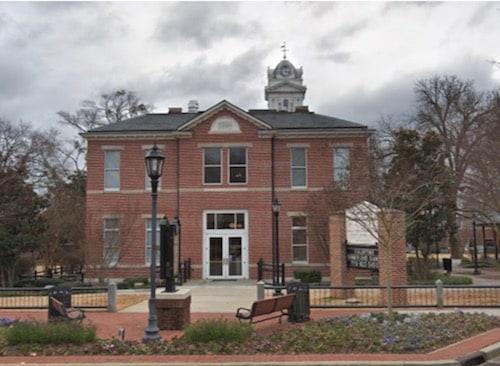
Other Gwinnett court resources include the circa 1885 Gwinnett historic courthouse, the Gwinnett County Sheriff inmate search, and the small claims court at Gwinnett Magistrate Court.

Drivers searching for Recorder's Court Lawrenceville, Recorders Court Lawrenceville GA, or Recorder Court in Lawrenceville GA are usually looking for the same county court. Read the citation itself for the date, time, and location. The officer writes the return date on the ticket.
Recorder's Court is not the same as State Court. More serious misdemeanors typically move out of Recorder's Court and into Gwinnett County State Court. A defendant may request a jury trial in State Court. DUI is the common example. Most charges under the Georgia DUI statute written by a county officer are bound over or transferred to State Court. They are rarely resolved on a Recorder's Court calendar.
Paying a citation at the window or online is generally the same as entering a guilty plea. Depending on the charge, that plea becomes a conviction. It lands on your driving history and may carry license consequences. Consequences escalate with prior offenses and with the severity of the charge.
Review any citation with a Recorder's Court date before you appear or pay. Some dispositions are reportable convictions. Some add points to a Georgia license. A charge that looks minor on the ticket may still affect insurance, employment, or immigration matters later. A DUI citation is the clearest example, because Georgia DUI laws attach a license suspension to a first conviction. Attorney Bubba Head has defended these cases in Gwinnett for decades.
The phrase case search gwinnett county covers several different record systems. Each Gwinnett court keeps its own docket. No single county index returns everything.
The Clerk of Superior Court maintains criminal and civil records for both Superior Court and State Court. That office is where felony files, misdemeanor files, and civil litigation records live. Magistrate Court, Probate Court, and Recorder's Court each hold their own records. Juvenile Court records are generally confidential under Georgia law. They are not open to a public search.
A name based search usually needs the full legal name and a date of birth. It helps to know roughly when the case was filed. A case number search is faster and more reliable when you have the number. The number appears on the citation, accusation, or indictment. Common names return many results. Identifiers matter.
An online docket entry is not the same as a certified copy. Docket screens are summaries. They can lag behind what the file actually shows. Employers, licensing boards, and immigration courts want a certified disposition from the clerk. Request the certified copy whenever something official depends on the answer.
A search that turns up an old Gwinnett conviction is the starting point for a record restriction analysis. Georgia's record restriction rules turn on the charge, the outcome, and the date. An arrest that ended without a conviction is treated one way. A guilty plea is treated another. The certified disposition usually decides what relief may be available.
Superior Court of Gwinnett County handles felonies. It is the only Gwinnett court that can accept a felony guilty plea or hold a felony trial. It also hears divorce, child custody, and equitable claims. It decides petitions for record restriction tied to felony charges.
State Court of Gwinnett County handles misdemeanors. That includes DUI under Georgia law, reckless driving, and leaving the scene of an accident. Most traffic misdemeanors that start in Recorder's Court end up here. State Court also runs the county's DUI accountability court.
Magistrate Court issues arrest and search warrants and takes warrant requests. It holds first appearances and preliminary hearings. It sets bond in many cases, and it hears county ordinance violations and small claims.
Juvenile Court handles delinquency cases involving minors and deprivation matters where a child's welfare is at issue. Its files are generally closed to the public.
Probate Court handles estates, wills, and guardianships. In some Georgia counties, probate judges also hear some traffic and wildlife tickets. Confirm the court named on your citation rather than assuming.
Recorder's Court hears county traffic citations and ordinance violations, as described above.
Municipal courts matter just as much. Lawrenceville, Snellville, Duluth, Suwanee, Norcross, and Lilburn each run a city court. A citation issued by a Snellville police officer goes to the Snellville Municipal Court, not to the county Recorder's Court. The agency the officer works for, not the spot where the stop happened, usually decides the court.
The caption on your ticket or accusation names the court. Read it before you assume where to appear. Showing up at the wrong courthouse is treated the same as not showing up at all.
Anyone charged in Gwinnett Superior Court, State Court, Recorder's Court, or Juvenile Court should think about talking with a Georgia criminal defense lawyer. Speak with one before the first court date. A lawyer can walk you through the charge. They can explain which court will hear the case. They can lay out your options at each stage.
Kohn & Yager LLC defends criminal and DUI cases in Gwinnett County and throughout Georgia. The firm offers a free consultation and answers calls 24 hours a day, seven days a week. Talk with a lawyer before you pay a ticket or enter a plea. Paying is generally treated as a conviction. Every case is different and results depend on the specific facts.

Start by working out which court handled the charge. The Gwinnett County Clerk of Superior Court maintains online records for Superior Court and State Court cases. Search by the defendant's full legal name and date of birth, or by case number for faster results. Recorder's Court, Magistrate Court, and Probate Court each keep their own records. Juvenile Court files are sealed under Georgia law.
Recorder's Court sits in Lawrenceville, the Gwinnett County seat. It sits in a county building that may be separate from the main courthouse where Superior and State Court meet. Your citation lists the exact address, courtroom, and reporting time. Confirm the location on the ticket, because county court space is reassigned from time to time.
Gwinnett County Superior Court hears felonies, divorce, child custody, and equity cases. It is the only court that can accept a felony guilty plea or hold a felony trial. Gwinnett County State Court handles misdemeanors, including DUI under Georgia law, reckless driving, and traffic offenses. State Court offers jury trials for misdemeanor charges, while Recorder's Court does not.
Recorder's Court hears traffic citations written by Gwinnett County police officers and sheriff's deputies. It also hears county ordinance violations. A judge decides each case without a jury. More serious misdemeanor charges – such as DUI – are typically bound over from Recorder's Court to State Court. Citations issued by city police departments go to the municipal court for that city, not to Recorder's Court.
Gwinnett deadlines depend on the courtroom. A citation returnable to Recorder's Court, a State Court misdemeanor or DUI calendar, and a Superior Court felony each move on different timelines. The first court date is rarely the only one that matters.
A case search that turned up an old Gwinnett conviction may also raise a record restriction question worth reviewing. Call (404) 567-5515 to talk with a lawyer before you pay a ticket or enter a plea. Paying is generally a conviction.