- Free Consultation, Call 24/7: (404) 567-5515 Tap Here To Call Us




1st Offense DWI in Georgia: Penalties, Process, and Defense


What Is a 1st Offense DWI in Georgia?

A 1st offense DWI in Georgia refers to a first-time charge of driving under the influence of alcohol or drugs. Georgia law uses the term “DUI” rather than “DWI,” but many drivers search for both terms. The charge falls under impaired driving offenses, which covers all such offenses in the state.
A first offense is a misdemeanor for most adult drivers when no aggravating factors are present. Aggravating factors include a serious injury crash or a child passenger. Georgia sets the blood alcohol concentration (BAC) threshold at 0.08% for adult non-commercial drivers. CDL holders face a lower limit of 0.04%. Drivers under 21 can be charged at just 0.02% BAC.
The term “DWI” does not appear in the Georgia code. Courts treat DWI and DUI charges identically. If you were arrested for impaired driving in Georgia, you face a DUI charge. This applies regardless of what the officer called it at the scene.
Penalties for a First DWI Offense in Georgia
Under Georgia’s DUI statute, a first DUI conviction carries a range of penalties. The judge and county affect the exact terms. Georgia treats this offense as a misdemeanor, but the consequences are serious.
Fines and surcharges. Courts may impose fines between $300 and $1,000. Mandatory surcharges can push the total cost well beyond the base fine.
Jail time. Driving While Intoxicated (DWI) first offense is a sentence that carries 24 hours to 12 months in jail. Most judges probate the majority of the sentence after the defendant serves the minimum 24 hours. Some counties allow time served from the initial arrest to count toward this requirement.
Community service. Judges typically order at least 40 hours of community service as part of the sentence.
Probation. Most first-offense convictions include 12 months of probation. Conditions include random drug and alcohol testing, no new arrests, and compliance with all other court orders.
DUI Risk Reduction Program. Georgia requires completion of an Alcohol and Drug Awareness Program. This is commonly called the DUI Risk Reduction course. The program includes classroom instruction and a clinical evaluation.
In our experience defending first-offense DWI cases in Georgia State Court, the actual sentence depends heavily on the county. Some jurisdictions impose stricter terms than others, even for identical BAC levels.
Penalties for a 2nd DWI Offense in Georgia
A second DUI offense within Georgia’s 10-year lookback window triggers much harsher penalties. The 10-year period runs from the arrest date on the first offense to the arrest date on the second.
Mandatory jail time. A second conviction requires at least 72 hours in jail. Many judges impose more. This minimum is harder to negotiate around than a first offense.
Higher fines. Courts impose fines between $600 and $1,000, plus surcharges.
Extended community service. A second DWI offense requires 30 days of community service. This is a sharp increase from the 40 hours required for a first offense.
License suspension. Georgia suspends the driver’s license for three years after a second conviction. Drivers may qualify for a limited driving permit after meeting certain requirements. Full reinstatement takes the entire suspension period.
Ignition interlock device. Courts may order installation of an ignition interlock device on the driver’s vehicle. This is a condition of any limited driving permit.
Additional consequences. Georgia law requires license plate forfeiture for the vehicle involved in the offense. In some counties, the court publishes the defendant’s name and photo in the local newspaper.
The severity jump from a first to a second offense is substantial. This is why fighting a first charge aggressively matters. A conviction stays on the record and sets the baseline for any future arrest.

Driving While License Suspended (DWLS) 1st Offense
Many people charged with a DWI also face a separate charge for driving on a suspended license. This happens frequently when a driver’s license was already suspended. The suspension may result from a prior incident or from failing to respond to an earlier action.
A DWLS 1st offense is classified as a misdemeanor. To convict, the state must prove two things. First, the driver operated a vehicle on a public road. Second, the driver knew or should have known that their license was suspended or revoked.
Penalties for a first DWLS conviction include two days to 12 months in jail and fines between $500 and $1,000. The court may also impose an additional six-month suspension on top of any existing suspension period.
When a DWLS charge runs alongside a pending DWI case, the two charges can compound each other. A DWI conviction may trigger a new suspension. The DWLS charge adds its own penalties on top. Resolving both charges together through coordinated defense strategy is critical to minimizing total exposure.
The DWI Court Process in Georgia: What to Expect
The Georgia DUI process moves through several stages. Understanding the timeline helps you protect your rights at each step.
Arrest and booking. After a DUI arrest, officers transport you to the county jail for booking. You will receive paperwork including a temporary driving permit (Form DS-1205). You will also receive notice of your right to request a hearing on your license suspension.
The 30-day ALS hearing deadline. This is the single most time-sensitive step in the entire process. Georgia’s Administrative License Suspension (ALS) law gives you exactly 30 days from the arrest date to request a hearing. If you miss this deadline, your license is automatically suspended. You will have no opportunity to contest it. In our experience, this is the most commonly missed opportunity to preserve driving privileges.
Arraignment. The court schedules an arraignment where you enter a plea. Your options are guilty, not guilty, or no contest. Entering a not-guilty plea preserves your right to challenge the evidence.
Pre-trial motions. Your attorney may file motions to suppress evidence. Your attorney may also challenge the legality of the traffic stop. Your attorney may exclude breath or blood test results. These motions often shape the outcome of the case.
Plea negotiation or trial. Many DUI cases resolve through plea negotiation. The charge may be reduced based on the strength of the evidence. If no agreement is reached, the case proceeds to trial before a judge or jury.
Defense Strategies for a First or Second DWI Charge
Every DUI case has potential weaknesses. A skilled attorney can identify these weaknesses. The right defense depends on the specific facts. Several strategies apply across many cases.
Challenging the traffic stop. The Fourth Amendment requires officers to have reasonable articulable suspicion before pulling you over. If the officer lacked a valid reason, the entire stop may be unconstitutional. No traffic violation and no erratic driving may support this challenge. Any evidence gathered after an illegal stop could be suppressed.
Challenging field sobriety tests. Officers must administer standardized field sobriety tests according to strict protocols. The National Highway Traffic Safety Administration sets these protocols. Improper instructions, uneven testing surfaces, or the driver’s physical limitations can undermine the reliability of these tests.
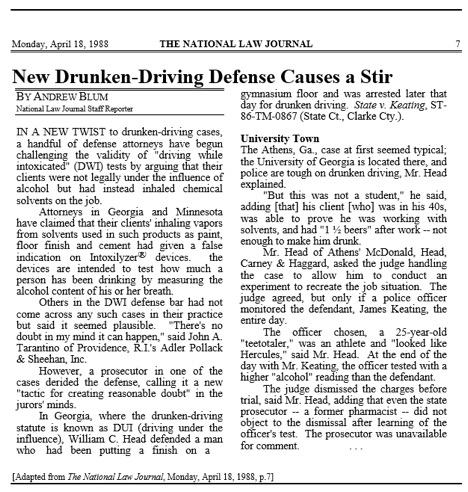
Challenging breath test results. Georgia uses the Intoxilyzer 9000 for breath testing. These devices require regular calibration and maintenance. If maintenance records show gaps, the results may be excludable. If the operator lacked proper certification, the results may be excludable.
Challenging blood draw procedures. When police obtain a blood sample, they must follow chain-of-custody procedures. Any break in the chain – from the draw to the lab to the courtroom – could compromise the results.
Medical conditions affecting BAC. Certain medical conditions can produce falsely elevated BAC readings. Gastroesophageal reflux disease (GERD) may push stomach alcohol into the mouth. This inflates breath test numbers. Diabetes and certain diets can produce acetone. Some devices misread acetone as ethanol.
How a First or Second DWI Affects Your Life
Beyond the courtroom penalties, a DUI conviction creates collateral consequences. These consequences follow you for years.
Insurance increases. Georgia requires an SR-22 filing after a DUI conviction. This high-risk insurance certification typically doubles or triples your premiums. The increase lasts three to five years.
Employment impact. A DUI conviction appears on background checks. It may disqualify you from jobs that require driving. Jobs that hold you to professional licensing standards may also reject you. CDL holders face particularly harsh consequences. They can lose commercial driving privileges even for a first offense.
Professional licenses. Nurses, teachers, lawyers, and other licensed professionals may face disciplinary proceedings. Their licensing boards review DUI convictions.
Immigration consequences. Non-citizens should be aware that a DUI conviction could affect visa status, green card applications, or naturalization proceedings. The immigration consequences vary depending on the case specifics.
No expungement available. Georgia does not allow expungement of DUI convictions. Once convicted, the record is permanent. This is one of the most important reasons to fight the charge. A conviction you cannot erase will affect your life indefinitely.
Frequently Asked Questions About DWI Charges in Georgia
Is a first DWI offense in Georgia a felony or misdemeanor?
A first DWI offense in Georgia is typically a misdemeanor. The charge may be elevated to a felony if aggravating factors are present. Aggravating factors include a serious bodily injury crash or a child under 14 in the vehicle. An attorney can evaluate your specific circumstances.
What happens on a 2nd DWI conviction in Georgia within 10 years?
A 2nd Driving While Intoxicated conviction within 10 years carries mandatory 72-hour jail time. Fines range from $600 to $1,000, plus surcharges. The conviction requires 30 days of community service and a three-year license suspension. Possible ignition interlock requirements also apply. Penalties increase sharply compared to a first offense. Some counties publish the defendant’s name and photo.
How long will my license be suspended after a first DWI in Georgia?
A first DUI conviction in Georgia may result in a license suspension of up to 12 months. Many first offenders qualify for a limited driving permit. This permit allows driving to work, school, and medical appointments. The 30-day ALS hearing request is critical to preserving your driving privileges.
Can a first-offense DWI be reduced to reckless driving in Georgia?
A first-offense DUI may be negotiated down to reckless driving in some cases. Reckless driving is sometimes called a “wet reckless.” This outcome depends on BAC level, the strength of the evidence, and the county’s prosecution policies. Reduction is not guaranteed. An experienced criminal defense attorney can assess your case.
Speak With a Georgia DWI Defense Attorney
If you were arrested for a first or second DUI in Georgia, the clock is already running. You have just 30 days from your arrest date to request an ALS hearing. This step is critical to fighting for your license. Missing that window means an automatic suspension. You will have no chance to contest it.
Kohn & Yager LLC handles first and second DWI cases throughout Georgia’s State and Superior Courts. Our attorneys understand county-specific sentencing practices and local prosecutors. We know the technical defenses that can make a difference in your case.
We offer a free consultation to review your charges and explain your options. Early intervention gives us the best chance to preserve your driving privileges. Early intervention also helps us build the strongest possible defense.
Contact Kohn & Yager LLC today to discuss your case. Do not wait until the 30-day deadline passes.