- Free Consultation, Call 24/7: (404) 567-5515 Tap Here To Call Us




2nd Offense Driving on a Suspended License in Georgia: Penalties, Defense, and Getting Your License Back


What Counts as Driving on a Suspended License in Georgia?

Driving on a suspended license in Georgia means operating a motor vehicle on a Georgia roadway without valid driving rights. The privilege must be suspended, revoked, canceled, or disqualified. You must also know about that status. Georgia treats driving while license suspended as a criminal misdemeanor, not as a routine traffic ticket. See our related guide: Fine for Texting While Driving in Georgia: Penalties, Points, and Your Options.
Under Georgia law, a driver who operates a motor vehicle while his or her license is suspended, revoked, canceled, or disqualified faces criminal charges. A suspended license means the state has taken away your driving rights for a set time. A revoked license means those rights are fully terminated. Revocation usually lasts longer and follows more serious reasons.
Prosecutors must prove two things to convict you. First, you drove a motor vehicle. Second, you had notice that your driving privilege was suspended. That second element is the knowledge requirement, and many cases turn on it.
Notice comes in two forms. Actual notice means an officer handed you the suspension notice. A judge telling you in open court also counts. So does a letter you received from the Department of Driver Services. Legal notice, often called constructive notice, means the state mailed the notice to the address on file. Georgia generally treats that mailing as notice even if you never opened the envelope. Most defenses attack this knowledge element.
Georgia suspends licenses for many reasons. These include DUI convictions, unpaid traffic tickets, and too many points on your record. Failure to pay child support and missing court dates also trigger suspensions. Many drivers learn about the suspension only after a police stop. That gap may create a defense.
This charge is very different from a citation for not carrying your license. Failure to carry a license is a far lesser offense. That offense carries no mandatory jail time and no added suspension. It is often the negotiated landing spot when a suspended license charge gets reduced.
Insurance status often surfaces in the same traffic stop. Our guide explains whether driving uninsured is illegal in Georgia and what penalties follow.
Why a Georgia Driver's License Gets Suspended
Georgia suspends driving privileges for four broad reasons. The reason matters. It controls how long the suspension lasts and what you must do to clear it.
Points on your driving record. Georgia assigns points to moving violations by statute.
- 15 or more points in any 24-month period generally triggers a suspension.
- Speeding 15 to 18 mph over the limit adds 2 points.
- Speeding 24 mph or more over the limit adds 4 points and can bring Super Speeder exposure.
- One speeding ticket rarely suspends a license, but repeat speeding inside a two-year window often does.
DUI arrests and DUI convictions. Georgia's implied consent scheme lets a suspension start before any conviction.
- A refusal to test, or a test result over the legal limit, can trigger an administrative suspension.
- A DUI conviction carries its own separate suspension on top of that.
- The deadline to challenge the administrative action is short, so drivers should act quickly.
Administrative and financial triggers. These are paperwork suspensions, and they surprise drivers most often.
- Failure to appear in court on a traffic citation.
- Unpaid fines on a case you thought was closed.
- A lapse in auto insurance reported to the state.
- An unpaid Super Speeder fee.
Convictions that have nothing to do with driving. Some suspensions never involve a car at all.
- Certain drug convictions suspend a license.
- Child support enforcement actions can suspend driving privileges.
Most clients charged with driving on a suspended license fall into the third group. They never learned about the suspension. A form triggered it, not a court date. Point totals, thresholds, and eligibility rules described here are current as of 2026 and depend on your record. The state adjusts them from time to time. Drivers should confirm their own status with the Department of Driver Services before driving.
1st Offense Driving on a Suspended License in Georgia
A first offense driving on suspended license is a misdemeanor under Georgia law. But the penalties are much harsher than most misdemeanors. A conviction requires a minimum of 2 days in jail. You must also pay fines from $500 to $1,000. An additional 6-month license suspension is added on top of any existing suspension. Mandatory jail time shocks most defendants. Many misdemeanor offenses allow judges to impose probation without jail. Georgia's statute requires at least 2 days in jail for a first conviction. Some first offenses may qualify for reduction or pretrial diversion. That result is more likely if you reinstate your license before your court date and have no prior criminal record. But these outcomes depend on the county, the prosecutor, and your case facts. A first offense still creates a criminal record. That record can hurt employment and insurance prospects for years. See our related guide: Is Littering Illegal in Georgia? Littering Laws, Fines, and Penalties.
2nd Offense Driving on a Suspended License in Georgia
A second offense within 5 years is a high and aggravated misdemeanor. That is a major step up from a first offense, with much tougher consequences. The penalties are steep. You face a minimum of 10 days in jail and a maximum of 12 months. Fines range from $1,000 to $2,500. An additional license suspension period is also imposed. Judges have very limited power to sentence below 10 days. Georgia counts prior offenses within a 5-year lookback window. If your first conviction was within the past 5 years, a new charge becomes a second offense. Defendants often do not realize that prior nolo contendere pleas still count toward this 5-year period. A nolo plea does not protect you from higher sentences on a later charge. A second conviction has serious collateral effects. Your auto insurance company will likely require an SR-22 filing. That filing raises your premiums for three or more years. Commercial driver's license holders face particular hardship. A suspended license conviction can disqualify them from driving commercially, which can end their careers. Most critically, a second conviction generally disqualifies you from obtaining a limited driving permit. You cannot drive legally to work, school, or medical appointments during the suspension period.
3rd Offense Driving on a Suspended License in Georgia
A third offense within 5 years carries even steeper penalties. Under Georgia law, driving on a suspended license is a high and aggravated misdemeanor. You face a minimum of 10 days in jail, up to 12 months, and fines from $1,000 to $2,500 — the same statutory range a second conviction carries. The real danger goes beyond the immediate sentence. Three serious driving offenses within 5 years can trigger habitual violator status. The Georgia Department of Driver Services reviews your record. The agency may declare you a habitual violator based on accumulated offenses. Habitual violator status is a turning point. Your license is revoked, not suspended, for 5 years. Driving during that revocation is a felony, not a misdemeanor. The potential sentence jumps from county jail time to state prison. Anyone facing a third offense should treat it as urgent. The window to stop habitual violator status may be narrow. A defense attorney needs time to explore your options before court. See our related guide: 1st Offense DWI in Georgia: Penalties, Process, and Defense.
4th Offense Driving on a Revoked License in Georgia
A fourth conviction within five years is a felony under the suspended license statute itself, and by that point habitual violator status has usually been declared as well. That status changes everything. Driving after habitual violator status is a felony. Conviction brings 1 to 5 years in state prison, not county jail. That is serious prison time with lasting effects on employment, housing, and civil rights. The difference between "suspended" and "revoked" matters here. Suspension is temporary and tied to a specific period. Revocation comes with habitual violator status. It ends driving rights entirely for 5 years. After 5 years, you must apply for reinstatement. You must meet strict requirements. These include completing a defensive driving course and getting new insurance. Some drivers must also install an ignition interlock device. A fourth offense makes probation-only outcomes very unlikely. Prosecutors and judges view repeat offenders as serious public safety risks. Strong defense is essential. A conviction could change the course of your life.
Jail Time for Driving on a Suspended License: What to Expect
Jail time for driving on a suspended license escalates with each offense. Here are the mandatory minimums:
- 1st offense: Minimum 2 days in jail (misdemeanor, up to 12 months maximum)
- 2nd offense: Minimum 10 days in jail (high and aggravated misdemeanor, up to 12 months)
- 3rd offense: Minimum 10 days in jail (high and aggravated misdemeanor, up to 12 months)
- 4th offense (or driving after a habitual violator revocation): 1 to 5 years in state prison (felony)
Georgia judges have very limited power on these mandatory minimums. Most misdemeanor offenses allow judges to suspend jail time entirely. Suspended license convictions are different. The jail time is rarely subject to plea negotiation. Still, how and when you serve time may vary by county. Some courts allow weekend jail service or work release programs. Those options let defendants keep their jobs during the sentence. Availability depends on the county's facilities and the judge's policies. Penalties listed reflect statutory minimums. Actual outcomes depend on your case facts, prior record, and the court.
Drivers usually want to know their real odds of sitting in a cell. On a first offense, the statutory two days is often already satisfied. Hours served at booking may cover it. A single weekend may cover it too, depending on the court and your record. A second offense within five years is a different picture. In many Georgia state and municipal courts, judges treat the ten-day minimum as real custody time. Some courts allow work release or weekend service. That choice depends on the county and on whether you hold steady employment. No attorney can guarantee a no-jail outcome on any of these charges. One factor moves judges toward the low end of the range more often than any other. It costs nothing to control. Reinstating your license before the sentencing date is that factor.

What Happens If You Are Pulled Over With a Suspended License
Most drivers assume the officer discovers the suspension by running the license. In practice, officers routinely run the tag through the Georgia Crime Information Center first. They do so before they ever walk up to the window. The suspension is usually known before the first word is spoken.
Driving on a suspended license is an arrestable misdemeanor in Georgia. Whether you go to jail that night or leave with a citation varies. Officer discretion, county policy, and your history all play a role. A first offense is often handled by citation and a court date. A second or later offense is far more likely to end in a custodial arrest. The charge is a high and aggravated misdemeanor at that level.
Your vehicle may also be affected. Officers may impound the car if no licensed driver is present to take it. Georgia law also allows tag confiscation in some repeat-offense situations.
A few practical points help at the roadside. Drivers should provide identification and remain polite. Arguing about whether the suspension is valid accomplishes nothing. The officer cannot fix a state record on the shoulder of the road. Volunteering statements about knowing your license was suspended can be costly. That admission goes straight to the knowledge element the state must prove. Asking for an attorney and saying nothing further about the driving protects the case.
Fines follow the same ladder as the jail exposure. A first conviction carries $500 to $1,000. A second within five years carries $1,000 to $2,500. A third within five years carries that same $1,000 to $2,500 range. A fourth or later conviction within five years is a felony carrying $2,500 to $5,000, plus court costs and surcharges.
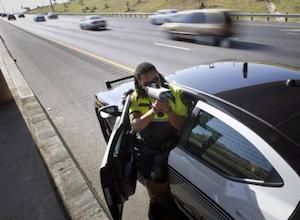
Common Defenses to Driving on a Suspended License Charges
Several defense strategies may apply to suspended license charges in Georgia. A skilled attorney reviews every angle before advising on the best approach.
Lack of notice is often the strongest defense. The state must prove you actually knew about the suspension. The Department of Driver Services often mails suspension notices to outdated addresses. If notice went to an old address and you never got it, the prosecution may fail to prove knowledge. One fact pattern dominates second-offense cases. A driver moved and never received the state's letter.
Unlawful or lifted suspension is another option. Sometimes state records have errors. A suspension may have been lifted before the stop while the system had not updated yet. An attorney can subpoena those records to check whether the suspension was valid on the date in question.
The defendant was not driving. If you were sitting in a parked car, the state cannot prove you operated the vehicle. The same holds when someone else was driving. This element matters more than people expect in parked-vehicle cases. It also matters in stops where the driver and passenger switched seats before the officer arrived.
Identity issues sometimes arise. The officer may not have properly identified the driver. Someone else may have used your information. Either situation may work as a defense.
Necessity or emergency circumstances apply in narrow cases. Georgia courts may consider genuine emergencies. This defense is limited and fact-specific.
Reinstatement before sentencing is not a defense to the charge. But reinstating your license before your court date can greatly improve the outcome. Judges view reinstatement as a sign of responsibility. It may open the door to reduced penalties or alternative sentencing.
Reinstatement also creates the most common dismissal pathway. In many Georgia courts, a driver who reinstates before the court date gains real leverage. Handing the prosecutor a valid license can get the charge reduced or dropped. A frequent landing spot is amendment to no license on person. That reduction avoids the mandatory jail minimum and the extra six-month suspension. This outcome is entirely discretionary. It varies by court, by prosecutor, and by your record. It is also far less available on a second offense within five years. Each case is unique. These defenses depend on your specific facts and circumstances. No outcome is guaranteed.
Hardship Licenses and Limited Driving Permits in Georgia
Searches for a hardship license ga drivers can use after a suspension almost always point to one thing. That thing is the limited driving permit. Georgia does not issue a document called a hardship license. The state issues a limited driving permit, and the terms are narrow. What Georgia drivers call a ga hardship license is that permit.
A limited permit generally allows travel to and from work. It also covers travel to your place of employment during work hours. School, court-ordered programs, and community service are covered as well. Medical care for you or an immediate family member also qualifies. The permit further covers appointments the state itself requires, such as risk reduction classes. It does not allow general personal driving.
Eligibility depends on the type of suspension. Permits are most commonly available on a first DUI suspension. Some points suspensions qualify too. Documented hardship situations may also qualify, subject to age and driving record conditions. Repeat suspended license offenders generally do not qualify. A second suspended license conviction typically disqualifies a driver during the added suspension period. Habitual violators are not eligible during the five-year revocation.
The permit fee is commonly $25. The underlying suspension must otherwise be eligible before the state will issue anything.
Drivers who want to apply for hardship license online ga wide can use the DDS DRIVES e-Services portal. That portal handles limited driving permit applications and reinstatements. You can also apply in person at a DDS Customer Service Center. Applicants should bring the certified court disposition. Proof of enrollment or completion in a DUI Alcohol or Drug Use Risk Reduction Program is needed where the suspension requires it. Proof of the qualifying need, such as employment or school enrollment, is also required.
One warning matters more than the rest. Driving outside the permit's terms is itself a violation. It can revoke the permit and add a new suspension on top of the one you are already serving. Eligibility turns on the specific suspension type. Drivers should confirm with the state or with counsel before assuming they qualify. No attorney or agency can promise that a permit will be approved.
How Long a License Suspension Lasts in Georgia
Suspension length in Georgia is set by the reason for the suspension. The judge who heard your case does not decide it. That surprises drivers who expect the court to control the timing.
A first points suspension generally runs six months. A second points suspension within five years generally runs 12 months. A third generally runs two years. A first DUI suspension generally runs 12 months, with limited driving permit eligibility in many cases. Habitual violator revocation runs five years. These are general ranges. Your actual period depends on your record and the specific suspension order.
One category has no end date at all. A license indefinitely suspended on a state record means the suspension is conditional rather than timed. The suspension stays in place until you cure the underlying problem. You must then pay the reinstatement fee. Curing it might mean appearing in court on a failure-to-appear. It might mean paying an old fine or an unpaid Super Speeder fee. Filing proof of insurance or finishing a required course may also be needed.
Indefinite suspensions are the ones drivers most often do not know about. The trigger is paperwork, not a court appearance. Nothing about the day feels like a suspension. These suspensions also do not expire on their own. Ten years can pass and the suspension will still be active. Time is not the condition.
Drivers should run their own record through the online license status check before driving again. The check takes minutes. It answers the question the officer will already know the answer to.
Cost to Reinstate a Suspended License in Georgia
Drivers who search for the cost to reinstate license in ga usually want one number. Georgia does not have one. The reinstatement fee ga drivers pay depends on the suspension type. The number of suspensions already on the record matters too.
DUI-related reinstatements commonly run $210 for a first. A second within five years commonly runs $310. A third within five years commonly runs $410. Points suspensions, failure-to-appear suspensions, and insurance-lapse reinstatements commonly run $200. That drops to $100 when you handle the reinstatement by mail instead of in person.
Several other costs catch drivers off guard:
- The $25 limited driving permit fee, if you need a permit.
- DUI Alcohol or Drug Use Risk Reduction Program tuition, where the suspension requires the course.
- Certificates of completion for any required course, which the state must have on file.
- SR-22 style proof of insurance, where the state requires it.
- Any unpaid Super Speeder fee, which must clear before reinstatement will process.
The state sets these amounts and adjusts them periodically. The figures above are current as of 2026. Drivers should confirm the current amount for their specific suspension before paying. Paying the fee only restores your driving privilege once every underlying condition is satisfied. Clearing the conditions comes first.
A practical reason supports moving now rather than after court. Walking into court with a valid license changes the negotiation posture on a pending charge. That is the one variable you fully control.

Speak With a Georgia Suspended License Defense Attorney
If you are facing a second, third, or fourth suspended license charge in Georgia, time matters. Driving again before your case resolves is a serious risk. Another stop could push your charges higher or trigger habitual violator status. Reinstatement before sentencing can reduce your exposure substantially. The sooner you act, the more options your attorney has.
Kohn & Yager LLC defends clients against suspended and revoked license charges across Georgia. That work spans state, superior, and municipal courts. We handle cases from 1st offense through felony habitual violator charges. We regularly handle second- and third-offense cases. We know how individual counties treat the mandatory minimums. We also know how local prosecutors view reinstatement before sentencing.
Defending the charge is only half the work. We also help clients untangle why the suspension happened in the first place. Some are indefinite suspensions that a filing or a payment can cure. We check whether a limited driving permit is available. We also explain what full reinstatement will actually cost. The criminal case and the state administrative track run in parallel, and both need attention.
Your free, confidential case review covers several steps. We pull apart your driving record and examine the notice question. We check your prior record. We then map the fastest legal path back to driving, alongside a strategy for your court date. Call today to schedule your review. The consultation costs nothing.
No attorney can promise a dismissal, a permit approval, or a sentence without jail. Every case is different. Results depend on the specific facts, the court, and your driving record. Past results do not guarantee a similar outcome.

Frequently Asked Questions
How much jail time will I get for a 2nd offense driving on a suspended license in Georgia?
A second offense within 5 years carries a mandatory minimum of 10 days in jail under Georgia law. The maximum is 12 months. Judges have limited power to go below 10 days. Some counties may allow weekend service or work release. But the jail time is generally unavoidable without a strong defense strategy.
Does a 1st offense driving on a suspended license stay on my record in Georgia?
Yes, a conviction for driving on a suspended license creates a permanent criminal record in Georgia. The conviction also appears on your driving history through the Department of Driver Services. Georgia does not automatically expunge misdemeanor traffic offenses. You may be able to seek record restriction in limited cases. An attorney can review your eligibility.
What is the difference between a suspended and revoked license in Georgia?
A suspended license is a temporary loss of driving rights for a set period. Once the suspension ends and you pay reinstatement fees, you can get your license back. A revoked license means your rights are fully terminated. Revocations last longer and require a formal application to restore. Habitual violator status triggers a 5-year revocation.
Can I get a limited driving permit after a 2nd offense suspended license conviction?
A limited driving permit is generally not available after a second offense. Georgia law restricts permit eligibility for repeat suspended license offenders. A second conviction typically disqualifies you during the additional suspension period. You cannot drive legally to work, medical appointments, or school until the full suspension is served.
Can I get a hardship license in Georgia after my license is suspended?
Georgia issues a limited driving permit rather than a hardship license. Eligibility depends on why your license was suspended. First DUI suspensions and some points suspensions generally qualify. Repeat suspended license offenders and habitual violators generally do not. Confirm your eligibility with the state before assuming you can apply.
How do I apply for a hardship license online in GA?
Applications go through the DDS DRIVES e-Services portal, which handles limited driving permit requests. You may also visit a DDS Customer Service Center in person. Applicants need the certified court disposition and proof of any required risk reduction program. Proof of the qualifying need is also required. The permit fee is commonly $25.
How much does it cost to reinstate a suspended license in Georgia?
The cost depends on the suspension type and your prior suspensions. DUI reinstatements commonly run $210, $310, or $410. The figure depends on how many you have had within five years. Points, failure-to-appear, and insurance-lapse reinstatements commonly run $200, or $100 by mail. Confirm current amounts with the state.
What does it mean if my license is indefinitely suspended in Georgia?
An indefinite suspension has no end date because it is conditional. The suspension lasts until you fix the underlying problem. That might mean appearing in court or paying a fine or Super Speeder fee. Filing proof of insurance or completing a required course also qualifies. The suspension will not expire on its own, no matter how much time passes.
Can you get your license suspended for speeding in Georgia?
Yes, a license can be suspended for speeding, though rarely from one ticket. Georgia suspends a license at 15 or more points in any 24-month period. Speeding 15 to 18 mph over adds 2 points. Speeding 24 mph or more over adds 4 points and can trigger Super Speeder fees. Repeat speeding within two years is what usually causes a suspension.