- Free Consultation, Call 24/7: (404) 567-5515 Tap Here To Call Us




Failure to Appear in Court in Georgia: Penalties, Dismissal, and Bench Warrants



When you sign a Georgia traffic citation, you make a legal promise to appear in court on a specific date. If you do not show up, the court treats it as a failure to appear (FTA). A failure to appear traffic ticket triggers a separate set of consequences beyond the original ticket itself. Under Georgia law, willful failure to appear on a citation is itself an offense, punishable by a fine of up to $200 or up to three days in jail. Even if you simply forgot or lost the ticket, the court can still treat the missed date as an FTA and set the same process in motion. A failure to appear traffic ticket issue is different from simply not paying a fine. If you signed the citation and never showed up, that broken promise is what creates the FTA. If you appeared but failed to pay a fine afterward, you may face contempt proceedings instead. Both are serious, but the FTA path carries distinct consequences like bench warrants and license suspension. This applies to all Georgia traffic offenses. Whether you received a speeding ticket, a failure to stop ticket, or a citation for an improper lane change, missing your court date triggers the same FTA process. The severity of the original charge does not exempt you from FTA consequences.
Immediate Consequences of Missing Traffic Court in Georgia
If you miss traffic court in Georgia, the clerk must first mail you a failure to appear notice, the judge may then issue a bench warrant for your arrest, and the Department of Driver Services (DDS) suspends your license once the clerk reports you – a sequence built around a 30-day response window. Here is what typically happens in sequence after a missed court appearance: First, the clerk of court mails a failure to appear notice to the address on your citation, and only after that can the court issue a bench warrant. The warrant authorizes law enforcement to arrest you on sight. The warrant goes into the Georgia Crime Information Center (GCIC) database, where any officer in the state can access it. Second, the court notifies the Georgia Department of Driver Services. Under Georgia law, DDS begins license suspension when a court reports a failure to appear. This notification usually goes out within days of the missed date. Third, the court may assess additional costs. These stack on top of your original fine. No Georgia statute sets a single state-wide FTA surcharge, so the added amount depends on the court that issued your citation. Fourth, your case now involves two problems instead of one. You must resolve both the original traffic charge and the failure to appear in court for traffic ticket before you can move forward. The longer you wait, the more complicated the resolution becomes. We regularly represent Georgia drivers who missed court after moving, losing the citation, or misreading the appearance date. In most cases, we can file a motion to recall the bench warrant before an arrest occurs. Acting quickly makes a significant difference.
Will Your License Be Suspended for Missing Traffic Court?
Yes, in most cases. Georgia law requires DDS to suspend your driver's license when you fail to respond to a traffic citation, unless the court orders otherwise. Under Georgia law, license suspension for failure to appear remains in effect until you resolve the underlying ticket and pay a reinstatement fee. The process works like this. The court sends an FTA notification to DDS. DDS then mails a suspension notice to your address of record. The suspension takes effect when DDS acts on the court's report, and DDS must mail notice to the address in its records. If you have moved and did not update your address with DDS, you may not receive the notice – but the suspension still takes effect. The restoration fee is $100, or $90 when reinstatement is processed by mail. However, you cannot simply pay the fee and restore your license. You must first resolve the traffic ticket that triggered the FTA. Only after the court confirms your case is closed will DDS process the reinstatement. Driving on an FTA-suspended license creates an entirely new problem. Under Georgia law, operating a vehicle with suspended license is a separate misdemeanor offense. A first conviction carries a fine of $500 to $1,000 and two days to 12 months in jail. Many drivers do not realize their license has been suspended until they are pulled over for something else – and then face arrest on both the warrant and the new charge.
Bench Warrants and Arrest Risk
A bench warrant issued for an FTA does not expire. It remains active in Georgia's databases indefinitely until you resolve it. This means the risk of arrest does not fade with time. It grows. Officers can execute the warrant during any encounter with law enforcement. You do not need to commit a new offense. A routine interaction is enough. Here are the most common situations where an outstanding bench warrant surfaces: Routine traffic stops. Even a minor stop for a broken taillight can lead to arrest if the officer runs your information and finds an active warrant. Airport travel. TSA screening does not typically flag state warrants, but interactions with airport law enforcement or customs can reveal them. Employment background checks. Many employers run criminal background checks. An active bench warrant may appear and raise red flags, even for non-criminal traffic matters. Gun purchases. Federal firearms background checks through the NICS system can flag active warrants, potentially resulting in a denial. Out-of-state warrants may also appear in the National Crime Information Center (NCIC) database. If you move to another state, a Georgia bench warrant can still follow you. Some states will detain you and arrange extradition for outstanding warrants, depending on the severity of the underlying charge. The fear of being pulled over and taken to jail is real. But in practice, most traffic FTA warrants can be recalled through a motion filed by an attorney – often without the driver being booked or spending any time in custody.
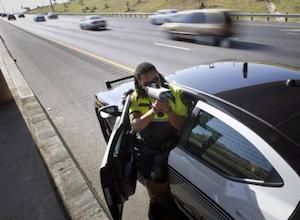
Special Cases: Failure to Stop Tickets and Other Serious Violations
Not all traffic tickets carry the same weight. Some violations are more serious, and missing court on these charges amplifies the consequences significantly. A failure to stop ticket covers several specific Georgia offenses. Running a stop sign is prohibited. Running a red light means disregarding an official traffic-control signal, which is a misdemeanor. Failing to stop for a school bus is governed by statute. Stop sign and traffic signal violations put three points on your driving record, and unlawfully passing a school bus puts six. When you miss court on a failure to stop violation, you face the standard FTA consequences plus the elevated impact of the underlying charge. Those points on your license affect your insurance rates. Combined with FTA fines and a license suspension, the total financial impact can be substantial. School bus stop violations deserve special attention. Georgia takes these seriously. As a misdemeanor the fine can reach $1,000 with up to 12 months in jail, and courts are less inclined to offer leniency when the driver also has an FTA on the case. It is important to distinguish these traffic offenses from failure to stop for law enforcement. Fleeing or attempting to elude a police officer is a separate criminal offense – a high and aggravated misdemeanor, and a felony on a fourth conviction or with aggravating facts. That charge falls under criminal defense rather than routine traffic court and carries far more severe penalties, including prison time.
How to Fix a Failure to Appear in Georgia
If you have an outstanding FTA, take these steps to resolve it: Step 1: Contact the court clerk. Call the clerk's office in the jurisdiction where your ticket was issued. This may be a municipal court, state court, or probate court depending on the county. Ask about your case status and what is needed to get back on the calendar. Step 2: Request a new court date. Ask the clerk whether you can be placed on a new court calendar. Some courts allow this with a phone call. Others require a written motion. Step 3: Hire an attorney to file a motion. An attorney can file a motion to recall the bench warrant and set the case for a new hearing. This is often the fastest and safest path. The motion asks the judge to withdraw the warrant so you can resolve the ticket without risk of arrest. Step 4: Resolve the underlying ticket. Once you have a new court date, you can pay the fine, negotiate a plea, or contest the charge. Your attorney can advise which option makes the most sense for your situation. Step 5: Pay all FTA fees and the DDS restoration fee. After the court confirms your case is resolved, pay the restoration fee to DDS. This is $100, or $90 by mail. Step 6: Confirm reinstatement before driving. Do not assume your license is automatically restored. Contact DDS or check your status online to confirm reinstatement. Driving before confirmation puts you at risk of another charge under Georgia law for operating a vehicle with suspended license. Acting quickly reduces the risk of arrest and often allows for warrant recall without booking.
Can an Attorney Appear in Court for You?
In most Georgia traffic and municipal courts, an attorney can appear on your behalf for misdemeanor traffic matters. This means you may not need to physically appear in court at all. This is especially valuable for FTA cases. Your attorney can file a motion to recall the bench warrant, negotiate with the prosecutor, and resolve the ticket – all without you being present. For many clients, this eliminates the stress and scheduling difficulty of a court appearance. The practical benefits include warrant recall without arrest, negotiated plea agreements that may reduce charges, and avoiding the license suspension trigger. For example, a failure to stop violation might be negotiated down to a non-moving violation that carries no points on your driving record. There are exceptions. Some judges require personal appearance for serious moving violations, cases with prior FTAs, or situations where the judge wants to address the defendant directly. Your attorney can advise whether your specific case requires you to be present. Our firm handles traffic ticket matters across Georgia's municipal courts, state courts, and probate courts. We understand how each jurisdiction processes FTA cases and what it takes to get warrants recalled efficiently. If you do end up standing in front of the judge yourself, it helps to know what to wear in traffic court before your date arrives.
Can You Get a Failure to Appear Dismissed in Georgia?
A Georgia lawyer can ask the court to reopen the case and drop the failure to appear. The motion asks the judge to recall the bench warrant, put the case back on the calendar, and let you pay or contest the ticket. What the court does with that request depends on the judge, the underlying charge, and whether you can show good cause for the missed date. No lawyer can promise a dismissal.
The most common path is filing a motion to recall the bench warrant and requesting the court dismiss the separate FTA charge. Georgia courts generally consider several factors when deciding these motions. Good cause reasons – such as a medical emergency, lack of proper notice, or incarceration in another facility – strengthen a dismissal request. Appearing voluntarily with an attorney also signals to the judge that you take the matter seriously.
It helps to understand the difference between dismissing the FTA charge and quashing the bench warrant. The warrant is the court's order for your arrest. Recalling it removes the immediate arrest risk. Missing court on a signed citation is its own offense, and if you were released on bail it can also be charged under Georgia's bail-jumping statute. Dismissing that charge eliminates the additional criminal exposure.
Uniform traffic citation procedures under Georgia law require the court clerk to first notify the accused by mail and allow 30 days to respond before forwarding the FTA to DDS for license suspension. If the court skipped this step, that procedural gap may support your motion.
Every case is different. Consult a licensed Georgia attorney to evaluate whether dismissal is realistic for your situation.

Punishment for Failure to Appear in Court
The punishment for failure to appear in court in Georgia depends on the severity of the underlying charge. Penalties range from license suspension for a traffic FTA to years in prison for a felony FTA.
Quick reference: Georgia FTA penalties by charge level:
- Traffic citation FTA: Indefinite license suspension until the ticket is resolved, a restoration fee of $100 (or $90 by mail), and a willful failure to appear punishable by a fine up to $200 or up to three days in jail.
- Misdemeanor FTA: If you were released on bail, misdemeanor bail jumping, punishable as a misdemeanor by up to 12 months in jail and a fine up to $1,000.
- Felony FTA: If the underlying charge is a felony, felony bail jumping, punishable by one to five years in prison, a fine of up to $5,000, or both.
Collateral consequences extend beyond the courtroom. A bench warrant goes into statewide databases. Bond forfeiture proceedings may cost you the money or property posted as bail. If you left the state to avoid court on one of the misdemeanors the bail-jumping statute lists, out-of-state bail jumping is a felony carrying one to five years and a $1,000 to $5,000 fine.
Insurance premiums often rise after a license suspension, even once reinstated. An active bench warrant can appear on employment background checks and block firearm purchases. The longer the FTA goes unresolved, the more these consequences compound.
Failure to Appear While Incarcerated
A failure to appear in court while incarcerated in another jurisdiction is one of the strongest grounds for having an FTA dismissed. If you were physically unable to attend court because you were in jail elsewhere, the failure was involuntary – not willful.
The remedy is filing a motion to recall the bench warrant with proof of incarceration. Attach jail booking records, release documents, or a certified letter from the facility confirming the dates you were held. Georgia courts can grant these motions when the documentation is clear.
If the incarceration was in another state, the Interstate Agreement on Detainers may apply. This compact allows one jurisdiction to request temporary custody of an inmate for court proceedings. A writ of habeas corpus ad prosequendum can also be used to produce an inmate for a scheduled hearing.
The court system will not automatically connect the dots between your incarceration and your missed date. You or your attorney must proactively notify the court and file the supporting paperwork. Without that step, the bench warrant and license suspension remain in effect regardless of the reason you missed court.
Failure to Appear Release Form in Georgia and How to Clear It
After you resolve an FTA, you need a release form from the court before DDS will lift your license suspension. This document – sometimes called a clearance letter or court release – notifies DDS that the failure to appear has been addressed and the case is closed.
Here is the step-by-step process to clear your FTA and restore your license:
- Appear in court or have your attorney file a motion to recall the bench warrant and set a new hearing date.
- Resolve the underlying citation. Pay the fine, enter a negotiated plea, or take the case to trial.
- Request the release form from the court clerk. After final disposition, the clerk issues a clearance document to DDS confirming the case is resolved.
- Submit the form to DDS with the reinstatement fee. Under Georgia law, license suspension restoration fees are $100, or $90 when processed by mail. Some courts may waive this fee.
- Confirm your license is active before driving. Check your status through the DDS website or by calling their office directly.
Fee amounts can change. Verify the current reinstatement fee with DDS before submitting payment. If you have multiple FTAs across different courts, you may need a separate release form from each jurisdiction.
What Happens If You Miss Your Court Date for a Traffic Ticket
If you miss your court date for a traffic ticket in Georgia, the consequences run on a 30-day clock. Under Georgia's uniform traffic citation procedures, the court clerk must first send a notice by first-class mail to the address on your citation. That notice gives you 30 days to resolve your charges or enter a not-guilty plea.
If you do not respond within that 30-day window, the clerk forwards your driver's license number to DDS within five days. DDS then suspends your license indefinitely under Georgia law. The suspension remains until you resolve the ticket and pay the license suspension reinstatement fee.
The failure to appear reinstatement fee is $100, or $90 if processed by mail. You cannot pay the fee alone to restore your license. The court must first confirm that your case reached final disposition.
If you have already failed to attend court on a traffic matter, take these steps immediately. Contact the court clerk in the jurisdiction where your ticket was issued. Ask whether you can be placed on a new calendar or whether a written motion is required. Do not drive if you suspect your license may be suspended – a new charge for driving on a suspended license will make the situation significantly worse. Retaining an attorney is often the fastest way to recall the warrant and get your case back on track.
Speak With a Georgia Failure to Appear Attorney
If you have an outstanding failure to appear on a traffic ticket or misdemeanor charge in Georgia, acting quickly can prevent an arrest on a bench warrant and limit the damage to your driving record. The sooner the warrant is recalled, the sooner you can work toward resolving the underlying charge – and in some cases, pursuing a dismissal of the FTA itself.
An attorney at Kohn & Yager LLC can file a motion to recall your warrant, represent you in court, and guide you through the DDS reinstatement process. In many cases, we handle FTA matters without you needing to appear in person.
Contact us today for a free consultation. We will review your case, explain your options, and take immediate steps to protect your license and your record. Every case is different, and results depend on the specific facts and circumstances.

Frequently Asked Questions
Can You Get a Failure to Appear Charge Dismissed in Georgia?
Dismissal is possible depending on the circumstances. Courts may dismiss an FTA charge when the defendant shows good cause – such as a medical emergency, lack of proper notice, or incarceration elsewhere. Filing a motion through an attorney and appearing voluntarily improves the chances. However, dismissal is never guaranteed.
What Is the Punishment for Failure to Appear in Court in Georgia?
For a traffic citation FTA, the main penalty is indefinite license suspension plus a restoration fee, and a willful failure to appear can also bring a fine up to $200 or up to three days in jail. If you were released on bail, misdemeanor bail jumping is a misdemeanor; felony bail jumping carries one to five years in prison and up to a $5,000 fine under Georgia law. Collateral consequences include bench warrants, bond forfeiture, and background check issues.
What Happens If You Fail to Appear in Court While Incarcerated in Another Jail?
If you were jailed in another facility and could not attend your court date, the failure was involuntary. An attorney can file a motion to recall the bench warrant with proof of incarceration. Courts can grant these motions when supported by booking records or a certified letter from the facility.
How Do You Get a Failure to Appear Release Form in Georgia?
After resolving your case, the court clerk issues a release or clearance form to DDS. You must also pay the reinstatement fee – currently $100, or $90 by mail. DDS will not lift the suspension until it receives both the court's clearance and your fee payment under Georgia's license suspension statute.
How Long Does a Bench Warrant for Failure to Appear Stay Active in Georgia?
A bench warrant for an FTA does not expire. It remains active in Georgia's law enforcement databases indefinitely until you resolve the underlying case. The warrant can surface during traffic stops, background checks, firearm purchases, and other encounters with law enforcement.