- Free Consultation, Call 24/7: (404) 567-5515 Tap Here To Call Us




How Long Will 1 Beer Show Up on a Breathalyzer?


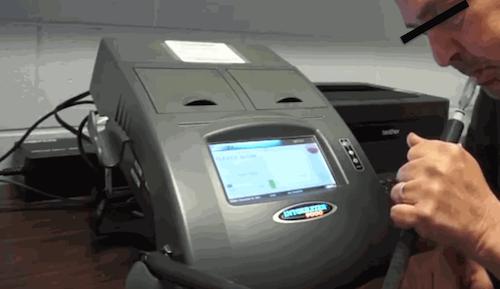

One standard beer typically registers on a breathalyzer for roughly 15 minutes to 2 hours. That is a general range, not a fixed rule. The detection window depends on your body weight, your food intake, and how quickly you consumed the drink. Alcohol reaches your breath about 15 minutes after the first sip. Your body then eliminates it at a slow and relatively constant rate. Everyone metabolizes alcohol a little differently, so that rate varies from one person to the next.
A single 12-oz beer at 5% ABV lifts most adults to a blood alcohol level of roughly 0.01 to 0.03. That is a small amount, and it clears relatively quickly. But these figures are broad averages. Two people can drink the same beer at the same time and blow two different readings. The amount of alcohol in the drink is only one input. Body size, food intake, and individual metabolism all affect the result. Georgia DUI arrests often turn on these readings, so it helps to understand how the instrument actually works.
How Breathalyzers Detect Alcohol
When someone drinks alcohol, only a tiny fraction of it ever reaches the breath. A breathalyzer does not sample your blood. It samples deep-lung air, sometimes called alveolar air. As blood moves through your lungs, some alcohol crosses into the air sacs and you breathe it out. The device reads that air and applies a fixed breath-to-blood partition ratio. From that ratio it produces an estimate of your blood alcohol concentration.
Two kinds of sensors do this work. Evidentiary instruments used by law enforcement officers rely on fuel cell technology. Fuel cell sensors run a small chemical reaction keyed to ethanol, so they are more accurate. They are also less likely to be thrown off by other substances on your breath. Inexpensive personal breathalyzers use semiconductor sensors that pick up a wider range of substances. Those units are far less reliable, and their readings are not proof of a crime.
In Georgia, the official evidentiary breath testing instrument is the Intoxilyzer 9000. Under Georgia law, a chemical analysis of breath counts only if the machine was in good working order. Every electronic component must be attached the way the manufacturer designed it. The person running the test must hold a valid permit from the state crime lab, which Georgia calls the Division of Forensic Sciences. The same statute calls for two breath samples in a row. The two readings may not differ by more than 0.020. If they agree that closely, the lower of the two is the reading that counts against you.

How Long Does a Breathalyzer Test Take?
The blow itself is short. Most people blow for 5 to 10 seconds. The full evidentiary testing process at the jail takes considerably longer than that.
Before the evidentiary test, the officer is trained to observe you for about 20 minutes. During that observation period the officer watches for a burp, a hiccup, vomit, or a sip of anything. Each of those can push raw alcohol back into your mouth. Mouth alcohol can spike a reading well above your true level, and acid reflux can do the same. This observation period is part of the state's approved breath testing routine rather than a rule written into the Georgia Code.
The officer must also read you Georgia's implied consent notice at the time the test is requested. After the observation period, you provide two sequential samples on the Intoxilyzer 9000. Add up the implied consent advisement, the observation period, both samples, and the processing time. From start to finish, the step usually runs about 25 to 40 minutes.
What Changes How Long Alcohol Stays in Your Breath
Many variables influence the detection window, which is why no chart can give you an exact number.
Body weight and composition are the biggest of them. A person who weighs 130 pounds will often reach a higher reading from one beer than a person who weighs 200 pounds. Alcohol distributes through body water, and muscle tissue holds more water than fat does. Two people of the same weight can still land in different places.
Biological sex affects detection windows as well. Women tend to carry a higher share of body fat. They also tend to have lower levels of the stomach enzyme that begins breaking alcohol down. Both traits can push the same drink to a higher reading.
Eating before or while drinking slows absorption considerably. Drink on an empty stomach and the alcohol reaches your blood quickly, so the peak is higher. A full meal, above all one with protein and fat, spreads the same drink over a longer period and lowers the peak.
Speed matters too. Finish a beer in five minutes and you will peak sooner than if you sip it over half an hour. Age, general health, and hydration level all play a role, and so do some medications that affect liver function. Because these factors vary so widely, any detection timeline is an estimate rather than a guarantee.
Detection Windows by Number of Drinks
The estimates below assume an average adult weighing roughly 160 to 180 pounds. Individual results can fall well outside these ranges.
1 beer (12 oz, 5% ABV) – One beer lifts most adults to about 0.01 to 0.03. The body eliminates alcohol at approximately 0.015 per hour. Most people clear one beer within 15 minutes to 2 hours of the last sip. That is the shortest window on this list, and it is the practical answer to the question how long will 1 beer show up on a breathalyzer. As a rough planning figure, the body clears about one standard drink per hour.
3 to 4 beers – Three or four standard beers may produce a peak concentration near 0.05 to 0.10 in an average adult. At the usual elimination rate, that can take approximately 3 to 6 hours to fade. A late night at this level can still register on a breathalyzer the next morning.
6 beers – Six standard beers may produce a peak concentration near 0.10 to 0.15 or higher. Elimination from that level can take approximately 6 to 10 hours. Stop drinking at midnight and you may still blow a positive reading at 8 or 9 a.m.
How Long Will 9 Beers Show up on a Breathalyzer?
Nine standard beers is a very different situation from one. Nine of them may peak near 0.15 to 0.22 or higher in an average adult. At the usual elimination rate, that can take 9 to 14 hours to clear, and frequently longer. A night that heavy can leave alcohol on your breath well into the following day. Many morning DUI arrests in Georgia begin exactly this way. The driver feels fine, sleeps a few hours, and still blows over the limit on the drive to work.
How Long Can Breathalyzers Detect Alcohol?
So how long do breathalyzers detect alcohol in a normal case? For most drinkers the honest answer is less than a full day. The body eliminates alcohol at approximately 0.015 per hour. Even a dangerously high concentration of 0.30 would clear in roughly 20 hours. Most people who drink heavily in a single evening have no measurable breath alcohol remaining within 12 to 16 hours. For a genuinely heavy night, plan on 12 to 24 hours before a breath test comes back clean.
Can a Breathalyzer Detect Alcohol After 24 Hours?
This is one of the questions people ask most often about breath testing. In nearly every ordinary drinking scenario, the answer is no. The arithmetic above is the reason. A single evening of drinking rarely leaves detectable breath alcohol a full day later.
There are rare exceptions. Extreme binge drinking that pushes a concentration past 0.35 could theoretically leave traces near the 24-hour mark. A few medical conditions can also produce unexpected results. Auto-brewery syndrome is a rare gut condition in which yeast produces alcohol inside the body, and it can put alcohol on the breath with no drinking at all. Uncontrolled diabetes can raise acetone levels, and so can a strict ketogenic diet. Some less sophisticated sensors mistake acetone for ethanol. The fuel cell in the Intoxilyzer 9000 is designed to tell the two apart.
Can a Breathalyzer Detect Alcohol After 48 Hours?
The two-day version of the question has an even clearer answer. A breathalyzer will not detect a drink you consumed two days earlier. The body simply cannot retain breath-detectable alcohol for that long. Blood, urine, and hair follicle testing have considerably longer detection windows, but standard breath testing does not.
What Can Cause a False Positive Breath Test
Not every elevated reading reflects actual impairment. Several ordinary substances and conditions can push a number up.
Mouthwash, breath spray, and some cough syrups contain alcohol. Using one shortly before a test can leave residual alcohol in your mouth, and that alone can inflate the reading. The 20-minute observation period exists to let mouth alcohol dissipate.
Gastroesophageal reflux disease can push alcohol vapor from the stomach up into the mouth, and so can recent burping or vomiting. If the officer misses that during the observation period, the reading is open to challenge.
Low-carb and ketogenic diets cause the body to produce acetone as a byproduct of fat metabolism. Some sensors, particularly the semiconductor units in personal devices, cannot reliably separate acetone from ethanol. Certain asthma inhalers contain alcohol or a propellant that can influence a reading.
Finally, improper calibration or maintenance can produce an unreliable number. Georgia law requires the testing instrument to be operated with every electronic component properly attached and in good working order. A defense attorney can demand the maintenance records and investigate whether that was true on the night of your test.
Refusing or Failing a Breath Test in Georgia
Georgia has an implied consent law. Under it, any person who drives on a Georgia road is deemed to have consented to chemical testing if arrested for driving under the influence. The testing may cover blood, breath, or urine.
The arresting officer must read the notice aloud when requesting the test. The notice informs you that a refusal will cost your Georgia license or driving privilege for a minimum period of one year. The notice also warns that refusing a blood or urine test may be offered into evidence against you at trial. Breath is deliberately not on that list. In Elliott v. State (2019), the Georgia Supreme Court held that a driver's refusal of a state breath test may not be used as evidence of guilt at trial. The Georgia Code now tracks that ruling.
An important distinction exists between the roadside portable breath test and the evidentiary test administered after arrest. The roadside unit is a preliminary screening tool used during the traffic stop. Declining it does not carry the one-year license penalty that follows a refusal of the evidentiary test. Both decisions still carry consequences that depend on the specific facts of your case.
There is no trick to passing a breathalyzer. Coffee, cold air, and a shower do nothing; only time lowers the reading. Every DUI stop is different, so consult a licensed Georgia DUI attorney about your own circumstances rather than relying on general information alone.
Speak With a Georgia DUI Defense Attorney
Breathalyzer results are not automatically accurate, and they are not automatically admissible. The Intoxilyzer 9000 must be properly calibrated and maintained. The operator must hold a valid permit from the Division of Forensic Sciences. The observation period must be completed properly. Both sequential samples must land within the required tolerance. A failure at any step in that process can give your attorney grounds to challenge the number.
A Georgia DUI defense attorney familiar with Intoxilyzer 9000 challenges can demand the maintenance records and the operator's training file. From there your attorney can evaluate whether testing procedures were followed correctly in your case. At Kohn & Yager LLC, our work is Georgia DUI defense. We know how breath evidence is collected, stored, and challenged in Georgia courts.
If you were arrested for driving under the influence, the clock is short. You have only 30 days from the suspension notice handed to you at arrest to request an administrative license hearing from the state. That request also carries a filing fee. Miss the deadline and you waive the hearing entirely. Contact Kohn & Yager LLC for a free consultation to discuss your case and your available options.

Frequently Asked Questions
Can One Beer Put You Over the Legal Limit in Georgia?
For most adults, one 12-oz beer at 5% ABV will not reach 0.08, the limit for drivers who are 21 and older. One beer tends to land near 0.01 to 0.03. But a very small person drinking on an empty stomach can go higher. Georgia sets a much lower limit of 0.02 for drivers under 21, so for a young driver one beer can be enough to cause a problem.
How Accurate Are Breath Tests?
The evidence-grade state machines are considered reliable when they are maintained, calibrated, and operated by trained personnel. They are not perfect. Mouth alcohol, medical conditions, poor upkeep, and operator error can all skew a reading. Georgia law calls for two samples in a row that agree within 0.020, and the lower one is the reading used. That rule exists because a single number is not always right.
Will Mouthwash Affect a Breath Test?
Yes. Many well known mouthwash brands contain a great deal of alcohol, some as much as 25 percent by volume. Using one just before a test can leave raw alcohol in your mouth and drive the reading up. The 20-minute waiting period is meant to let that fade. If the officer cut it short, you may have grounds to challenge the result.
What Happens if I Refuse a Breath Test in Georgia?
Refusing the official test after a lawful arrest costs your Georgia license or driving privilege for at least one year. Under the current Georgia notice, refusing a blood or urine test may be offered into evidence against you at trial. Refusing a breath test may not, under Elliott v. State. The roadside hand-held unit is a separate matter and does not carry the same one-year penalty. Call a Georgia DUI lawyer right away if you are facing a refusal case.
How Long Does One Drink Stay Detectable?
After one standard drink, most adults are clear within 15 minutes to 2 hours. The body eliminates alcohol at roughly 0.015 per hour, so a small amount does not last long. Heavy drinking is a different story and can take most of a day to fade. No chart fits every person, so treat any range you read as an estimate.