- Free Consultation, Call 24/7: (404) 567-5515 Tap Here To Call Us




How Many DUIs Until You Lose Your License in Georgia?


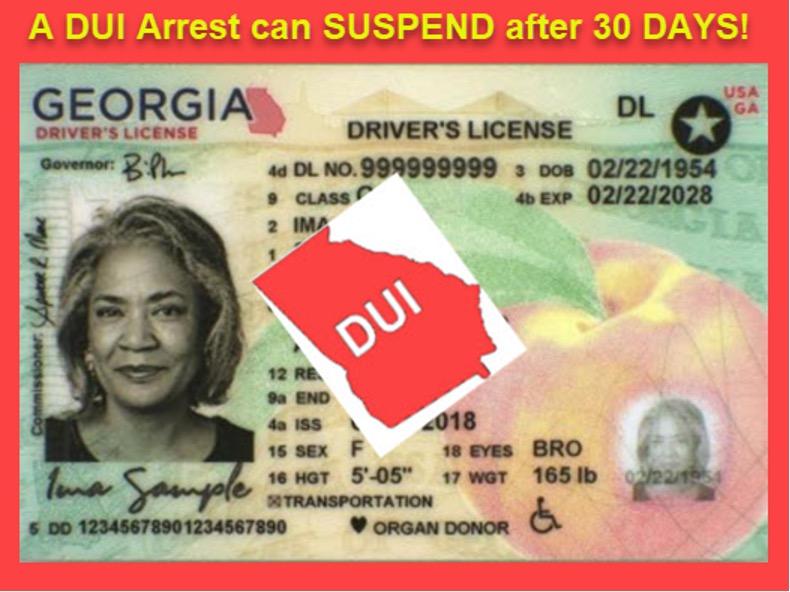
How Georgia Handles DUI License Suspensions

In Georgia, you can lose your license after even a first DUI conviction. Each later offense brings a longer suspension. A second conviction within five years brings a three-year suspension. A third triggers a five-year revocation and habitual violator status. A fourth within ten years is charged as a felony. So the real answer to how many DUI before you lose your license turns on two things. Which kind of suspension applies, and how far back the state counts.
Georgia does not run drunk driving through its point system. A speeding ticket adds points. A DUI conviction instead triggers an automatic license suspension, whatever your point total is. That surprises a lot of drivers who expect it to work like any other ticket.
Two suspension tracks run side by side after an arrest. The first is an administrative license suspension, which is triggered by the arrest itself and begins before your case ever reaches a courtroom. The second is the suspension a court imposes after a conviction. Both can apply to the same arrest, and each carries its own timeline and its own reinstatement requirements.
License Suspension After a First DUI in Georgia
A first DUI conviction in Georgia brings a twelve-month suspension. Most first-time offenders do not lose all driving rights for the full year.
A driver with no prior DUI conviction in the past five years can apply for a limited driving permit right away. That permit covers trips to work, school, medical care, and court-ordered programs. After 120 days, the same driver may apply to the department for early reinstatement of the full license. Early reinstatement requires proof of completion of a certified DUI Alcohol or Drug Use Risk Reduction Program, plus a restoration fee of $210, or $200 when the paperwork is processed by mail.
So most first offenders keep driving in some form. The restrictions are real, but a limited permit prevents the total loss of mobility that most people fear when they are arrested. It is not the same as a full license. A first offense also adds no points to your driving record, so the suspension itself is the entire penalty on the license side.
The suspension that starts at arrest is separate from the one a judge orders later. If you refused a chemical test or failed a breath test, that first process starts right away. Acting inside the legal deadline to fight it is critical.

What Happens to Your License After a Second DUI
A second conviction within five years is a much harder hit. Georgia suspends the license for three years.
The driver cannot even apply for reinstatement until eighteen months of that suspension have passed. Reinstatement then requires proof of completion of a DUI Alcohol or Drug Use Risk Reduction Program, installation and maintenance of an ignition interlock device for one year unless the requirement is waived for financial hardship, and payment of the restoration fee. The sentencing court must also order a clinical evaluation and any substance abuse treatment that evaluation recommends.
The five-year window is measured from the date of the earlier arrest to the date of the current arrest, not from either conviction date. What counts is the day you were pulled over, not the day the case finally resolved in court. Two arrests inside that window count as repeat offenses for suspension purposes, even if one of the cases took years to reach a final disposition.
A second conviction inside five years costs more than a license. The court must order the license plates surrendered on every vehicle registered in that person's name. The court then forwards them to the local tag agent. So the order reaches any car titled to the driver, not just the one they were stopped in.
A second conviction also sets up the third. Georgia treats repeat drunk driving as a pattern, and the penalties climb with each one.
Third DUI: License Revocation and Habitual Violator Status
A third conviction within five years crosses a hard line. Georgia declares the driver a habitual violator. The license is revoked, not just suspended, and the revocation runs five years.
No driving permit is available during the first two years. That means no legal driving at all for two full years. After that, the driver may apply for a probationary license. Approval is not automatic.
The process itself is short. The Department of Driver Services mails a notice declaring habitual violator status, and the driver has to surrender the license. Operating a vehicle after receiving that notice is a felony in Georgia, punishable by a fine of at least $750, imprisonment for one to five years, or both. That charge is entirely separate from the underlying drunk driving prosecution.
Revocation is not the same as suspension. A suspended license becomes valid again on its own once the term ends and the reinstatement conditions are satisfied. A revoked license does not. The driver has to apply, meet every statutory condition, and wait for the department to agree. Georgia law also bars the department from issuing a new license until it is satisfied, after investigating the applicant's character, habits, and driving ability, that it is safe to grant the privilege again.
A third conviction in five years is a turning point. It changes your legal status, and it narrows every option after it.
Fourth DUI: A Felony Charge in Georgia
A fourth conviction within ten years is a felony in Georgia. Only convictions dated on or after July 1, 2008 count toward that total.
The felony carries a fine of $1,000 to $5,000 and a prison term of one to five years, though the judge may suspend or probate all but ninety days of it. Georgia's DUI statutes do not set a separate lifetime license ban, which is a common misconception. What usually drives the license outcome at this stage is the five-year rule instead. A driver with three or more convictions inside a five-year period is a habitual violator, so the license is revoked for five years.
Getting a license back after that revocation is not a formality. The department cannot issue a new license to a habitual violator revoked for three DUI convictions in five years until that person submits proof of completing a risk reduction program. The department also has to weigh the applicant's character, habits, and driving ability before deciding it is safe to restore the privilege, which makes reinstatement a judgment call rather than a right. At this level the damage reaches well past the license, because a felony conviction affects employment, housing, and civil rights.
How Many Points Is a DUI on Your License in Georgia?
Drivers often ask how many points is a DUI on your license in Georgia. The answer surprises people. A DUI conviction adds no points at all to your driving record.
Georgia's point system assigns points for most moving violations. Speeding, running a red light, aggressive driving, and reckless driving all carry a point value. The commissioner suspends the license of any driver who accumulates fifteen or more points in a consecutive twenty-four month period. Driving under the influence is not on that schedule at all, so it runs on an entirely separate track.
A conviction triggers an automatic suspension instead. How long it lasts depends on how many prior convictions fall inside the lookback window. That is harsher than a points model. You cannot cancel it out with a defensive driving course or a point reduction program.
Some states run drunk driving through points alone. The offense adds a big block of points, and the suspension only lands if the total gets high enough. Georgia skips that step. One conviction suspends the license even if the rest of your record is spotless.
That matters, because people search for drunk driving points hoping to find a number they can manage. In Georgia there is no such number. The suspension is automatic.

The 30-Day Deadline That Protects Your License
After a DUI arrest in Georgia, one deadline decides whether you keep driving. You have thirty days from the date of the suspension notice to act. You either submit a written hearing request with the $150 filing fee, or you elect an ignition interlock device limited driving permit instead.
That deadline used to be ten days, and plenty of people still call it the "ten-day rule." Miss it and there is only one result. The license is suspended with no hearing and no chance to contest it.
That hearing is separate from your criminal case, and the issues it can reach are narrow. Did the officer have reasonable grounds to make the arrest? Were you properly advised of your implied consent rights? Did you refuse or fail a chemical test? A favorable result there can preserve your driving privileges while the criminal case works its way through court.
Choosing the interlock permit instead lets you keep driving right away with the device in the car. That can be the better call, depending on the facts. Either way, you have to act inside the same window.
This is the most time-sensitive part of a Georgia DUI defense. Many drivers never realize the license process runs on its own clock, and a faster one than the court case.
Speak With a Georgia DUI Defense Attorney
The clock on your license starts at the arrest. Every day you wait moves you closer to a suspension you might have fought.
A DUI defense attorney can contest the license suspension at that hearing, negotiate a reduced charge that may avoid the mandatory suspension altogether, and guide you through the limited permit application. The department's administrative process carries strict procedural requirements, and a defective hearing request can cost you the opportunity entirely.
Kohn & Yager LLC handles drunk driving defense throughout Georgia. We know the license procedures that run alongside a criminal case. A free consultation can clarify your options and the deadlines that apply to you.
Do not wait until that window closes. Contact a licensed Georgia DUI attorney to talk through your case and protect your license.

Frequently Asked Questions
How Many DUIs to Lose License for Good in Georgia?
Georgia's DUI statutes do not set a lifetime license ban. A third conviction within five years makes the driver a habitual violator, and the license is revoked for five years. A fourth within ten years is a felony charge. Getting a license back after a habitual violator revocation is not automatic. The Department of Driver Services has to decide it is safe to let that person drive again.
Does a DUI Add Points to Your Driver's License in Georgia?
A DUI conviction in Georgia adds no points to your driving record. It triggers an automatic license suspension under a separate set of rules. The point system covers other moving violations, not drunk driving.
Can I Get a Limited Driving Permit After a DUI in Georgia?
A driver with no prior DUI in the past five years can apply for a limited driving permit right away. After 120 days that driver may also ask to reinstate the full license, with proof of a DUI risk reduction course and a restoration fee. For a second offense within five years, the wait to apply for reinstatement stretches to eighteen months.
How Long Does a DUI License Suspension Last for a First Offense in Georgia?
A first DUI conviction carries a twelve-month suspension. First offenders can apply for a limited driving permit that covers work, school, medical care, and court-ordered programs. After 120 days they may also ask the state to reinstate the full license.
What Is Habitual Violator Status in Georgia and When Does It Apply?
Georgia declares a driver a habitual violator after three serious driving offenses within five years. DUI convictions count toward that total. The label brings a five-year revocation with no permit for the first two years. Driving after that notice is a felony.