- Free Consultation, Call 24/7: (404) 567-5515 Tap Here To Call Us




Impeding Traffic in Georgia: Slow Poke Law, Fines, and Defenses


Impeding traffic in Georgia means driving so slowly that you interfere with the normal and reasonable movement of other vehicles. It happens most often when a driver stays in the left lane while faster traffic comes up from behind. Yes, impeding traffic is illegal in Georgia, and it is a misdemeanor traffic offense rather than a simple warning.

The rule comes from Georgia's impeding traffic law. The statute says no person shall drive a motor vehicle at such a slow speed as to impede the normal and reasonable movement of traffic. A 2014 amendment added the left-lane duty that Georgia drivers now call the slow poke law. That change requires a driver in the leftmost lane to move over when a faster vehicle approaches from behind.
Officers write these tickets across the state, but enforcement concentrates on the busy metro corridors: I-285, I-85, I-75, and Georgia 400. A conviction brings a fine, points on your license, and a misdemeanor record. Kohn & Yager LLC has defended Georgia traffic and misdemeanor charges in Atlanta-area courts for more than 25 years, and these cases are often more contestable than drivers assume.
When Driving Slowly in the Left Lane Is Legal

The statute itself builds in flexibility. A reduced speed for safe operation is permitted when that speed is necessary for safe operation. That single phrase is the legal hook behind nearly every exception below. If your slower speed served safety or followed the law, you were not impeding traffic.
Traffic congestion. When every lane is backed up, you cannot move right into a gap that does not exist. You would need to show the traffic volume at the time, which is why the location and the hour of the stop matter.
Inclement weather, obstructions, or hazards. Rain, ice, fog, debris, and crash scenes all justify slowing down. Weather records and photos of the roadway help support this.
Compliance with an official traffic control device. If a signal, sign, or work-zone marker set your speed, you were following the law, not breaking it. Point to the specific device and where it stood.
Exiting or turning left. Drivers may use the left lane to reach an exit or complete a left turn. You would need to show that the turn or exit was close enough to make the lane choice reasonable.
Toll payment. On toll highways, drivers may stay left when they need to pay a toll or use a pass. The exception exists because the toll infrastructure forces the lane position.
Authorized emergency vehicles. Officers, medics, and firefighters performing official duties are exempt, since their work often requires slow or stopped travel.
Highway maintenance and construction vehicles. Crews working on the road cannot keep pace with traffic, so the law carves them out.
These exceptions are not automatic. The officer may still write the citation, and the court decides whether the reduced speed was necessary. That is why the details of the stop matter so much.
Fines and Penalties for an Impeding Traffic Ticket in Georgia
Georgia sets no separate penalty inside the impeding statute. Georgia's traffic penalties supply it instead. That statute makes most traffic offenses misdemeanors and caps the fine at $1,000. The ceiling is the number drivers hear about, but few first-time defendants pay anything close to it.
In practice, the base fine that Georgia municipal and county courts set for a first impeding traffic citation runs well below the maximum. The printed amount is only the starting point. Georgia adds mandatory state surcharges to every traffic fine, and local courts add their own costs on top. Together those add-ons can push the assessed total far past the number on the ticket. The final figure depends on the court named on the citation, so two drivers stopped on the same stretch of I-285 may owe different amounts.
The money is often the smallest part of the problem. A conviction adds 3 points to your record through the Georgia Department of Driver Services. Insurers treat a points-bearing moving violation as a risk signal. The surcharge that follows may cost more over three years than the fine and court costs combined, though the effect depends on your insurer and your driving history.
A ticket for impeding traffic also produces a misdemeanor conviction. It is a traffic misdemeanor, not a felony, but it can still surface on a criminal history check. That matters for drivers who hold a commercial license, drive for a living, or expect a background screening.
Ignoring the ticket makes all of this worse. Missing the court date can trigger a failure-to-appear, and the state may suspend your license until you clear it. Late payment can add its own penalties, again depending on the court.
None of these numbers are fixed. Actual fines, court costs, license consequences, and insurance effects vary by the court, the driver's record, and the insurance company involved.
What to Do After You Get an Impeding Traffic Citation
Start by reading the citation closely. It names the court, sets an appearance date, and shows whether the officer checked the box waiving your appearance. Those three details drive everything that follows.
Understand what paying does. Paying the ticket online or by mail is a guilty plea. It closes the case, but it also triggers the 3 points, the misdemeanor conviction, and the insurance surcharge. Paying is not a way to make the charge disappear.
Watch the deadline. The court date on the citation is real, and skipping it can lead to a failure-to-appear and a license suspension. If you plan to contest the charge, act well before that date.
Know what contesting involves. You enter a not-guilty plea with the municipal or county court listed on the ticket, and the court sets a hearing. At that hearing, the officer testifies about what he or she saw. In most impeding traffic cases, that testimony is the entire case. There is no radar reading and no calibration record, only an officer's judgment about whether other vehicles were actually slowed. That makes these citations more contestable than drivers expect.
Preserve evidence right away. Dashcam footage often overwrites itself within weeks. Save the file, note the exact time and mile marker, pull weather records for that day, and write down the names of any passengers. Traffic camera and construction records may also help, but they do not stay available forever.
Write down your own account while it is fresh. Note the weather, the number of lanes, whether traffic was heavy, where the officer first appeared behind you, and what the officer said at the window. Memory fades fast, and a contemporaneous note carries more weight months later than a recollection built after the fact.
Outcomes vary by court and by the facts of the stop. A criminal defense attorney can review the citation and explain what your specific court typically does with these charges.
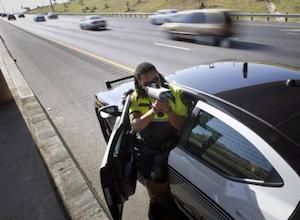
Does an Impeding Traffic Conviction Add Points to Your License?
Yes, an impeding the flow of traffic conviction carries 3 points. For drivers under 21 years of age, accumulating 4 or more points within a 24-month period leads to an automatic license suspension. A single conviction would put such a driver one point away from suspension if they already have one other violation. For drivers 21 and over, accumulating 15 points within a 24-month period results in a license suspension, and this conviction moves the driver closer to that threshold.
Points also raise insurance costs. Insurance companies view drivers with points as higher risks and often increase rates. Points can create other indirect problems too, including difficulty getting coverage and a requirement to take driver education courses. If the state suspends your license over accumulated points, you must go through reinstatement, which takes time and money. Repeat offenses or additional points can lead to longer suspensions or even revocation.
Points do not stay forever. They fall off the record two years after the violation date, so the running total looks at a rolling 24-month window. Georgia also lets a driver petition to reduce points by completing a certified defensive driving course, though the state limits how often a driver may use that relief. Eligibility depends on your driving history and, in some cases, on the court.
The stakes rise sharply for some drivers. A commercial driver may face disqualification consequences that a standard license holder never sees, and a driver on a restricted or probationary permit may lose limited driving privileges entirely. For a driver under 21, one conviction is disproportionately dangerous, since a single prior violation already puts them at the suspension line.
Defenses to an Impeding Traffic Charge in Georgia
Because the statute allows reduced speed when necessary for safe operation, most defenses aim at that language. Here are the arguments you and your lawyer may discuss.
Your speed matched the road and weather conditions. Wet pavement, heavy traffic, fog, or ice can make a slower speed the safe choice. Weather records and photographs support this.
You followed an official traffic control device. If a signal, a posted advisory speed, or a work-zone sign set your pace, you were obeying the law rather than breaking it.
You slowed to avoid a hazard or obstruction. Construction zones, crash scenes, and debris all require caution. Reducing speed there is reasonable driving.
You kept a safe following distance. In heavy traffic or reduced visibility, backing off the car ahead is exactly what a careful driver does.
You reacted to an emergency. Slowing for an emergency vehicle, a pedestrian, or an animal in the roadway is a legitimate reason to drop your speed.
You were in the left lane for a lawful reason. Preparing to turn left, taking a left exit, or passing slower traffic on the right all permit left-lane travel, as long as you return right when it is safe.
No traffic was actually impeded. The officer must be able to describe vehicles that slowed, braked, or changed lanes because of you. Observing a slow car is not the same as observing impeded traffic. If the road behind you was empty, this core element may fail.
The lane configuration did not trigger the duty. The left-lane rule applies only where two or more lanes travel in the same direction. On a road with one lane each way, that duty does not apply.
Evidence strengthens all of these points. Consider presenting records or expert testimony that supports your account. A traffic engineer or safety expert may be able to testify that your speed was reasonable given the conditions, which can turn a credibility contest into a factual one.
Is Impeding Traffic a Crime or a Moving Violation?
Is impeding traffic illegal in Georgia, or is it just poor road manners? It is illegal. A violation of Georgia's impeding traffic law is a misdemeanor under Georgia's traffic penalties.
That classification answers the question drivers ask most often. When people ask is impeding traffic a crime, the technical answer is yes. A misdemeanor is a criminal offense, and a conviction can appear on a criminal history. It is not a civil infraction the way a parking ticket is. Parking tickets are handled administratively and never create a criminal record.
The moving violation label is different but also applies. The charge is a moving violation because the vehicle was in motion when the offense occurred. That is why the Department of Driver Services assesses 3 points and why insurers surcharge for it. Non-moving violations, such as equipment defects and parking tickets, carry no points and rarely affect insurance.
So both labels are correct at once. The charge is a misdemeanor criminal offense and a moving violation, and each label explains a different consequence. One creates the record, the other creates the points.
The label also shapes how a conviction follows you. A moving violation reaches your driving record and your insurance. A misdemeanor reaches background checks that employers, licensing boards, and landlords may run. One citation can produce both results at the same time, which is why drivers who would shrug off a parking ticket should take this charge seriously.
Because it is a misdemeanor, you have the right to contest it in the municipal or county court that issued it rather than simply paying. How a specific court handles the charge may depend on the jurisdiction, the officer's citation, and the facts of the stop.
Georgia's Left Lane Law Explained
The Georgia left lane law lives in the state's left-lane rule. It says a driver in the leftmost lane must move over when a faster vehicle approaches from behind. Some drivers call it the GA left lane law, and most people mean this rule when they say slow poke law.
The trigger is the other vehicle, not your speedometer. The duty arises when an overtaking vehicle comes up behind you. It does not depend on how your speed compares to the posted limit.
That surprises many drivers. Traveling at the speed limit is not a defense. Traveling above it is not a defense either. If a faster vehicle approached and you stayed left, the duty applied. The other driver's speeding does not excuse a failure to yield the passing lane, and officers along I-285 and Georgia 400 write these citations regularly on that basis.
The rule applies only on roadways with two or more lanes traveling in the same direction. It does not apply on a standard road with one lane each way, and high occupancy vehicle lanes are treated separately.
The practical takeaway is simple. Use the left lane to pass, to turn left, or to exit left, then return to the right lane when it is safe. Georgia lawmakers added this duty in 2014 to smooth traffic flow and reduce the lane-weaving that causes crashes.
Impeding Traffic Versus a Speeding Ticket
Both charges are misdemeanor moving violations, and both add points. The point totals differ. Speeding points scale with how far over the limit you were, ranging from none at the low end up to 6 points at the high end. Impeding traffic carries a flat 3 points no matter how slow you were driving.
The evidence differs even more. A speeding case usually turns on a device: radar, laser, or pacing, plus calibration and training records. Those records either exist or they do not. An impeding traffic case turns on the officer's subjective judgment about whether traffic was actually impeded. That difference often gives the defense better material, because judgment is easier to question than a calibrated instrument.
Insurance treats the two differently in practice. Insurers know exactly what to do with a speeding conviction. Impeding traffic is less familiar to them, but it is still a surcharged moving violation on your record.
Officers sometimes write an impeding traffic charge in place of a more serious one, and sometimes write both from the same stop. Georgia also bans lane splitting, which prohibits a motorcyclist from riding between lanes of stopped or slowed traffic. Drivers often confuse the two rules, but lane splitting is its own offense and is not legal in Georgia.
How Our Firm Handles Impeding Traffic Cases
Kohn & Yager LLC has handled Georgia traffic and misdemeanor cases for more than 25 years. Larry Kohn and Cory Yager appear regularly in the municipal and county courts along the I-285, I-85, I-75, and Georgia 400 corridors, where slow poke enforcement concentrates.
That familiarity matters because these courts are not interchangeable. Some prosecutors will discuss a reduction to a non-points offense for a driver with a clean record. Others take a harder line and set the case for a bench trial. Knowing which court you are in shapes the strategy from the first phone call.
We start with the citation and the scene. Where was the stop, how many lanes ran in that direction, and what did traffic look like at that hour? A common pattern involves a driver cited on I-285 during heavy congestion who had no safe opening to move right. Another involves a driver ticketed at or above the posted limit who assumed that speed alone answered the charge.
From there, the judgment call is practical. Some cases are worth trying, because the officer cannot describe any vehicle that was actually slowed. Others are better resolved through a negotiated reduction that keeps points off the license. We do not promise a result in either direction. What we can do is review the facts and explain the realistic range of outcomes in your court.
Talk to an Impeding Traffic Lawyer in Atlanta
An impeding traffic citation rests on one officer's judgment about traffic conditions, which makes it more contestable than most drivers assume. Talking to an impeding traffic lawyer early gives you the clearest view of your options.
Timing matters. The court date on your citation sets a real deadline, and dashcam footage can overwrite itself within weeks. Weather and traffic records become harder to pull as time passes.
A consultation with Kohn & Yager LLC is free. We review the citation, the location, the lane configuration, and what traffic was doing when the officer stopped you. On a first call, we walk through the charge, the points at stake, and what your specific court typically does with these cases. Depending on the facts, a dismissal, a reduction, or a trial may be worth pursuing.

Frequently Asked Questions About Impeding Traffic in Georgia
Can I be charged with impeding traffic if I was driving the speed limit?
Yes, if you were in the left lane and not actively passing other vehicles or preparing to turn left. The left-lane duty is triggered by a faster vehicle approaching from behind, so your speed relative to the posted limit does not settle the question.
Is impeding traffic a moving violation in Georgia?
Yes. Drivers frequently ask is impeding traffic a moving violation, and it is, because the vehicle was in motion. That is why the charge carries the 3 license points described above and why insurers surcharge for it.
How much is the fine for an impeding traffic citation in Georgia?
The statutory maximum is $1,000 under Georgia's traffic penalties, but most first-time base fines are far lower. State surcharges and local court costs can raise the total well beyond the printed amount, and the final figure depends on the court named on your ticket.
Is impeding traffic a crime or just a ticket?
It is both. The charge is a misdemeanor under Georgia law, so a conviction can appear on a criminal history, even though officers issue and courts resolve it like an ordinary traffic ticket.
Is lane splitting legal in Georgia?
No. Lane splitting is prohibited for motorcyclists riding between lanes of stopped or slowed traffic. It is a separate offense from impeding traffic, though drivers often confuse the two.
What should I do if I am pulled over for impeding traffic?
Remain calm, be polite, and avoid admitting guilt. Then follow the steps in the section above on responding to a citation, and contact an experienced attorney before your court date.