- Free Consultation, Call 24/7: (404) 567-5515 Tap Here To Call Us




Incitement to Riot and Unlawful Assembly in Georgia: Laws, Penalties, and Defenses



Under Georgia law, incitement to riot is a serious criminal offense. A person commits this crime when they intend to riot and urge, counsel, or advise others to riot. The conduct must occur at a time, place, and under circumstances that produce a clear and present danger of a riot. Georgia classifies inciting a riot as a misdemeanor. The penalty is up to 12 months in jail and a fine of up to $1,000. Courts may also order repayment of property damage costs. Charges can be brought even if no actual riot occurs, so long as the accused's actions meet the statutory criteria.
Georgia law also addresses a closely related offense: unlawful assembly. The unlawful assembly definition under Georgia law covers two scenarios. First, two or more persons assemble to commit an unlawful act and fail to leave after a peace officer lawfully orders them to disperse. Second, two or more persons assemble without legal authority to do violence to another person or their property. Unlawful assembly is also a misdemeanor in Georgia. Understanding the distinction between incitement to riot and unlawful assembly is critical for anyone facing either charge. The elements prosecutors must prove differ in important ways.
What Is Unlawful Assembly Under Georgia Law?
Unlawful assembly in Georgia means knowingly joining a gathering of two or more persons. The group must have assembled to commit an unlawful act or to do violence. Two statutory prongs define unlawful assembly, so the offense takes two distinct forms under Georgia law.
The first form involves assembling to commit any unlawful act. The group must then fail to leave when a peace officer lawfully orders them to disperse. No member of the group can have yet injured a person or damaged property.
The second form involves assembling without legal authority. The goal is to do violence to someone, or to exercise force over another person. Prosecutors must prove the accused believed the target violated the law or needed correction.
The two-or-more-persons element is essential. A single individual cannot commit unlawful assembly, because the offense always involves a group of people. Beyond the number requirement, prosecutors must show the group had an unlawful purpose. This is where the line between lawful protest and an unlawful assembly charge becomes important. Peaceful demonstrations are protected by the First Amendment.
But when a protest escalates, the situation may change. If participants begin planning or engaging in unlawful acts, charges may follow. If a group refuses a lawful dispersal order from law enforcement, charges may follow as well. These actions cross into unlawful assembly territory.
Common fact patterns include the following. Protesters block roadways after police officers issue dispersal orders. Groups gather outside private property and threaten violence. Crowds form with the stated purpose of confronting a specific individual. The informal term "unlawful gathering" has no separate legal meaning in Georgia. The statutory definition of unlawful assembly is what controls, and unlawful assembly is the charge prosecutors actually bring.

Defending Against Incitement to Riot and Unlawful Assembly Charges
As an experienced criminal defense attorney Atlanta, Larry Kohn approaches each case with a strategic and personalized defense plan. Several defense strategies may apply depending on the facts of the case.
Lack of Intent. Both incitement to riot and unlawful assembly require proof of specific intent. For incitement, prosecutors must show the accused intended to cause a riot. They must show more than that the accused was present at a heated gathering. A person who makes an offhand remark during a tense situation may not have formed the requisite intent. Defense attorneys challenge intent by examining the accused's words, conduct, and the surrounding context. They show that no purposeful effort to provoke a riot existed.
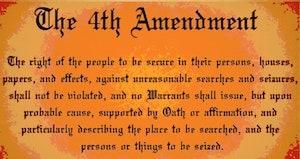
First Amendment Protection. The First Amendment protects a wide range of speech, including inflammatory or provocative statements. Under the standard established in Brandenburg v. Ohio, speech cannot be criminalized unless it is directed toward producing imminent lawless action and is likely to produce such action. A speaker at a protest who uses strong language criticizing the government is generally protected. The prosecution must show the accused's speech went beyond advocacy. The speech must directly incite imminent violence. This defense is especially powerful when the accused's statements were political in nature.
Insufficient Evidence. The prosecution bears the burden of proving every element beyond a reasonable doubt. For incitement to riot, this includes proving a clear and present danger of a riot actually existed. Defense counsel may argue that the circumstances did not rise to that level. Perhaps the crowd was small or dispersing. Perhaps people did not respond to the accused's statements in a threatening manner.
Mistaken Identity in Crowd Situations. Unlawful assembly arrests often occur during chaotic, large-scale gatherings. Law enforcement may arrest individuals without sufficient individualized probable cause. A person standing at the edge of a crowd may be swept up in a mass arrest. They may have no connection to the group's unlawful purpose. Video footage, cell phone records, and witness testimony can establish that the accused was a bystander rather than a participant.
Lawful Dispersal Defense. For unlawful assembly charges under the first prong, the statute itself provides an important limit. A person can only be convicted if they failed to withdraw after being lawfully commanded to disperse by a peace officer. This must occur before any member of the assembly inflicted injury. If law enforcement never issued a clear dispersal order, this may serve as a complete defense. If the accused left promptly after the order was given, this may also serve as a complete defense. The statute also recognizes an affirmative defense under the second prong for those who withdrew upon command.
How Incitement to Riot Differs From Affray and Unlawful Assembly
Georgia law defines three distinct public order offenses that are often confused. Understanding the differences helps clarify what prosecutors must prove for each charge.
Incitement to Riot requires that a person, with intent to riot, urge, counsel, or advise others to riot. The conduct must occur under circumstances producing a clear and present danger of a riot. Only one person is needed to commit this offense – the person doing the urging. Actual violence is not required. The focus is on the accused's speech and conduct, not on whether a riot occurred. The penalty is a misdemeanor: up to 12 months in jail and up to $1,000 in fines.
Affray is fighting in a public place by two or more people, to the disturbance of the public tranquility. Unlike incitement, affray requires actual physical confrontation between the people involved. It must occur in a public setting, so fighting inside a private residence does not qualify. An affray charge in Georgia is also a misdemeanor.
Unlawful Assembly requires two or more persons assembling for an unlawful purpose or for the purpose of doing violence. Violence is not required under the first prong if the group assembled for any unlawful act and refused to disperse. The second prong specifically involves assembling to do violence to another person or their property. This offense is a misdemeanor as well.
The key distinctions are the number of persons required, whether violence must occur, and the nature of the prohibited conduct. Incitement focuses on speech that provokes others. Affray focuses on actual fighting. Unlawful assembly focuses on the purpose of the gathering itself.
Elements of Incitement to Riot in Georgia
Incitement to riot under Georgia's inciting a riot law requires the prosecution to prove three elements of the crime beyond a reasonable doubt.
First, the accused must have acted with the specific intent to riot. General anger, frustration, or even aggressive language is not enough. Prosecutors must show the accused purposefully sought to bring about a riot.
Second, the accused must have engaged in conduct that urges, counsels, or advises others to riot. This element covers a broad range of behavior. It includes shouting instructions to a crowd or distributing materials encouraging violent action. The conduct must go beyond passive presence or general expressions of discontent.
Third, the conduct must have occurred at a time, place, and under circumstances that produced a clear and present danger of a riot. This element has constitutional significance. The "clear and present danger" standard requires that the risk of a riot was real and imminent, not speculative or remote. Courts applying this standard consider several factors. These include the size and mood of the crowd, the specific words used, and whether the audience was already agitated.
The U.S. Supreme Court's decision in Brandenburg v. Ohio refined the constitutional boundary. Speech advocating illegal conduct is protected unless it is directed to inciting imminent lawless action and is likely to produce such action. Georgia courts must apply this standard when evaluating incitement charges. A political speech calling for change – even in heated terms – differs fundamentally from standing before an agitated crowd and directing them to smash windows.

Penalties for Incitement to Riot and Unlawful Assembly
Both incitement to riot and unlawful assembly are classified as misdemeanors under Georgia law. A conviction for either offense may result in up to 12 months in county jail, a fine up to $1,000, or both. Courts may also impose probation with conditions such as community service or anger management classes.
For incitement to riot, courts may order the defendant to pay restitution for property damage caused during the disturbance. This applies even if the defendant did not personally damage property. The incitement itself may create liability for resulting harm.
The collateral consequences of a conviction can be significant. A misdemeanor conviction creates a permanent criminal record that may appear on background checks. This could affect employment opportunities, professional licensing applications, and housing prospects. For non-citizens, any criminal conviction – including a misdemeanor – may trigger immigration consequences such as deportation proceedings or denial of visa applications.
A person can face incitement to riot charges even when no actual riot occurred. The statute focuses on whether the accused's conduct created a clear and present danger of a riot, not on whether a riot materialized. This means charges can arise from situations that were defused by law enforcement before violence broke out.

Speak With a Georgia Criminal Defense Attorney About Riot or Assembly Charges
Even as misdemeanors, incitement to riot and unlawful assembly convictions carry lasting consequences. A criminal record from either charge can follow you for years, affecting job prospects, professional licenses, and more. Building an effective defense often depends on acting quickly. You should preserve video evidence, identify witnesses, and analyze whether law enforcement followed proper procedures during the arrest.
Defenses grounded in the First Amendment or challenges to the intent element require careful legal analysis. They depend on the specific facts and circumstances. An attorney familiar with Georgia's riot and assembly statutes and experienced in metro – Atlanta courts can evaluate the strength of the prosecution's case. They can identify the strongest path forward.
If you are facing incitement to riot or unlawful assembly charges, contact Kohn & Yager LLC for a confidential consultation. Bring any arrest paperwork, citation documents, and any video or witness information you have gathered. The sooner you speak with an attorney, the more options may be available for your defense.

Frequently Asked Questions About Incitement to Riot and Unlawful Assembly
What Does Unlawful Assembly Mean in Georgia?
Unlawful assembly in Georgia means knowingly joining a gathering of two or more people. The gathering must have formed to commit an unlawful act or to do violence to another person or their property. Under Georgia law, a person commits this offense when they join such a gathering. They must then fail to leave after a peace officer lawfully commands the group to disperse.
What Constitutes an Unlawful Assembly Under Georgia Law?
Georgia law recognizes two forms. The first involves assembling with two or more persons to commit any unlawful act. The person must then refuse to withdraw after a lawful dispersal order. The second involves assembling without legal authority. The purpose is to do violence to someone the accused believes violated the law, or to exercise power over another person through violence. In both cases, the prosecution must prove the accused knowingly participated.
Is Unlawful Assembly a Felony or Misdemeanor in Georgia?
Unlawful assembly is a misdemeanor in Georgia. A conviction may result in up to 12 months in jail, a fine up to $1,000, or both. While less severe than a felony, a misdemeanor conviction still creates a criminal record that could affect employment and other areas of life.
What Is the Difference Between Incitement to Riot and Unlawful Assembly?
Incitement to riot focuses on an individual's speech or conduct that urges others to riot. The conduct must occur under circumstances creating a clear and present danger of a riot. A single person can commit this offense. Unlawful assembly focuses on the purpose of a group gathering. It requires two or more people and addresses the collective act of assembling for an unlawful purpose or to do violence. A person could face incitement charges for urging a crowd toward violence. The crowd members who stay after a dispersal order could face unlawful assembly charges.
Can I Be Charged With Incitement to Riot if No Riot Actually Happened?
Yes, you can be charged with incitement to riot even if no riot actually occurred. Georgia's incitement to riot statute does not require that a riot actually happen. The prosecution must prove that the accused's conduct created a clear and present danger of a riot. If your words or actions met the statutory elements at the time they occurred, charges may be brought regardless of the outcome. This is why intent and the surrounding circumstances are often the central issues in these cases.