- Free Consultation, Call 24/7: (404) 567-5515 Tap Here To Call Us




Is It Illegal to Drive Uninsured in Georgia? Penalties, Arrest, and Jail Time


Is It Illegal to Not Have Car Insurance in Georgia?

Is it illegal to not have car insurance in Georgia? Yes – driving an uninsured registered vehicle is a misdemeanor under state law. Is driving without insurance a crime? It is, and the consequences are serious. A conviction carries a fine between $200 and $1,000, a mandatory license suspension, and up to 12 months in jail. Whether an officer makes a custodial arrest or issues a citation depends on what else the stop reveals. Georgia sets its minimum liability limits at 25/50/25. Those numbers mean $25,000 for bodily injury per person, $50,000 for total bodily injury per accident, and $25,000 for property damage.
Georgia's Minimum Car Insurance Requirements
Georgia's insurance code puts a duty on every registered vehicle owner to keep continuous liability insurance. Under Georgia law, the minimum coverage limits are:
- $25,000 for bodily injury to one person
- $50,000 for total bodily injury per accident
- $25,000 for property damage per accident
People often call these "25/50/25" limits. They represent the minimum – not the recommended – amount of coverage. Many drivers carry higher limits. The law requires only these baseline amounts.
Coverage must be continuous. A policy lapse of even a single day can bring penalties. Georgia tracks compliance through the Georgia Electronic Insurance Compliance System (GEICS). Your insurance company reports your coverage status to the Georgia Department of Revenue. A lapse report reaches the state almost at once.
This duty applies to every registered vehicle in Georgia. Daily driving and long-term parking make no difference. A vehicle registered in your name must have active insurance. One exception exists. An owner may surrender the registration and tag to the county tag office before the coverage lapses.
How the state learns your coverage lapsed. A traffic stop is not needed for Georgia to find out. Insurers report policy issuance, policy changes, and cancellations directly to the state's electronic compliance database. The system flags the gap on its own. The Department of Revenue's Motor Vehicle Division then mails a lapse notice. The notice goes to the registered owner at the address on the tag record.
That same data reaches officers on the road. An officer who runs your tag sees your coverage status before reaching your window. Automated license plate readers can also surface an uninsured flag on routine patrol.
Georgia sets the insurance requirement for drivers in its motor vehicle code. The minimum liability limits come from Georgia's Motor Vehicle Safety Responsibility Act.
One caution deserves attention. Database errors are common. A flag in the system is not proof that you actually drove uninsured.
Is It Illegal to Drive Uninsured in Georgia?
Is it illegal to drive uninsured in Georgia? Yes. Driving without valid insurance is a misdemeanor prosecuted under Georgia's motor vehicle code, which requires proof of minimum liability coverage for every operated vehicle, in tandem with the compulsory coverage requirement in the insurance code. The fine ranges from $200 to $1,000, and the court may impose up to 12 months in jail.
For enforcement purposes, "uninsured" means one of three things. First, no active policy exists on file with the Department of Revenue's electronic insurance database (GEICS). Second, a policy lapsed past the grace window and the insurer reported the cancellation. Third, coverage exists but fails to meet the 25/50/25 minimums.
The driver does not need to own the vehicle. Operating any registered vehicle without valid coverage triggers the statute. The owner who authorized the operation may also be cited.
Drivers should understand one important distinction. "Driving uninsured" means no policy exists. "Driving without proof of insurance" means a policy exists, but the driver cannot show it at the stop. The second situation is often resolved by presenting proof to the court, and the fine may be reduced to no more than $25. The first carries the full misdemeanor penalties. Is it illegal to drive uninsured even briefly? Yes – the statute draws no line based on how long the lapse lasted.
What Is the Maximum Penalty for Driving Without Insurance in Georgia?
The penalties for no insurance on a car in Georgia are steep. Driving without valid coverage is a misdemeanor under Georgia law. The punishment climbs with repeat offenses.
Maximum penalty. Georgia punishes this offense as a misdemeanor. The maximum penalty is a $1,000 fine and up to 12 months in jail. The fine floor sits at $200. Courts rarely impose the ceiling on a first charge. The exposure is still real. Sentences vary with the county and the judge.
First offense. You face a fine between $200 and $1,000. Jail exposure runs up to 12 months. A mandatory 60-day license suspension applies. A $210 restoration fee, or $200 if processed by mail, restores the license, and you must also show proof of a prepaid six-month policy. Your vehicle registration may also be suspended. That step triggers a $25 lapse fee and a $60 registration reinstatement fee.
Second offense within five years. The fine range stays at $200 to $1,000. The license suspension grows to 90 days, and Georgia law also suspends the vehicle's license tag and tag registration for those same 90 days. Judges may impose harsher terms. Probation conditions and a longer sentence are both possible. The restoration fee rises to $310, or $300 if paid by mail, and your insurance costs may rise sharply.
Third or subsequent offense. The statutory range does not change. The practical outcome usually does. A third lapse tells the court that two prior orders did not change the driver's behavior. Judges may order longer suspensions and stricter probation. Some counties impose actual custody time.
The costs drivers underestimate. Fines and reinstatement fees are separate obligations. Paying the court does not restore your license or your tag. Court costs and state surcharges can nearly double the base fine. The $25 lapse fee, the $60 registration reinstatement fee, and the $210 license reinstatement fee stack on top. A single no-insurance charge can cost several thousand dollars once higher premiums are counted.
These penalties apply even with no accident involved. A routine traffic stop is all an officer needs to find the missing coverage.

Will You Be Arrested or Just Cited for Driving Without Insurance?
So can you get arrested for driving without insurance? Yes, an arrest is possible. The offense is a misdemeanor. Georgia officers may make a custodial arrest for any misdemeanor committed in their presence.
In practice, most drivers are cited and released rather than booked into jail. Georgia law lets officers issue a citation in lieu of arrest for traffic misdemeanors. The officer writes the ticket. You sign it. You then drive away or arrange a ride. Signing the citation is only a promise to appear in court. The signature is not an admission of guilt, and it waives no defense.
Will you get arrested for driving without insurance if nothing else is wrong? In most stops, no. Officers typically issue a citation and send the driver on their way. But several aggravating factors can push the outcome from a citation toward a custodial arrest:
- An outstanding warrant in any Georgia jurisdiction
- A suspended or revoked driver's license
- No valid driver's license at all
- A suspended registration or an expired tag
- An accident that injured someone
- Refusal to sign the citation
- An inability to establish your identity
- Another arrestable offense discovered during the stop
The same lapse can end two stops very differently. A driver with a clean license usually leaves with a ticket. A driver whose license is already suspended often leaves in handcuffs. The insurance count is added on top of the suspension charge.
Can you get arrested for not having car insurance when one of those aggravating factors is present? Almost certainly. Officers who discover a suspended license or an outstanding warrant during a no-insurance stop will usually book the driver rather than issue a citation.
The combined-charge scenario deserves its own note. Officers who stop a driver for suspected impaired driving often find no active coverage. A no-insurance count may then ride along with a DUI arrest. The DUI drives the arrest decision. The insurance charge is simply added at booking. That extra count may raise the bond amount. It also adds a separate suspension to the license consequences the driver already faces.
Can cops tell if you don't have insurance? Yes. Georgia officers query the Georgia Electronic Insurance Compliance System (GEICS) in real time during a traffic stop. The system is linked to the Department of Revenue's Motor Vehicle Division. When an officer runs your tag, the database shows whether a policy is active before the officer even approaches the window. Automated license plate readers on patrol can also flag an uninsured vehicle without a stop in progress.
So do you get arrested for driving without insurance as a general rule? That outcome is possible but uncommon when the insurance lapse is the only issue. The decision usually turns on what else the stop reveals.
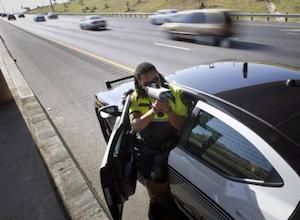
Can You Go to Jail for Not Having Car Insurance?
Readers asking can you go to jail for no insurance want a direct answer. Yes, you can go to jail for not having car insurance in Georgia. Driving without insurance is a misdemeanor. The maximum sentence is up to 12 months in jail. First-time offenders rarely receive jail time for this charge alone. Judges typically impose fines, license suspension, and community service instead. Each case is different, and the outcome depends on the circumstances.
What a first offense usually looks like. In Georgia municipal and state courts, a first charge often resolves without custody. A typical disposition includes a fine or a term of probation. Some courts allow a nolo contendere plea. Judges frequently make proof of reinstated coverage a condition of the sentence. Defendants should bring the new policy to court. Showing active coverage on the court date carries real weight with most judges.
For drivers wondering what typically happens instead of jail on a first offense, here is the realistic picture. Most first-time defendants receive a fine within the $200 to $1,000 range, a mandatory 60-day license suspension, and probation. Some courts add community service hours. The mandatory suspension and reinstatement fees apply regardless. Jail is technically possible, but courts reserve custody for cases with aggravating circumstances.
When judges do impose custody. Jail becomes more likely in a narrow set of fact patterns. Repeat offenders face greater scrutiny. A second or third lapse within five years changes the tone of the hearing. Driving on a suspension caused by a prior no-insurance conviction compounds the charges. Failing to appear on the original citation can produce a bench warrant and a night in custody. An uninsured driver who injures someone faces criminal exposure and heavy civil liability.
Repeat-offender jail exposure. Can you go to jail for having no car insurance on a second or third conviction? The odds increase sharply. The statutory ceiling stays the same – a $1,000 fine and up to 12 months – but judges treat repeat offenders differently. A second conviction within five years tells the court that the first sentence failed to change the behavior. A third conviction compounds that message. Judges in some counties impose short jail terms, stricter probation, and longer suspensions. The driver's overall record, including any missed court dates or other pending charges, heavily influences the outcome.
So can you go to jail for having no car insurance on a first charge with nothing else pending? In most courts that outcome is unlikely. Custody on this offense almost always follows repeat charges or a missed court date. The lapse alone rarely sends anyone to jail. Results still depend on the county, the judge, and the driver's record.
As explained above, the no-insurance statute directs the officer to issue a uniform traffic citation when you cannot show proof of coverage. A custodial arrest at the scene usually follows some other factor the stop reveals. A no-insurance charge alongside other offenses raises the stakes. Consulting a defense attorney is then especially important. The combined penalties could affect your freedom, your driving privileges, and your financial future.

Is Driving Without Insurance a Felony in Georgia?
Is driving without insurance a felony? No, driving without insurance is not a felony in Georgia. The charge is a misdemeanor under the state's motor vehicle code. That classification does not change with repeat offenses. A misdemeanor conviction carries a maximum of 12 months in jail and a $1,000 fine.
This point is worth emphasizing. The number of prior no-insurance convictions does not raise the offense to felony status. Unlike some other traffic offenses in Georgia that escalate with repeated violations, driving without insurance remains a misdemeanor on the first, second, third, and every subsequent conviction. The statutory ceiling stays the same each time.
The question comes up because other conduct found during the same stop can be a felony.
Fake proof of coverage. A forged or counterfeit insurance card can support serious criminal charges. Under Georgia law, knowingly manufacturing, selling, or distributing a counterfeit proof of insurance document is a felony punishable by a fine of up to $10,000 or two to ten years in prison, or both. Possessing a counterfeit document you know to be false is a separate offense punished as a misdemeanor. A falsified policy document could also support forgery charges under Georgia's forgery statute, which criminalizes making or altering a writing with intent to defraud. Those charges are far more serious than the underlying lapse.
Serious injury or death. A driver who causes serious injury or a death may face other counts. Serious injury by vehicle and vehicular homicide are the main ones. Prosecutors pursue those counts apart from the insurance violation. The missing coverage does not create the felony. The lapse does leave the driver personally exposed to the civil claim.
Driving on a suspended license. A suspension may follow a prior no-insurance conviction. Continued driving can then bring a new charge. Repeat suspended-license offenses can escalate in seriousness under Georgia law.
The felony exposure comes from the accompanying conduct, not from the lapse. A citation or accusation may list more than one count. A defense attorney should read the actual charging language before the court date. What the paperwork charges may differ from what the officer said at the scene.
What Happens If You Don't Pay Your Car Insurance
Understanding what happens if you do not pay car insurance is critical for every Georgia driver. Missing a payment sets off a chain of events that can escalate quickly.
Most insurers offer a grace period of 10 to 30 days after a missed payment. During this window, your coverage usually stays active. Payment before the grace period ends changes nothing. Payment after that window brings a cancellation notice, and the insurer ends the policy.
The insurer then reports the lapse to the Georgia Department of Revenue through the state compliance system. The department then sends you a lapse notice. You get 30 days to get new coverage. Failure to act leads to a suspended registration.
Your vehicle registration will be suspended if no coverage is in place within that 30-day window. You will owe a $25 lapse fee and a $60 reinstatement fee to restore it.
Driving during any lapse period matters even more. That choice exposes you to the full penalties under Georgia law. Even a brief lapse carries the same penalties.
Switching carriers is different from a lapse. One policy may end and another start the same day. No gap in coverage exists in that case. The key is avoiding any period, even one day, when the vehicle is uninsured.
Consequences Beyond the Criminal Charge
A no-insurance conviction carries consequences that reach well beyond the courtroom.
SR-22 filing requirement. After a conviction that carries a mandatory suspension, Georgia requires an SR-22 certificate of financial responsibility. The SR-22 is not a type of insurance. The document is a form your insurer files with the Department of Driver Services. The filing proves you carry the state-required minimum limits. The Department of Driver Services handles license reinstatement. The Department of Revenue's Motor Vehicle Division handles registration and coverage-lapse matters. You must keep the SR-22 in place for one year after your license is restored.
Higher insurance premiums. Insurers treat a no-insurance conviction as high-risk behavior. Premiums rise, and the increase lasts. Many drivers pay elevated rates for three to five years. Some carriers decline to write the policy at all. Over time, the added premium may cost more than the fine did.
Civil liability you cannot insure away. This exposure surprises drivers the most. An uninsured at-fault driver is personally liable for the other party's medical bills and property damage. No carrier steps in to defend the claim or to pay it. A judgment could lead to wage garnishment or a lien on your property. The other driver's uninsured-motorist carrier may also pursue subrogation against you. That claim follows after the carrier pays its own insured. Depending on the crash, that exposure could follow you for years.
Commercial driving impact. A commercial driver's license adds another layer of risk. A misdemeanor conviction could affect commercial driving privileges. Trucking and transportation employers review driving records closely.
Immigration consequences. For non-citizens, a misdemeanor conviction may complicate immigration proceedings. The conviction could affect visa renewals, green card applications, or removal proceedings.
A misdemeanor conviction also stays on your criminal record. Record restriction through Georgia's legal process is the only way to address it.
Defenses to a No-Insurance Charge in Georgia
Several defense strategies may apply to a no-insurance charge. The right one depends on the facts of your case.
The coverage was active at the time of the stop. An insurer sometimes fails to report coverage correctly, or a payment posts late. Your policy may have been in effect when the officer pulled you over. The policy declarations page should then go to the court. A letter from your insurer confirming the coverage dates helps as well. This showing often results in dismissal.
The state database was wrong or the report was late. Reporting errors are more common than many drivers realize. This ground is the most common route to dismissal. A carrier may reinstate a policy and transmit the update days later. That delay can leave a fully covered driver flagged as uninsured. The declarations page plus a carrier letter usually clears it up.
A recently purchased policy had not been reported yet. A new policy bought shortly before the stop may not appear in the state database in time. Proof of the purchase date and the effective date can establish coverage.
You were not the registered owner. The duty to insure the vehicle falls on the owner. A driver may have borrowed the car with no knowledge of the lapse. That driver had no duty to insure it and may have a defense. The strength of that argument depends on the facts.
The vehicle was not on a public road. The statute reaches operation on Georgia roadways. Movement on private property may fall outside it, depending on the facts of the stop.
Coverage obtained after the citation. Buying a policy after the ticket does not defeat the charge outright. Many judges will still weigh it in mitigation. The new policy can support a reduced fine or a dismissal on proof of compliance.
A constitutional challenge to the stop. The officer may have lacked reasonable suspicion or probable cause. A motion to suppress could then exclude what the stop produced. Suppressing an unlawful stop can take the insurance charge with it.
Our attorneys defend traffic misdemeanors in Georgia municipal and state courts. These charges often resolve at arraignment or in pre-trial talks. Documentation reaching the prosecutor early drives that result.
Some drivers also face reckless driving, driving on a suspended license, or a charge for carrying a handgun without a license. A strategy then has to account for every count. Consulting an Atlanta criminal defense attorney who knows Georgia traffic and criminal courts is important. Outcomes vary with the facts, and no result is guaranteed.
Charged With Driving Without Insurance in Georgia? Talk to a Defense Attorney
A citation for driving without insurance in Georgia starts a clock. A license suspension for this offense begins running on the date of conviction, not the date of the citation. Acting quickly gives you the best chance to protect your driving privileges.
Kohn & Yager LLC offers free consultations for no-insurance charges and other traffic misdemeanors. Our attorneys defend these cases in Georgia municipal, state, and superior courts. We know how metro Atlanta courts handle them at arraignment and in pre-trial talks.
Clients should bring the citation to the consultation. Any proof of insurance coverage helps too. Correspondence from the insurer or from the state also matters.
Some drivers are booked rather than cited. Those clients should bring bond paperwork and the accusation. The arraignment date matters as well. Those documents show what the state actually charged. They also show how much time remains to respond.
The records that help most are the policy declarations page and the payment history. Carrier correspondence and the citation itself round out the file.
The consultation is free and carries no obligation. Even a lapsed policy leaves room to work. A defense attorney may be able to negotiate reduced penalties or identify a viable defense. Many drivers also ask whether a no-insurance ticket can be dismissed. Every case is different, and past results do not guarantee a similar outcome.
Contact Kohn & Yager LLC today to discuss your no-insurance charge. We can explain what options may be available to you.

Frequently Asked Questions
How Long Can Your License Be Suspended for Driving Without Insurance in Georgia?
Your license faces a 60-day suspension for a first offense. A second offense within five years raises it to 90 days and suspends your tag and tag registration as well. Restoring a first-offense suspension costs $210, or $200 by mail; a second offense within five years costs $310, or $300 by mail. The suspension begins after your court date. The exact length may depend on the judge and the circumstances of your case. Driving on a suspended license during this period could bring added criminal charges.
Will a No-Insurance Ticket in Georgia Go on My Criminal Record?
Yes, driving without insurance is a misdemeanor in Georgia. A conviction appears on your criminal record. The entry could affect employment background checks, housing applications, and professional licensing. Georgia does offer a record restriction process. That process may allow you to seal the conviction in some cases. Asking a defense attorney about eligibility is worth the time after a conviction.
What Should I Do If I Get Pulled Over and My Insurance Recently Lapsed?
Drivers should answer the officer honestly and avoid extra statements about the length of the lapse. Accepting the citation without argument is the better course. New coverage should be arranged right away. Gathering documentation of the prior coverage dates helps the defense. Speaking with a defense attorney before the court date is also wise. A brief lapse or an insurer error may open options to reduce or dismiss the charge.
Do I Need an SR-22 After a No-Insurance Conviction in Georgia?
Georgia requires an SR-22 before restoring a license suspended for a no-insurance conviction. The SR-22 is a certificate of financial responsibility. Your insurance company files that form with the Department of Driver Services. The filing verifies that you carry the required minimum coverage. You must keep the SR-22 for one year after restoration. A lapse during that year triggers a report to the state, and the department must revoke the license.
Can the Charge Be Dismissed If I Had Insurance but Could Not Prove It at the Traffic Stop?
Yes, dismissal is possible in that situation. Valid insurance may have been in force at the time of the stop. The proof of coverage simply was not at hand. The policy declarations page or an insurer verification letter should go to the court. That showing may lead to dismissal. Georgia penalizes both, but proving coverage was in effect caps the fine at $25 and leaves your license unsuspended. Action before the court date is essential. An attorney can help gather the right documents and present them to the judge.
Can You Get Arrested for Driving Without Insurance in Georgia?
Yes, an arrest for driving without insurance is possible. The offense is a misdemeanor, and Georgia officers may arrest for a misdemeanor committed in their presence. In practice, most drivers receive a citation and stay out of custody. An arrest becomes far more likely when another factor is present. Common examples include an outstanding warrant, a suspended license, or a suspended registration. A crash with injuries or an unproven identity can also lead to booking. Refusing to sign the citation carries the same risk.
Is Driving Without Insurance a Felony in Georgia?
No, driving without insurance is not a felony in Georgia. The charge is a misdemeanor, and it stays a misdemeanor even for repeat offenders. The maximum punishment is a $1,000 fine and up to 12 months in jail. Felony exposure comes from other conduct found along the way. Forged or counterfeit proof of coverage can support forgery or insurance fraud charges. Causing serious injury or a death while driving may bring serious injury by vehicle or vehicular homicide charges. Prosecutors pursue those counts separately.
How Much Is the Fine for No Insurance in Georgia?
A first offense carries a fine of $200 to $1,000 before court costs. State surcharges and local court costs can add a great deal to that amount. The fine is also separate from your reinstatement obligations. A $25 lapse fee and a $60 registration reinstatement fee restore the tag. A $210 fee reinstates the license. The exact total depends on the county and the court.
Can Cops Tell If You Don't Have Insurance in Georgia?
Yes. Georgia officers query the Georgia Electronic Insurance Compliance System (GEICS) during a traffic stop. The system is linked to the Department of Revenue's Motor Vehicle Division and shows whether a policy is active on the vehicle's tag before the officer approaches the window. This is why "the insurance company forgot to update the state" is a common – and often winnable – defense. Database lag is real. A policy may be fully paid and active while the state system still shows a lapse. In court, the policy declarations page from the insurer usually beats the database entry.
What Is the Maximum Penalty for Driving Without Insurance in Georgia?
The statutory maximum for a misdemeanor conviction is a $1,000 fine plus up to 12 months in jail. A mandatory license suspension also applies – 60 days for a first offense, 90 days for a second offense within five years. Those penalties do not include the separate costs that stack on top: court costs, state surcharges, a $210 license reinstatement fee, a $60 registration reinstatement fee, a $25 lapse fee, and potential SR-22 filing costs. The true financial exposure from a single no-insurance charge typically runs well past $1,000.