- Free Consultation, Call 24/7: (404) 567-5515 Tap Here To Call Us




What Is a Non-Reportable Accident in Georgia?


What Is a Non-Reportable Accident?

A non-reportable accident is a motor vehicle collision. It does not meet Georgia's statutory thresholds for a mandatory written crash report. When a crash does cross those lines, notice must go to the local police, the county sheriff, or the state patrol. The label refers strictly to the state reporting obligation – not to whether the crash has legal consequences.
Talk with a co-author of Georgia’s leading law book on DUI laws at no cost. Our criminal defense law firm offers a FREE lawyer consultation and can be reached 24 hours a day at (404) 567-5515.
Many drivers hear "non-reportable" at the scene and assume the incident does not matter. That assumption is wrong. A non-reportable accident can still lead to insurance claims, civil lawsuits, and even criminal charges. The term only means that Georgia law does not require that particular collision to be reported to law enforcement, and a local agency may still require its own written report.
Under Georgia's accident reporting statute, a driver must immediately notify law enforcement when an accident results in injury, death, or property damage of $500 or more. If a collision falls below that threshold and involves no injuries, the officer at the scene may decline to generate a report. Instead, the officer may tell drivers to exchange information on their own.
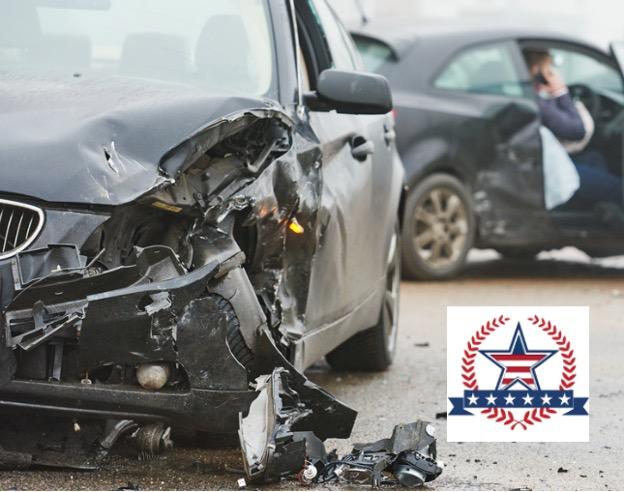
When Is a Car Accident Reportable in Georgia?
Georgia law makes a crash reportable when any of these conditions exist:
- Any bodily injury to any person involved in the collision
- Any death resulting from the accident
- Property damage of $500 or more in apparent extent
When any of these thresholds are met, the driver must give immediate notice to law enforcement. For crashes within a municipality, notify the local police department. For crashes outside a municipality, notify the county sheriff or nearest state patrol office. Under Georgia law, this notice is required.
The investigating officer typically completes a Georgia Uniform Motor Vehicle Accident Report and assigns a case number. Law enforcement must submit that report to the Georgia Department of Transportation, which provides copies to the Department of Driver Services when a claim requires them.
At the scene, the practical signals are straightforward. If an officer takes statements, documents damage, and issues a report number, the crash was treated as reportable. If the officer tells both drivers to exchange information and leaves without writing a report, the crash is being treated as non-reportable.
Common Examples of Non-Reportable Accidents
Non-reportable accidents tend to involve minimal damage and no injuries. Common scenarios include:
- A minor parking-lot fender bender that leaves scuffed paint on both bumpers but no structural damage
- A low-speed rear-end tap at a stoplight where both vehicles drive away with only cosmetic scratches
- Backing into a mailbox or fence on private property with minimal visible damage
- Two vehicles brushing side mirrors in a narrow lane with no measurable repair cost
Private-property crashes deserve a special note. Incidents that occur entirely in parking lots, driveways, or other private property often fall outside the scope of a state crash report. Officers may decline to file a report for these collisions. However, the property owner and each driver's insurance carrier may still be involved. A single-vehicle crash involving no other person and no property of anyone else carries no duty to stop or report at all.
Keep in mind that "minor" is measured against the $500 property-damage threshold and whether anyone was hurt. A crash that feels stressful may still fall below those statutory lines.
Do You Still Need to Exchange Information?
Yes. Even in a non-reportable accident, Georgia law requires drivers to stop and exchange information. The duty to stop after any collision involving damage to an attended vehicle is required by Georgia law. That statute applies regardless of whether the crash meets the reporting threshold. If you hit a parked car with no one in it, you must locate the owner or leave a written notice with your name and address, and failing to do so is a misdemeanor. A driver who damages a mailbox, sign, or other roadside fixture must take reasonable steps to notify the owner.
Leaving the scene of even a minor collision can result in criminal charges. Under Georgia law, a hit-and-run involving only property damage or non-serious injury is a misdemeanor. A first conviction carries a fine of not less than $300 nor more than $1,000, imprisonment of up to 12 months, or both, and that fine cannot be suspended, stayed, or probated. If the accident is the proximate cause of death or serious injury, knowingly failing to stop is a felony. It carries one to five years of imprisonment.
Here is what to exchange at the scene:
- Full name and address
- Driver's license number
- Vehicle registration information
- Insurance carrier name and policy number
Beyond the legal requirements, take these practical steps:
- Photograph both vehicles, the surrounding area, and all visible damage
- Get contact information for any witnesses
- Write a brief description of what happened while your memory is fresh
These records can prove valuable if a dispute arises later.
Does a Non-Reportable Accident Affect Insurance or Your Driving Record?
This is the question most readers want answered. The short version: "non-reportable" refers to the state reporting requirement. It does not make the accident invisible.
Insurance. Insurance carriers maintain their own internal claim databases. If either driver files a claim, the insurer may note it in that driver's history. This record may factor into future premium calculations, depending on the carrier's policies. Even if you choose not to file a claim, the other driver's insurer could still open one.
Driving record. When no officer files a crash report and no citation is issued, nothing is typically added to your Georgia Motor Vehicle Record from the incident itself. However, this is a general pattern rather than a guarantee. Officer discretion, carrier reporting practices, and individual circumstances all vary.
If you are concerned about how a non-reportable accident may affect your record, pull your own record through the Georgia Department of Driver Services. Also confirm with your insurance carrier directly.
Can You Still Be Sued or Charged After a Non-Reportable Accident?
Absolutely. The non-reportable label does not shield anyone from civil liability or criminal prosecution.
Civil liability. A driver whose minor collision caused hidden injuries can still be sued for damages. Hidden injuries include soft tissue damage and concussion symptoms that appear days later. Under Georgia law, personal injury actions must generally be brought within two years after the right of action accrues. Under Georgia law, property damage actions must be brought within four years. A non-reportable accident does not shorten or eliminate these deadlines.
Criminal charges. An officer can still charge a driver with DUI, reckless driving, hit-and-run, or driving on a suspended license based on observations at the scene. This is true even if no crash report is written. Under Georgia's DUI statute, a person may not drive while under the influence of alcohol or drugs to the extent it is less safe to drive. Under Georgia's reckless driving statute, driving in reckless disregard for the safety of persons or property is a misdemeanor. The reporting threshold and the charging decision are independent of each other.
What to Do After a Non-Reportable Accident
Follow these steps even when the collision seems minor:
- Move to safety. On a public road with no apparent serious injury, Georgia law requires drivers to move a drivable vehicle out of the roadway when it can be done safely. Check yourself and passengers for injuries.
- Call 911 if there is any doubt. If anyone may be hurt, if either driver appears impaired, or if either driver is hostile or uninsured, call law enforcement.
- Exchange information and photograph everything. Names, license numbers, insurance details, and photos of all damage.
- Notify your insurance carrier promptly. Most policies require timely notice of any accident, even if you do not plan to file a claim. Failing to report could jeopardize your coverage.
- Monitor for delayed symptoms. Watch yourself and your passengers for pain, stiffness, headaches, or other symptoms over the following days. Some injuries do not appear immediately.
- Keep a written record. Note the date, time, location, weather, and what happened. Store it with your photos.
- Consult an attorney before giving a recorded statement. If the other driver's insurer contacts you for a recorded statement, speak with a licensed Georgia attorney first. Recorded statements can be used against you later.
Talk to a Georgia Criminal Defense Attorney
A non-reportable accident can still lead to serious criminal exposure. Hit-and-run charges, DUI investigations, reckless driving citations, and discoveries of a suspended license all begin at the scene of minor collisions. What starts as a fender bender can escalate quickly.
If you are facing criminal charges that arose from any traffic accident in Georgia, Kohn & Yager LLC can help you understand your options. Early legal advice – especially before giving any recorded statement or attending a follow-up interview – can protect your rights.
Contact Kohn & Yager LLC for a free, confidential consultation about your case. Every situation is different, and results depend on the specific facts and circumstances involved.

Frequently Asked Questions
What Does Non-Reportable Accident Mean in Georgia?
A non-reportable accident is a collision that falls below Georgia's mandatory reporting thresholds. Under Georgia law, crashes must be reported when they involve injury, death, or property damage of $500 or more. If a collision does not meet any of these thresholds, it is considered non-reportable. This does not mean the accident has no legal consequences.
Do I Have to Call the Police for a Minor Car Accident in Georgia?
If no one is injured and property damage appears to be below $500, Georgia law does not require you to notify law enforcement. Calling the police is still a good idea if there is any dispute about fault. It is also wise to call if either driver appears impaired or refuses to exchange information.
Will a Non-Reportable Accident Go on My Driving Record in Georgia?
In most cases, no. When no crash report is filed and no citation is issued, nothing is typically added to your Georgia Motor Vehicle Record. However, this may vary depending on the circumstances. You can verify your record through the Georgia Department of Driver Services.
Does My Insurance Company Need to Know About a Non-Reportable Accident?
Most insurance policies require you to report any accident promptly, regardless of severity. Failing to notify your carrier could affect your coverage. Even if you choose not to file a claim, the other driver may file one with their own insurer.
Can I Still Be Sued After a Non-Reportable Accident in Georgia?
Yes. The non-reportable designation does not prevent anyone from filing a civil lawsuit. A person injured in the accident may bring a personal injury claim within the applicable statute of limitations. The fact that no crash report was filed does not eliminate civil liability.