- Free Consultation, Call 24/7: (404) 567-5515 Tap Here To Call Us




Open Carry Permit Laws in Georgia: What You Need to Know in 2026


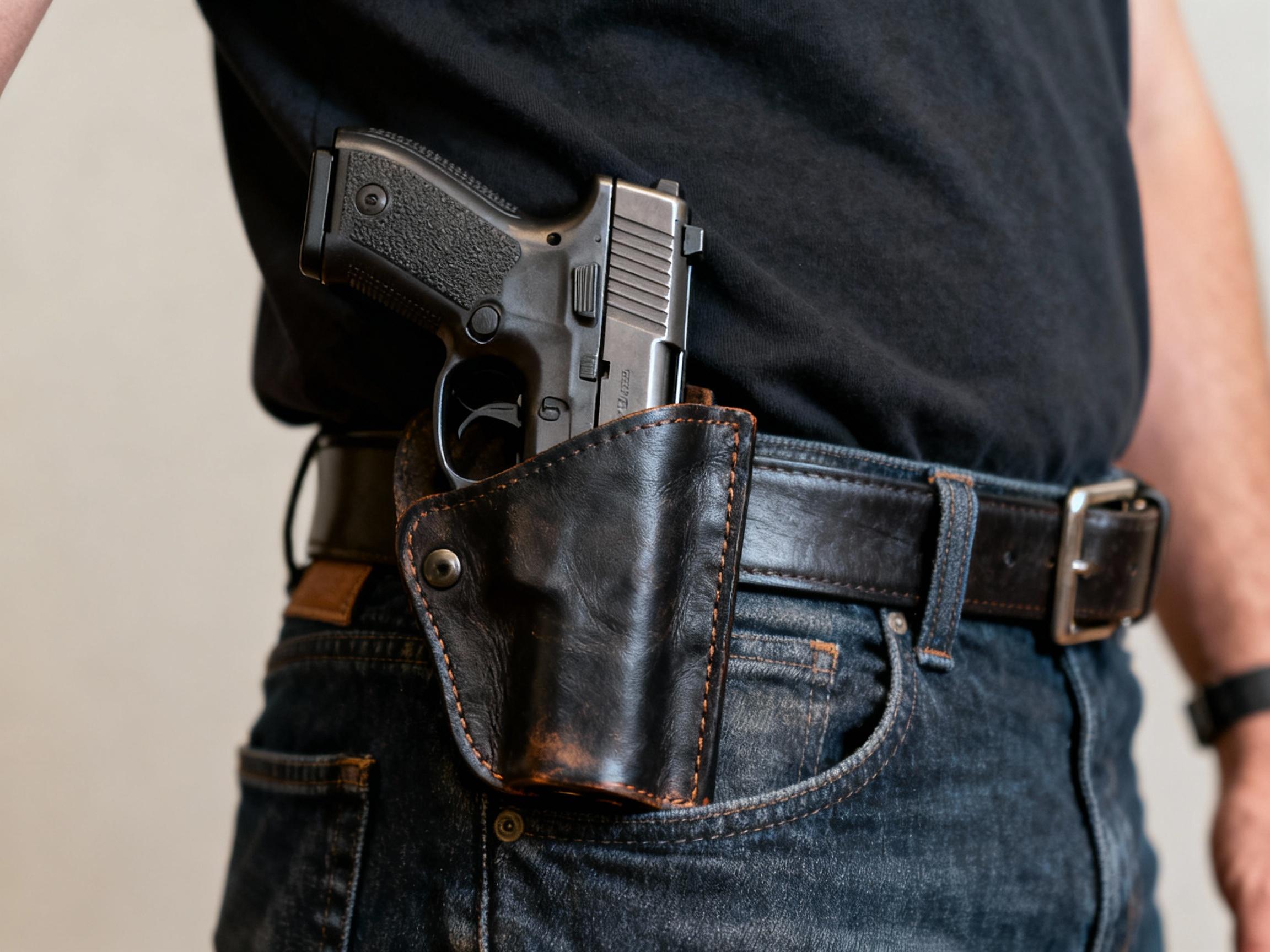
What Is an Open Carry Permit?
An open carry permit is a state-issued license that lets a person carry a firearm in plain sight, usually in a belt holster or a shoulder rig rather than hidden under clothing. Open carry is the opposite of concealed carry, where the firearm must stay out of view. Some states issue a separate concealed carry permit alongside an open carry license, while others fold both into a single permit to carry.
In Georgia, the phrase "open carry permit" never appears in the law. The state issues a Weapons Carry License instead, under Georgia law authorizing handgun carry. Before 2022, that license covered both open and concealed carry, and Georgia still uses the same single license for both. People call it an open carry license, a weapon carry permit, or simply a carry license, but all three names point to the same card.
Georgia's carry rules changed sharply in 2022. One new law reshaped who needs a license and who does not.
Georgia's Permitless Carry Law: What Changed in 2022
In April 2022, Governor Brian Kemp signed Senate Bill 319, known as the Georgia Constitutional Carry Act. The bill amended Georgia's handgun carry statute and changed how the state treats firearm carry.
Before that law, carrying a handgun in public without a license was a crime. After it took effect, Georgia became a permitless open carry state, and anyone who counts as a "lawful weapons carrier" may now carry a handgun openly or concealed. In plain terms, eligible adults may carry without a permit, and a handgun carried openly in a holster no longer needs paperwork behind it.
A "lawful weapons carrier" is generally a person who is:
- At least twenty-one years old, or eighteen and either on active military duty or honorably discharged
- Not barred from having a gun under state or federal law
Some people still may not carry a gun at all. The barred list includes:
- Convicted felons
- People under an active protective order or a bond rule that bars guns
- People ruled mentally incompetent or committed against their will
- Anyone convicted of a forcible misdemeanor in the past five years, depending on the offense
- People in the country unlawfully
One point matters more than the rest. Permitless carry dropped the license requirement, but it did not drop the place restrictions. Carrying in a banned location is still a criminal offense, license or no license.
Do You Still Need a Weapons Carry Permit in Georgia?
Georgia no longer requires a permit for daily carry. A carry license still helps in several ways.
Travel. Many states honor a Georgia carry license, but most do not honor permitless carry status earned in another state. If you drive armed into Alabama, Florida, or Tennessee, you may need the Georgia license to carry legally, and without it you could face criminal charges in that state.
Faster gun purchases. A valid license can stand in for the federal background check delay at a licensed dealer.
Clear proof. A license is simple documentation that you are authorized to carry, and during a traffic stop it can make the conversation with an officer go smoother.
How to apply. You apply at the probate court in the county where you live. The steps are short:
- Fill out the application at the county probate court
- Give fingerprints and pass a criminal background check
- Pay the fees. State law sets the application fee at thirty dollars, and the court adds its own fingerprint and background check costs
- Wait for processing, which usually runs thirty to sixty days
Applicants must be twenty-one or older and must not fall into a prohibited category. The license lasts five years, and you renew it at the same probate court.

Where You Cannot Openly Carry in Georgia
Georgia allows firearms in public in most places, but it bans them in certain locations, and the ban applies whether you hold a license or carry without one. Breaking these restrictions can bring criminal charges.
Under Georgia law, prohibited firearm locations include:
- Government buildings, if you are not a lawful weapons carrier
- Courthouses
- Jails and prisons
- State mental health facilities that admit patients against their will
- Polling places, within one hundred fifty feet, while an election is being held
- Places of worship, unless the church or other governing body allows carry on its property
- Nuclear power sites
Schools sit under a separate rule: a different Georgia statute covers school safety zones, school events, and school buses, and it reaches colleges and technical schools as well.
Federal law adds more limits. Guns are banned in:
- Federal buildings and courthouses
- United States post offices
- Screened areas of airports
- Military bases, unless approved
Private property matters too. A business owner or landowner may bar firearms on its own property and ask an armed visitor to leave, and refusing to go can lead to a criminal trespass charge.

Open Carry Laws by State: What States Don't Allow Open Carry?
Georgia's rules stop at the state line, and every state writes its own carry law. A handful of them still bar open carry of a handgun outright.
As of 2026, these states generally do not allow open carry of a handgun in public: California, Connecticut, Illinois, New Jersey, and New York. The District of Columbia bars it too. Five more states allow open carry only with a permit or license. Those states are Hawaii, Maryland, Massachusetts, Minnesota, and Rhode Island.
Two states changed course lately, and both changes matter to Georgia drivers. South Carolina passed a constitutional carry law in March 2024, so open carry there no longer requires a permit. Florida is the bigger shift: a state appeals court struck down Florida's open carry ban in September 2025, and the Florida attorney general then directed police statewide not to enforce it. The old ban still sits in the Florida statute book, so read the current rule before you cross that line.
Other details can change the answer too:
- Whether the gun is a handgun or a long gun
- Whether it is loaded or unloaded
- Whether you stand on public or private property
- City and county rules inside the state
Gun laws change often. A legislature can rewrite its carry law in any session, so before you travel armed, check the current rule in every state on your route. Read that state's own statute, or call an attorney licensed there.
Penalties for Illegal Open Carry in Georgia
Carrying a firearm unlawfully in Georgia can be charged as a misdemeanor or as a felony, and the grade turns on where you were and on who you are.
Carrying when you are barred from having a gun. Permitless carry protects people who may lawfully own a firearm, and it does nothing for anyone on the prohibited list. A convicted felon who carries a firearm in public faces a separate felony charge under Georgia law.
Carrying in a banned place. Under Georgia law, carrying a weapon in most banned locations is a misdemeanor, and a conviction can bring up to twelve months in jail plus a fine.
Carrying in a school safety zone. This one is far more serious. A lawful weapons carrier who slips up faces a misdemeanor, but anyone else faces a felony punishable by two to ten years in prison and a fine of up to ten thousand dollars. A dangerous weapon or a machine gun raises the minimum to five years.
A weapons conviction brings added effects beyond jail and fines. Those effects can last for years.
- Loss of gun rights – a felony conviction can bar you from owning a gun for life
- Job impact – many employers run background checks, and a weapons record can cost you an offer
- Immigration risk – for a non-citizen, a weapons conviction can trigger removal or block naturalization
The facts of your case drive everything. Where you were stopped, what you carried, your criminal history, and whether you honestly believed you were carrying legally all matter. Talking with a criminal defense attorney is the best way to understand your options.
Charged With an Open Carry Violation? Speak With a Georgia Weapons Defense Attorney
A weapons charge in Georgia can threaten your freedom, your firearm rights, and your future, and even a misdemeanor conviction can leave a permanent mark on your record.
Kohn & Yager LLC handles weapons and gun offense cases across Georgia. The firm knows the probate courts that issue carry licenses and the superior courts that try weapons charges. Every case is different, and results depend on the specific facts and circumstances.
If you face a weapons charge, or you simply have questions about Georgia's carry rules, contact Kohn & Yager LLC for a confidential consultation. The sooner you speak with a defense attorney, the sooner you can begin protecting your rights.

Frequently Asked Questions About Open Carry Permits
Do You Need a Permit to Open Carry in Georgia?
You do not need a permit to open carry in Georgia. The Georgia Constitutional Carry Act took effect in 2022, and since then anyone who counts as a lawful weapons carrier may carry a handgun in plain sight without a Weapons Carry License. You must be twenty-one or older, and you must not be barred from possessing a firearm under state or federal law. Place restrictions still apply.
What Is Permitless Open Carry?
Permitless open carry means a state lets eligible adults carry a firearm in plain sight without first obtaining a license. Georgia joined that group in April 2022 under Senate Bill 319. The term does not mean every restriction disappeared: banned locations and eligibility limits still apply, and violating them is still a crime.
Which States Don't Allow Open Carry in 2026?
California, Connecticut, Illinois, New Jersey, and New York generally bar open carry of a handgun. So does the District of Columbia. Hawaii, Maryland, Massachusetts, Minnesota, and Rhode Island allow it only with a permit. Florida's ban was struck down in September 2025 and is no longer enforced, and South Carolina dropped its permit rule in 2024. Check the current statute before you travel armed.
Can You Open Carry a Long Gun in Georgia?
Georgia law generally allows open carry of long guns, meaning rifles and shotguns, without a license. The permitless carry provisions in Georgia's handgun carry statute deal mainly with handguns. Even so, carrying any firearm in a prohibited location remains illegal whatever the gun, and local ordinances can add restrictions.
What Happens if You Open Carry in a Prohibited Place in Georgia?
Carrying a firearm in most banned locations is a misdemeanor in Georgia, and a school safety zone is the sharp exception. A lawful weapons carrier faces a misdemeanor there, while anyone else faces a felony punishable by two to ten years in prison. Penalties can include jail, fines, and a permanent criminal record, and a felony conviction can also cost you your firearm rights for good. If you face such a charge, speak with a Georgia criminal defense attorney about your own facts.