TOP-RATED
Atlanta Criminal Defense
Law Firm
Atlanta Criminal Defense
Law Firm




A Speeding Citation is the written traffic ticket a Georgia law enforcement officer issues when a driver allegedly exceeds the posted speed limit. Unlike many other states, Georgia treats every speeding ticket as a misdemeanor criminal offense – not a mere infraction. This article covers GA speeding fines by miles-per-hour over the limit, what the charge "speeding in excess of maximum limits" actually means on your ticket, when speeding can lead to a custodial arrest, and why hiring a traffic defense lawyer may protect your driving record and wallet.

Yes. Under Georgia's traffic code, any act forbidden by the rules of the road is a misdemeanor unless a different classification is specifically stated. Because no separate "infraction" category exists in Georgia law, every speeding ticket creates a misdemeanor criminal charge.
This classification carries real consequences. A conviction goes on your criminal record, not just your driving history. You have the constitutional right to an attorney, the right to a jury trial, and the right to remain silent. In theory, a misdemeanor conviction can carry up to 12 months in jail, though jail is not the usual outcome in a routine speeding case.
The practical impact hits most drivers through fines, insurance rate increases, and points on their Georgia driving record. Accumulating too many points within 24 months can trigger a license suspension by the Georgia Department of Driver Services. For commercial drivers, even a single speeding conviction can threaten CDL privileges.
Because Georgia classifies speeding as a crime rather than an infraction, drivers should take every citation seriously. Paying the ticket without contesting it equals a guilty plea to a misdemeanor offense.

Most drivers reach us with the same worry: how to pay speeding ticket fines in GA without these stresses, inconveniences, and costs. How to avoid jail time for high speed super speeding tickets in GA (many places require jail time for triple digit speeding tickets, e.g., going 101 in a 70). In the post-COVID era, where speeding has dramatically increased, some courts have no tolerance for those driving at high speeds. Also, it is worth noting that in certain marked areas (e.g., construction or work zones, school zones), a speeding offense will be treated (and punished) as a more serious charge. Heed these slowdown areas or be pulled over and ticketed.
Not having to go to municipal court, and letting an attorney deal with a speeding violation, is how most clients would rather pay a speeding ticket in Georgia. For many clients, simply being freed from having to personally come to court is worth the legal fee.
Another goal is keeping points on your license off your record from this traffic ticket, when this is possible. Georgia speeding ticket points can vary from zero to 6 points, for one traffic offense. Certain young drivers under age 21 are penalized more harshly under Georgia's under-21 license suspension law: a driver under 18 can be suspended for accumulating four points in any 12 month period, not 24 months.
A nolo contendere speeding ticket Georgia case resolution is possible, for some drivers. The driver cannot have used a nolo plea within the past 5 years, is the starting point. Next, will the presiding judge be willing to accept a "no contest" plea?
Clients also ask, "how much does a speeding ticket cost in Georgia?" The fine amount will depend on the specific speed at which the driver was traveling in excess of the posted speed limit. Additionally, accumulating too many points on a person's driving record within 24 months in GA can result in the suspension or revocation of a driver's license. This may answer "how long does a speeding ticket stay on your record in Georgia?" at least as far as "demerit points" on your license are concerned. Our guide explains how long a speeding ticket stays on your license in Georgia.
Some clients call us to learn their GA speeding ticket price, or to ask how to settle an Atlanta speeding ticket and just pay their GA speeding fines. Others worry most about an increase in their car insurance premiums. Our most important accomplishment may be in having this ticket not "show" on DDS GA records.
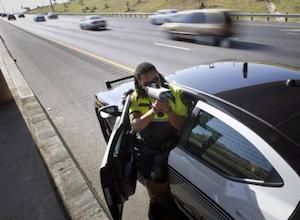
The traffic citation is the "accusation" form used in Court. This document informs which driver committed the crime, and how he or she is being charged, while specifying the date, time, roadway, direction of travel, closest mile marker to where it happened, citation number, and how fast the vehicle was going. This citation should show the court date and time and give the address and phone number for the court. The law enforcement agency that issued the traffic citation may also note what type of approved Georgia law speed detection device was used, including the identification number of that speed detector.
Apart from the author, Cory Yager, Larry Kohn, and William Head possess significant experience in dealing with motor vehicle crimes. It is crucial to remember that if you go to court without legal representation and end up being convicted (or if your lawyer fails to properly inform you about the consequences of your court case outcome), the likelihood of our Georgia attorneys being able to rectify the situation decreases. Call us today at 404-567-5515 for a no-cost consultation with a GA lawyer who handles speeding ticket cases. While our offices are located in the metropolitan area of Atlanta, our law professionals can guide you to top local attorneys, if outside our geographic range for processing your traffic law case.
Georgia speeding fines are not uniform across the state. Each court sets what it charges within the limits the statute allows, and a newspaper survey of southeast Georgia found the same charge costing drivers close to a thousand dollars more in one court than in another. The state's reputation for hard speed enforcement is old enough to have reached pop culture, in the 1977 road-chase movie Smokey and the Bandit. For a plain-English walk through what happens after the ticket, watch our attorney discuss a Georgia speeding court case before your own court date.
So what is a speeding citation, exactly? In Georgia, a speeding citation is the official document an officer hands you at a traffic stop. It serves two purposes at once: it is the criminal charging instrument (the formal accusation) and the summons ordering you to appear in court.
Georgia uses a statewide Uniform Traffic Citation form developed by the Department of Driver Services. Every citation includes specific details: the statute you allegedly violated, the speed the officer recorded, the posted speed limit, the location of the stop, your court date, and the fine schedule. It also typically notes the type of speed detection device used.
A citation is different from a warning. A warning carries no legal consequences – no fine, no court date, no criminal record. A citation, on the other hand, is a live criminal charge that requires you to respond by the court date listed.
A citation is also different from a custodial arrest. With a citation, the officer releases you at the scene after you sign the ticket. Signing is not an admission of guilt – it is simply your promise to appear in court. Refusing to sign the citation can itself lead to arrest.
Most Georgia speeding stops end with a citation and a drive home. However, a speeding arrest is possible under certain circumstances. Because every traffic violation in Georgia is a misdemeanor offense, an officer has the authority to make a custodial arrest instead of writing a ticket.
In practice, arrests are most common when the driver is traveling at extremely high speeds – particularly triple digits on an interstate. An officer may also arrest a driver for speeding when the conduct rises to the level of reckless driving. Other common triggers include driving without a valid license, having outstanding warrants, or refusing to sign the citation.
If an officer places you under arrest at the roadside, you will be handcuffed, transported to the local jail, and booked. You will need to post bond before your release. The booking process can take several hours depending on the county.
It is important to understand that the Super Speeder fee is a separate state fee, not part of the fine the court imposes. The Department of Driver Services adds the $200 fee based on the speed in the conviction, whether or not an arrest occurred at the scene.
GA speeding fines follow a tiered schedule that sets the maximum fine allowed for a first offense, based on how far over the posted limit the driver was traveling:
These figures are statutory maximums for the base fine, not the amount any particular court charges. Court costs, surcharges, and add-on fees are assessed on top of the fine, and what a driver actually pays varies widely from one Georgia court to another.
On top of whatever the court imposes, drivers convicted of going 85 mph or more on any road – or 75 mph or more on a two-lane road – owe a separate $200 state fee under Georgia's Super Speeder law. The Georgia Department of Driver Services bills this fee separately, after the court case ends. Failure to pay it within 90 days results in a license suspension and an additional $50 reinstatement fee.

If your ticket reads "speeding in excess of maximum limits," that is the charging language Georgia officers use for exceeding the maximum lawful speed. This phrase – speeding in excess of maximum limits GA – is the most common charge code on Georgia speeding citations.
Under this statute, "maximum limits" refers to the posted speed limit on the road where the stop occurred. Georgia law sets default speed limits that apply even where signs are not posted: 30 mph in urban and residential districts, 35 mph on unpaved county roads, 55 mph on most other roads, and 65 to 70 mph on interstates and divided highways, depending on location.
The citation will list the specific code section charged, the posted or statutory speed limit, and the speed the officer alleges you were traveling. The gap between these two numbers drives the penalty tier under the fine schedule.
A separate charge – driving too fast for conditions – applies when a driver travels at an unsafe speed for a curve, an intersection, weather, or other special hazards, even if technically under the posted limit. Local governments can also lower a posted limit below the state maximum after a traffic engineering study. Even so, the vast majority of Georgia speeding citations fall under the "maximum limits" charge.
Fighting a speeding ticket on your own is possible, but a Georgia traffic defense attorney can often achieve outcomes that are difficult to get without legal representation. Here are seven reasons to consider hiring a lawyer.
1. Protect your license from points and suspension. Georgia assigns points to your driving record for speeding convictions. Too many points within 24 months can trigger a license suspension. A lawyer may negotiate a reduction that carries fewer or zero points.
2. Avoid Super Speeder fee stacking. The $200 Super Speeder fee stacks on top of your court fines. If your speed qualifies, a lawyer may be able to negotiate the alleged speed down below the Super Speeder threshold.
3. Protect CDL and commercial driving privileges. Commercial drivers face stricter consequences for speeding convictions. A single ticket at 15 mph or more over the limit can affect CDL standing. An attorney who handles traffic cases understands these risks.
4. Address under-21 license suspension exposure. Drivers under 21 face a separate suspension track. Georgia's under-21 suspension law suspends a license by operation of law for certain convictions, including any offense carrying four or more points, and a driver under 18 can be suspended for accumulating four points in a single 12 month period.
5. Defend against enhanced penalties in work and school zones. Speeding in a construction zone or school zone carries higher fines and more aggressive prosecution. A lawyer can review whether the zone was properly marked and the citation was valid.
6. Challenge the speed detection method. Georgia law regulates which speed detection devices officers may use – radar, LIDAR, and VASCAR among them – and each device must meet Department of Public Safety specifications. A lawyer can investigate calibration records, officer certification, and device maintenance logs.
7. Negotiate a reduction to a non-moving violation. In many Georgia courts, prosecutors may agree to amend a speeding charge to a non-moving violation that carries no points and does not appear on your driving history. This outcome is far more common when an attorney handles the negotiation.

If you received a Georgia speeding citation, a free consultation with a traffic defense attorney at Kohn & Yager LLC can help you understand your options. During the call, a lawyer will review the details of your citation, identify the exact subsection charged, and discuss the alleged speed and detection method used.
Depending on your court and the speed alleged, options may include entering a nolo contendere plea, negotiating a reduction to a lesser charge, challenging the accuracy of the speed reading, or preparing for trial. Every case is different, and the best path forward depends on the specific facts of your situation.
Call Kohn & Yager LLC at (404) 567-5515 for a free, no-obligation consultation. Our attorneys are available 24/7 and handle speeding cases in courts throughout Georgia.

A speeding citation is the official Uniform Traffic Citation an officer issues when a driver allegedly exceeds the posted speed limit. It serves as both the criminal charging document and the court summons. It lists the statute violated, the alleged speed, the posted limit, and the court date.
Base fines range from $0 for 5 mph or less over the limit up to $500 for 24-34 mph over. Those are statutory maximums for a first offense, and court costs and surcharges are added on top, so the amount varies by court. Drivers going 85+ mph on any road or 75+ mph on a two-lane road also owe a $200 Super Speeder fee.
This is the standard charging language for exceeding Georgia's maximum lawful speed limit. It means the officer alleges you drove faster than the posted or statutory speed limit. The ticket will show both the limit and your alleged speed.
Yes. While most speeding stops end with a citation, officers may arrest drivers for extremely high speeds, reckless driving, driving without a valid license, outstanding warrants, or refusing to sign the citation. An arrest means booking at the local jail and posting bond.
Georgia does not have a traffic infraction category. Under the state's traffic code, all traffic violations – including speeding – are misdemeanor criminal offenses. A conviction creates a criminal record entry.