- Free Consultation, Call 24/7: (404) 567-5515 Tap Here To Call Us




Is a Breathalyzer Admissible in Court in Georgia?


Are Breath Test Results Allowed as Evidence in a Georgia DUI Case?
Yes, breath test results are generally admissible in a Georgia DUI case. The State must first prove the test ran on an approved device. The operator must have a valid permit. All required procedures must have been followed. Judges exclude breath results regularly when that foundation fails.
Clients often ask, "Is a breathalyzer admissible in court?" The answer turns on the paperwork behind the number. Admissibility is a threshold question a judge decides at a motion hearing before trial, outside the jury's presence. Weight is how much the jury trusts the number once it comes in. Admissibility and weight are separate decisions.
Two statutes supply most of the rules. Georgia's implied consent law says when a driver must submit to state testing. The chemical testing statute sets the foundation for admitting a result. Under Georgia law, a reading of 0.08 or higher supports a per se DUI charge for most adult drivers. A lower reading can still support a DUI less safe charge, which rests on the officer's observations.
Our firm has defended DUI charges in Georgia courts for years. What happens with a breath result depends on the circumstances of each stop.
Roadside Breath Tests vs. the Official Breath Test at the Station
Most Georgia DUI stops involve two different breath tests, and Georgia courts treat them very differently. Knowing which device produced your number is the first step in judging whether the State can use it.
Handheld Roadside Breath Devices
The small handheld unit an officer offers at the roadside is a screening tool. Georgia officers call it an alco-sensor and use it alongside field sobriety testing. The numeric result from that device is not admissible to prove a specific blood alcohol concentration. Under Georgia's chemical testing law and Georgia appellate case law, this result comes in only as evidence that the screening was positive or negative for alcohol. Its role is to help establish probable cause for the arrest.
The roadside screening test is voluntary. Declining it differs from refusing the official state test. It does not by itself trigger an implied consent suspension. Prosecutors sometimes try to reference a roadside number at trial, and defense counsel can move to keep it out.
The State-Administered Breath Test
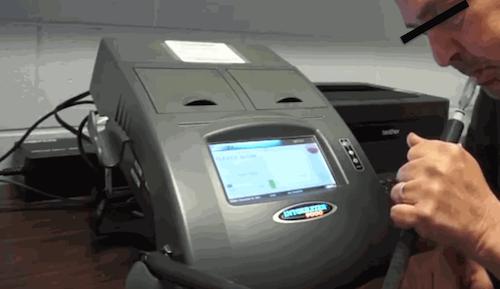
The evidentiary breath test happens after arrest, usually at the jail or a police station. Georgia agencies use the Intoxilyzer 9000, the breath testing instrument approved by the Georgia Bureau of Investigation's Division of Forensic Sciences. This is the test whose result the State puts in front of a jury.
The instrument calls for two sequential adequate breath samples. Those readings must fall within an acceptable range of each other, or the test is not valid. Only a person holding a current operator permit may run the machine. Implied consent governs this state-administered test, so the timing and wording of the officer's notice can decide whether the result survives a challenge. A triple 0 breathalyzer reading is a different situation, and Georgia officers sometimes still pursue a DUI charge after one.
What the State Must Prove Before a Breath Test Comes Into Evidence
Georgia's chemical testing statute sets the foundation, and the burden sits with the State, not the driver. Compare the checklist below against your own case:
- The test ran on a device approved by the GBI Division of Forensic Sciences.
- The instrument was operating properly and had been checked under state procedures.
- The person who ran the test held a valid, current permit issued by the Division of Forensic Sciences.
- The electronic and operational components the statute requires were all working.
- The arresting officer read the implied consent notice at the time of arrest, in the proper form under Georgia's implied consent law, and in a timely way.
Georgia law also gives the driver a right the State cannot ignore. After taking the state's test, you may request an independent chemical test by qualified personnel of your own choosing. The officer must reasonably accommodate that request, and a judge may suppress the state's result when that does not happen.
If the State cannot prove each element, the number does not come in. Defense counsel raises these issues by written motion before trial.
Common Reasons a Breathalyzer Result Gets Thrown Out
An unlawful stop or arrest. If the officer lacked reasonable articulable suspicion to stop the car, that defect can taint everything that follows. The same applies if the officer lacked probable cause to arrest. Everything that follows, including the breath test, can be affected.
A defective implied consent notice. The notice may be read late, read at the jail instead of at the time of arrest, or read in the wrong version. Coercive statements about what happens if a driver refuses can also undermine the reading.
A compelled breath sample. In Olevik v. State (2017) and Elliott v. State (2019), the Georgia Supreme Court held important rulings. The state constitutional protection against compelled self-incrimination covers the act of blowing into a breath machine. A coerced sample may be suppressed, and a breath test refusal generally cannot be used against a driver at trial.
Operator permit and record problems. Expired permits and gaps in the instrument's inspection and area calibration records are recurring grounds for challenge.
No proper observation period. Officers must observe the driver for the required deprivation period. Burping, regurgitation, dentures, or recent drinking can put mouth alcohol on the sample and inflate the reading.
Medical and physiological factors. Readings can be affected by mouth alcohol. Burping, regurgitation, dentures, or recent drinking can cause this. Medical conditions matter too. Acid reflux, diabetes, and ketosis from a low-carbohydrate diet can all affect a reading, depending on the circumstances.
A successful challenge does not end the case. The State may still proceed on DUI less safe using the officer's observations and the field sobriety tests.
What Happens If You Refused the Breath Test in Georgia
A refusal sets two tracks in motion: the administrative license case and the criminal DUI case. They move on different timelines.
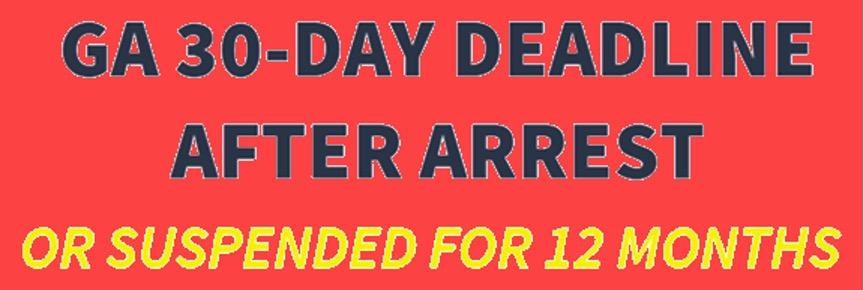
On the administrative track, a refusal can trigger an implied consent suspension. You generally have 30 days from the arrest to request an administrative license suspension hearing. You may also elect the ignition interlock device permit if you qualify. Miss that window and the suspension can take effect by default. The deadline does not pause while the criminal case proceeds.
On the criminal track, drivers want to know whether the refusal itself proves guilt. Georgia's appellate courts have significantly limited the State's ability to use a breath test refusal as substantive evidence at trial. A refusal of blood or urine testing is treated differently, because those tests do not involve the same compelled act. These rules turn on which test was refused, the arrest date, and how the officer handled the stop. Have a lawyer read your paperwork rather than guessing from a general rule.
Talk to a Georgia DUI Defense Attorney About Your Breath Test
Kohn & Yager LLC litigates motions to suppress breath test results in Georgia state and superior courts. We know what Intoxilyzer 9000 discovery should include: inspection records, operator permits, area calibration documentation, and the full test printout. That material should be requested early.
The 30-day administrative license deadline runs from the arrest date. This deadline is the first hard one in most Georgia DUI cases, and it can pass before a first court date.
We offer a free, confidential case review. An attorney will read the implied consent notice and its timing, review the test printout, and look at how the stop unfolded. The goal is to identify whether the breath result is challengeable. Past results do not guarantee a similar outcome, and every case depends on its own facts.

Frequently Asked Questions About Breath Tests in Georgia DUI Cases
Can a breathalyzer result be used against you in a Georgia DUI trial?
Yes, a state-administered breath test result can be used against you if the State lays the proper foundation under Georgia's chemical testing law. The prosecutor must show an approved instrument, a permitted operator, correct procedures, and a proper implied consent reading. If any element is missing, a judge may exclude the result.
Is the roadside handheld breath test admissible in Georgia court?
A handheld breath test is admissible in Georgia court only in a limited way. The numeric result from a handheld alco-sensor is not admissible to prove a specific blood alcohol concentration in Georgia. It may come in only as evidence that the screening was positive or negative for alcohol, supporting probable cause for the arrest. Defense counsel can move to exclude any roadside number.
Can a breathalyzer reading be wrong?
Yes, a breathalyzer reading can be wrong. Readings can be affected by mouth alcohol. Burping, regurgitation, dentures, or recent drinking can cause this. Medical conditions matter too. Acid reflux, diabetes, and ketosis from a low-carbohydrate diet can all affect a reading. Machine problems matter too, including poor maintenance, gaps in inspection records, or an operator who departed from procedure.
What happens if you refuse a breath test in Georgia?
A refusal can trigger an implied consent license suspension. You generally have 30 days from arrest to request a hearing. You may also elect the ignition interlock device permit. Georgia's appellate courts have sharply limited the State's use of a breath test refusal as substantive evidence at trial. Blood and urine refusals are handled differently.
Can you be convicted of DUI in Georgia without a breath test?
Yes, you can be convicted of DUI in Georgia without a breath test. Georgia law allows a DUI less safe conviction. The conviction is based on the officer's observations. The driving pattern, statements, and field sobriety testing matter. The State needs no chemical test at all. Suppressing a breath result does not automatically end a case. It does remove the number juries focus on most.