- Free Consultation, Call 24/7: (404) 567-5515 Tap Here To Call Us




SFST Clues: What Officers Score, and 10 Reasons to Decline in Georgia


Officers scoring the standardized field sobriety tests are trained to count 18 SFST clues in all. The three tests break down this way: horizontal gaze nystagmus (HGN) carries 6 clues, the walk-and-turn carries 8, and the one-leg stand carries 4. Those 18 clues are the entire scoring system for the standardized battery.
The 6 HGN clues are really 3 observations checked separately in each eye. Officers do not grade these evaluations as pass or fail. Instead, NHTSA sets a decision point for each test. Reaching that number tells the officer that impairment is likely, and nothing more.
Field sobriety tests are voluntary in Georgia. The sections below explain how each clue is scored, how officers administer the tests, and why many drivers decline them.
List of 10 Reasons to Not Attempt Field Sobriety Tests
The standardized battery has a long federal history. Starting in 1975, the National Highway Traffic Safety Administration funded research meant to standardize roadside sobriety testing. Researchers began with more than a dozen candidate tests. They narrowed the battery to the three tests still in use by 1981. The agency has revised its training manual many times since the early 1980s, and it later added the drug recognition expert program. That history explains where the clue counts come from. It does not settle how well the tests measure alcohol impairment. Criminal defense lawyers have challenged the battery in courts nationwide for decades.
Below are ten reasons drivers commonly give for declining these roadside evaluations. None of this is advice about your own stop. A lawyer who has reviewed your video and your paperwork is the only person who can tell you what these points mean for your case.
1. The tests are voluntary. A driver in Georgia may decline to perform field sobriety tests. Officers rarely say so out loud. Many drivers also do not know they can ask to speak with DUI lawyers near me before deciding.
2. The reliability of the battery is contested. Defense experts argue that the standardized procedures are not scientifically validated the way clinical measures are. Prosecutors disagree. The dispute is real, and it gets litigated in Georgia courtrooms.
3. Eye conditions can create the same signs as alcohol. Congenital nystagmus, vertigo, and benign paroxysmal positional nystagmus can all cause eye jerking with no alcohol in the system. Video of congenital nystagmus and of the HGN eye test shows how similar the two can look. Officers do not ask enough medical screening questions to rule this out.
4. The person scoring you is not medically trained. A police recruit generally needs to be high school educated (diploma or GED) to enter the academy. HGN is a neurological observation, not an ordinary roadside skill.
5. The certification is short. Officers take a 24-hour practitioner course, or a 40-hour instructor development course. Even registered nurses with far more medical training do not gather HGN clues for diagnostic purposes.
6. Independent reviewers have criticized roadside HGN. Medical doctors and Ph.D. clinical psychologists who have studied police use of HGN describe it as forensically weak. That criticism supports keeping the eye test out of the role of primary proof.
7. Administration errors are common. The evaluations are not scientific in the way clinical testing is, and lighting, passing traffic, and uneven ground all affect scoring. Deviations from the manual show up regularly on video.
8. The balance tests divide your attention. The walk-and-turn and the one-leg stand make you listen, remember, count out loud, and move all at once. The stance itself is unnatural. Age, weight, and old injuries all affect performance.
9. The vertical gaze check is not scored. After HGN, some officers make two vertical passes, known as the VGN eye test. It carries no clue count and adds little to the investigation.
10. The decision points are low. NHTSA's thresholds are four of six clues on HGN, two of eight on the walk-and-turn, and two of four on the one-leg stand. A driver can perform most of the battery correctly and still reach them.
One point deserves special emphasis. Declining the roadside field sobriety tests is not the same decision as refusing the state-administered chemical test of blood, breath, or urine. Georgia's implied consent law governs that second request, and refusing it carries its own license consequences. Georgia charges the offense itself as driving under the influence. Other states call similar conduct DWI, but that is not a Georgia charge name.
Because those two refusals carry different consequences, talk with an attorney about your specific stop rather than relying on a web page. Keep in mind as well that no roadside evaluation proves driving impairment on its own. General reference pages on field sobriety testing sometimes overstate that connection.
Talk With a Georgia DUI Attorney About Your Field Sobriety Tests
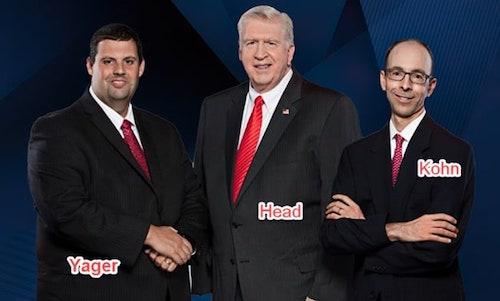
The DUI defense attorneys at Kohn & Yager LLC have completed the NHTSA standardized field sobriety testing course that law enforcement officers take. That training serves one practical purpose. It lets a lawyer compare what the training manual requires against what the video actually shows.
A review of your stop usually starts with the recording and the officer's clue notations. We look at where the tests were given, what instructions you heard, and whether the written report matches the footage.
The consultation is free. Georgia DUI cases also carry short administrative deadlines on the license side, so acting promptly matters. Call 404-567-5515 to talk through your field sobriety tests and your options.
Cory Yager, a former police officer, and the rest of our team can review your case. We will explain how the state may try to use your roadside clues under Georgia DUI laws. Past results do not guarantee a similar outcome, and every case depends on its own facts.
The 18 SFST Clues Officers Are Trained to Score
The standardized battery contains three tests and 18 clues in total. A clue is a specific, observable behavior the officer is trained to watch for. It is not a general impression that someone seemed drunk. NHTSA assigns each test a decision point, which is the clue count the agency treats as an indicator of likely impairment. The three SFSTs and their individual clue counts appear below.
Knowing the counts matters for a simple reason. An officer who testifies to a clue that does not exist in the training manual is describing something other than a standardized test result.
HGN Clues: Six Indicators, Three per Eye
Nystagmus is involuntary jerking of the eye. In each eye, the officer scores three clues. They are lack of smooth pursuit, distinct and sustained nystagmus at maximum deviation, and onset of nystagmus prior to 45 degrees. Because each clue is scored separately in the left eye and the right eye, the maximum is 6.
NHTSA sets the decision point for HGN at 4 or more clues. Reaching it does not prove intoxication by itself. Many conditions and substances unrelated to alcohol can produce nystagmus, including inner-ear disorders, head injury, and some prescription medications. NHTSA claims the clue count correlates with blood alcohol concentration, and defense experts contest that claim at trial. Depending on the circumstances, the officer's scoring may be open to challenge. Fatigue, caffeine, and even the flashing lights on a patrol car can affect what an officer believes he or she sees at the roadside.
Walk-and-Turn Clues: Eight Scored Behaviors
The walk-and-turn carries 8 clues:
- Cannot keep balance during the instruction stance
- Starts too soon
- Stops while walking
- Does not touch heel to toe
- Steps off the line
- Uses arms for balance
- Makes an improper turn
- Takes an incorrect number of steps
Two of those 8 are scored during the instruction phase, before you take a single step. Most drivers never realize the test has already started. NHTSA sets the decision point at 2 or more clues.
The SFST steps are counted out loud, nine down the line and nine back. Drivers take them on a real roadside, not in a lab. Gravel, a sloped shoulder, dress shoes, and traffic passing at speed can all produce clues in a sober person. So can a knee or back injury, age, and body weight. That is why surface and lighting conditions matter so much to the result.
One-Leg Stand Clues: Four Signs of Impairment
The one-leg stand carries 4 clues: swaying while balancing, using the arms for balance, hopping, and putting the foot down. NHTSA sets the decision point at 2 or more clues.
The test runs about 30 seconds. The officer, not a timer, controls when it ends. An officer who lets the count run long increases the odds that a clue appears. NHTSA's own training materials acknowledge that inner-ear problems, leg or back injuries, and body weight can affect performance apart from alcohol.
A driver may set the raised foot down more than once during the exercise. Even so, the scoring still maxes out at 4 recorded clues, because each clue counts once no matter how often it happens.

How Officers Give SFST Instructions and Run the Tests
The SFST instructions are scripted, and the order of the three tests is fixed. Officers begin with HGN. They check for equal pupil size and equal tracking, then look for resting nystagmus. After that, they make passes across each eye for the three scored clues. The stimulus stays roughly 12 to 15 inches from the face, at or slightly above eye level.
The walk-and-turn comes second. You stand heel to toe on a real or imaginary line with your arms at your sides while the officer explains and demonstrates. You then take nine heel-to-toe steps down the line. You turn on the lead foot with a series of small steps, then take nine steps back, counting each one out loud.
The one-leg stand comes last. You raise one foot about six inches off the ground with the toe pointed. You keep your arms at your sides and look at the raised foot. You then count "one-thousand-one, one-thousand-two" and onward until the officer tells you to stop.
NHTSA's own guidance is direct on this point. The tests must be given in the prescribed, standardized manner for the clue counts to carry meaning. Officers record NHTSA DUI clues on a standard form during or shortly after the stop. Deviations from the standard instructions may undercut the weight a judge or jury gives that form, and they are a routine subject of cross-examination.
How SFST Clues Are Challenged in a Georgia DUI Case
Challenging the clues is not about calling an officer dishonest. It is about testing whether the numbers written in the report mean what the state says they mean. Several categories come up again and again in Georgia DUI cases.
Certification. Defense counsel may ask whether the officer's NHTSA training was current on the night of the stop, and what that training actually covered.
Administration. Each test has to be given in the standardized manner. A shortened instruction, a skipped demonstration, or a stimulus moved too quickly can all matter.
Conditions. NHTSA recommends a reasonably level, dry, non-slippery surface with adequate lighting. Highway shoulders often do not meet that description.
Documentation. Whether the officer marked clues at the scene or reconstructed them later at the station can affect how reliable those notations look.
Video. In our experience handling DUI cases in Georgia courts, body camera and dash camera footage does not always match the narrative written into the report. A shoulder that the report calls level may look sloped on camera. A clue described as obvious may be hard to see at all.
These challenges rarely rest on one point. More often, several small deviations together raise a fair question about how much the clue count is worth. A judge may still admit the testimony and let a jury weigh it. The practical goal is to give the jury the full picture of how the roadside evaluation was run.
None of this guarantees a particular result. Depending on the circumstances, a successful challenge may reduce the weight of the roadside evidence or support a pretrial motion. Talk with a defense lawyer about your own stop before drawing conclusions from any general article.

Frequently Asked Questions
How Many Clues Are There in the Standardized Field Sobriety Tests?
There are 18 clues in total across the three standardized tests. HGN accounts for 6, the walk-and-turn accounts for 8, and the one-leg stand accounts for 4. Officers score each clue separately.
What Are the Six HGN Clues an Officer Looks For?
They are lack of smooth pursuit, distinct and sustained nystagmus at maximum deviation, and onset of nystagmus prior to 45 degrees. Each one is scored in the left eye and again in the right eye. That is how three observations become six clues.
How Many Clues Does an Officer Need to Fail You on the Walk-and-Turn?
NHTSA sets the decision point at 2 of the 8 clues. Officers are not supposed to call it passing or failing. Reaching the decision point simply tells the officer that impairment is likely, and that judgment can be challenged.
Can You Refuse Field Sobriety Tests in Georgia?
Yes. Field sobriety tests are voluntary in Georgia, and a driver may decline to perform them. Officers usually do not volunteer that fact at the roadside. Declining may still affect how the officer handles the rest of the stop.
Is Refusing Field Sobriety Tests the Same as Refusing a Breath Test in Georgia?
No. The state-administered chemical test requested under Georgia's implied consent law is a separate decision with separate license consequences. Ask a lawyer how each choice applies to the facts of your case.