TOP-RATED
Atlanta Criminal Defense
Law Firm
Atlanta Criminal Defense
Law Firm




A CDL license defense attorney defends commercial drivers in three settings. The first is traffic citations. The second is DUI charges. The third is the disqualification case that follows. The goal stays the same: keep the commercial privilege intact. One reportable conviction can end a driving career. So these cases are handled very differently from ordinary traffic tickets.
A Georgia conviction follows your CDL no matter which state issued the license. The rule applies whether or not you were working at the time. Larry Kohn and our attorneys travel anywhere in Georgia to handle CDL traffic tickets. Some drivers want a lawyer who focuses on CDL defense. Protecting your CDL driver's license starts with a call before your first court date.
Federal motor carrier rules sort commercial driver offenses into a few groups. Each group carries its own penalties. The periods generally stack for repeat offenses.
Major offenses. These include DUI under Georgia law and refusing the state-administered chemical test. Leaving the scene also counts. So does using a commercial vehicle to commit a felony. Causing a fatality through negligent operation belongs here too. A first major offense generally triggers a lengthy disqualification. A second can result in a lifetime bar, depending on the offense and the driver's record.
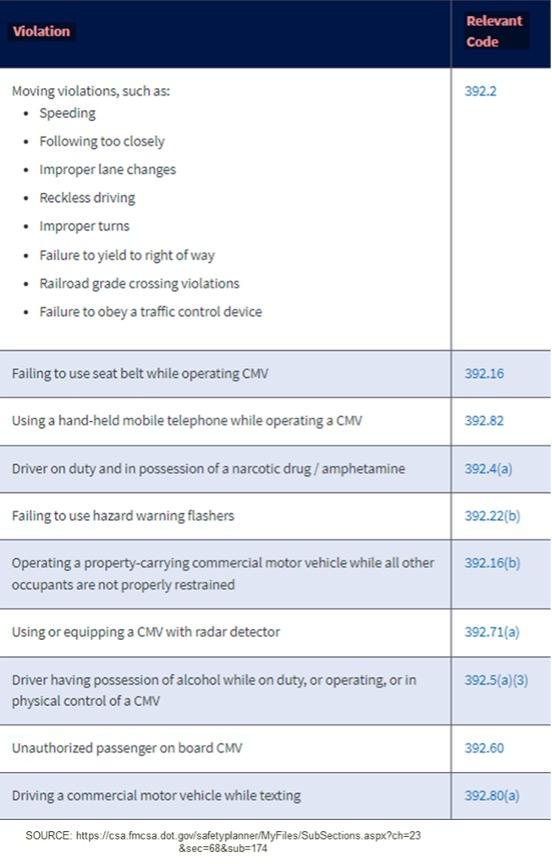
Serious traffic violations. This group covers excessive speeding, reckless driving, and improper or erratic lane changes. Following too closely belongs here. So does driving a commercial vehicle without a valid CDL in possession. One conviction alone generally does not disqualify a driver. A pattern within a set period usually does.
Out-of-service order violations. An inspector may place the driver or the vehicle out of service. Driving after that order is its own offense. Penalties generally increase sharply with each added violation.
Railroad-grade-crossing violations. Failing to slow, stop, or clear the tracks carries real risk. Many drivers underestimate it.
DUI deserves special attention. Most commercial drivers arrested for DUI are in a personal vehicle at the time. Georgia's Department of Driver Services applies disqualification rules to that conviction anyway. So a driver should contest any charge that can generate a reportable conviction. If you are waiting at the scene for police, watch Mr. Head's video on what not to do.

Georgia's implied consent law covers every driver on the state's roads. Driving here means agreeing to a chemical test of blood, breath, or urine. That duty applies when an officer makes a lawful DUI arrest. The officer must read the applicable notice at the time of arrest, or soon after. Georgia uses a separate notice for drivers operating a commercial motor vehicle. The stated consequences differ.
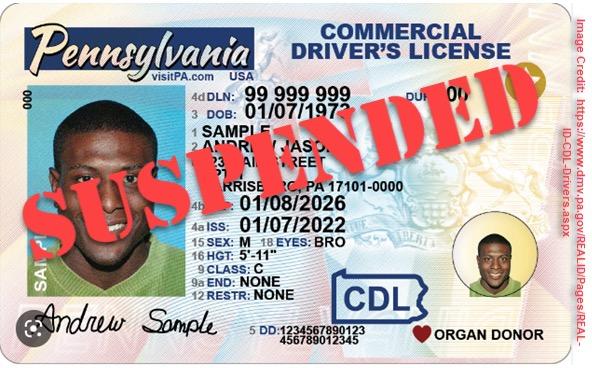
Refusing the state-administered test carries consequences on two tracks. The refusal can support a suspension of the ordinary Class C privilege. It can also trigger disqualification of the commercial privilege on its own. That second consequence is what ends careers. It can attach even where the criminal case later resolves well.
The deadline to challenge the license action is short. The clock runs in days from the arrest. Missing it generally forfeits the hearing. Drivers should contact counsel at once rather than wait for the first court date.
A DUI arrest in a personal car reaches the CDL the same way an arrest in a tractor-trailer does. No carve-out exists for off-duty driving.
An attorney should review the Georgia implied consent notice actually read at your arrest. Whether it was correct, timely, and the right version depends on the facts.
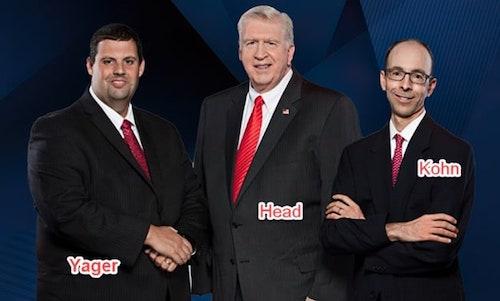
Attorneys near me for CDL drivers. Our four Atlanta criminal lawyer professionals work at one Georgia law firm. Together they bring over 90 cumulative years in criminal law. That work includes traffic violations of all types. Larry Kohn has worked with William Head since 1996. Cory Yager is an ex-cop with nearly a decade in law enforcement. He made arrests of CDL drivers before becoming a criminal defense attorney. Senior Partner William Head has handled dozens of serious accident and fatality cases involving commercial drivers since 1976. Three of our commercial driver attorneys in Georgia co-author Georgia's leading law book on DUI defense. That book was first published in 1995. Our semi-truck accident lawyers keep the list of federal motor carrier safety driver disqualification requirements. The list shows which case resolutions to avoid to maintain CDL driver requirements. So, if searching for a big rig truck lawyer near me for a criminal case, start with our FREE consultation. Dial 404-567-5515. One of our Atlanta traffic lawyers will provide no-cost initial legal advice.
Commercial driving pay is hard to match in non-CDL work. A driver who loses the privilege usually cannot step into another job at the same income. Retraining takes time the budget may not have.
The employment consequences arrive quickly. A disqualification can end the current employment relationship outright. It can also affect whether another carrier will hire the driver later. Carriers pull the record before making an offer.
Our team understands the pressures behind many of these charges. Driver fatigue and tight dispatch schedules are two of them. Many serious citations also require notice to your employer. The carrier's insurer may then ask for a recorded statement. Anything you say on that line can surface later in the criminal case.
Getting counsel involved early generally leaves more procedural options open. Waiting until a conviction is entered closes doors. Once a plea is accepted and reported, the available paths shrink.
For a commercial driver, a traffic citation is never routine paperwork. The citation is a threat to the license that pays the bills.
A CDL holder can face disqualification for citations received in a privately owned vehicle. The driver does not need to be hauling a load. No uniform and no dispatch are required either.
An 18-wheeler operator can be sidelined by a ticket picked up on a day off. That ticket may come in an ordinary car, an SUV, a motorcycle, or a pickup truck. The conviction reports to the driving record. The commercial privilege is affected from there.
Federal rules generally look back three years on many license questions. The applicable period still depends on the offense and the driver's history.
Here is the consequence the paperwork never spells out. A driver who quietly pays a personal-vehicle ticket has entered a conviction. Nothing happens that afternoon. The problem surfaces months later, when a carrier runs the record.
So our cdl defense lawyers ask about every pending citation. The one written in the truck is not the whole picture. A DUI charge under Georgia law in a personal vehicle is treated as a major offense for commercial purposes.
Some readers were injured by a commercial vehicle and need civil help instead. A trucking accident attorney in Atlanta handles that side.

A Georgia conviction does not stay in Georgia. The court reports it. The driver's home-state licensing agency then acts on the record, even though the case was prosecuted here.
That creates a two-state problem. The charge must be resolved in the Georgia court that issued it. The license consequences land where the driver is licensed. Paying the Georgia fine by mail does not contain the damage.
Drivers licensed in Alabama, South Carolina, North Carolina, Tennessee, and Florida receive Georgia citations often. Many are running I-75, I-85, and I-20 at the time.
Counsel appearing in the Georgia court can often resolve the case without a return trip. Much depends on the court and the charge. Some courts require the defendant present. Drivers should answer that question early rather than assume.
A commercial driver cannot treat a citation the way other motorists do. Paying the fine is a conviction. The payment does not make the matter disappear.
Federal rules also prohibit masking a commercial driver's conviction. A nolo contendere plea does not shield the CDL. Neither does a diversion program or a driving school disposition. Those options can shield a Class C license, but not a commercial one.
That leaves one realistic path. The citation must be fought before it becomes a conviction. A lawyer for cdl tickets works the case at the citation stage rather than after judgment. That work means challenging the basis for the stop. Counsel examines how the speed was measured and whether the device was calibrated. Counsel also tests the officer's observations against any available video.
Where a legitimate non-reportable disposition exists, counsel can negotiate toward it. Where one does not, the charge has to be defended on the merits.
Georgia traffic cases are heard in county and municipal courts across the state. Each court keeps its own calendar. Experienced cdl traffic ticket defense attorneys can often appear so the driver does not lose a dispatch day.
None of this guarantees a result. Early work preserves options that vanish the moment a fine is paid.
Drivers searching for a cdl law firm want to know what is actually handled. Here is the scope of our cdl legal services.
DUI defense for commercial drivers. Charges under the statute in a commercial or personal vehicle. That work includes chemical test and refusal issues.
Serious traffic citation defense. Excessive speeding, reckless driving, following too closely, and improper lane change. Other violations that stack up also fit here.
Out-of-service and logbook violation defense. Charges from roadside inspections, hours-of-service records, and out-of-service orders.
Administrative license and disqualification matters. The license case runs on its own track and deadline, apart from the criminal case. Both need attention at once.
Personal-vehicle charges that reach the CDL. Citations picked up off duty in a car, pickup, SUV, or motorcycle. Those still report to the driving record.
Post-conviction and reinstatement questions. What a prior conviction means going forward. What a prospective carrier will see.
Our cdl defense lawyers review the charge, the paperwork, and the driver's record together. The same citation means very different things for a clean record and for a driver with priors. What any of these services can accomplish depends on the facts of the individual case.
A CDL license defense attorney does more than show up on the court date.
Counsel gets the citation, the incident report, and any dashcam or bodycam video while it still exists. Video is routinely overwritten on a retention schedule. A late request is often too late.
The next step is the stop itself. Was the stop lawful? Did any field or chemical testing follow proper procedure? Then comes classification. Is the charge a reportable major offense, a serious traffic violation, or something with no commercial consequence at all? Drivers are frequently surprised in both directions.
Finally, the criminal case and the license action have to be lined up. They move on separate timelines. A decision that helps one can hurt the other.
Our attorneys bring over 90 cumulative years in criminal law to that work. Larry Kohn has worked with William Head since 1996. Cory Yager spent nearly a decade in law enforcement. He arrested CDL drivers before moving to criminal defense.
Drivers may bring us the citation or arrest paperwork for a review at no cost. The consultation covers what the charge means for your CDL specifically. The criminal exposure is a separate question with its own deadline.
Drivers should call before the first court date. After a DUI arrest, the license deadline runs quickly. That deadline does not wait for the criminal calendar.
Our cdl defense lawyers are reachable outside normal business hours for drivers on the road. No attorney can promise that a disqualification will be avoided. Every case turns on its own facts. An early review is what keeps the most options open.

Does a DUI in my personal car affect my CDL in Georgia?
Yes, a DUI in a personal car can affect your CDL. A conviction under Georgia law generally reaches the commercial privilege even when the driver was off duty. Federal disqualification rules do not turn on what you were driving. Refusing the state-administered test carries its own commercial consequence.
Can I just pay a CDL traffic ticket in Georgia instead of fighting it?
Paying the fine is a conviction. For a commercial driver, it generally reports to the driving record. The dispositions that help ordinary motorists avoid a reportable outcome are largely unavailable. One paid ticket may matter little, or it may combine with priors. Much depends on the offense and the record.
How long does a CDL disqualification last in Georgia?
The length depends on the offense category and the driver's prior record. Major offenses generally carry substantially longer disqualification periods than serious traffic violations. Repeat offenses within the applicable lookback period generally increase the period, in some cases permanently. The calculation turns on the exact charge, so an attorney should review your record.
Do I have to appear in Georgia court if I hold a CDL from another state?
Usually the Georgia court that issued the citation must resolve the case. The driver does not always have to appear personally. Depending on the court and the charge, counsel can often appear on the driver's behalf or arrange a virtual appearance. Some matters do require the defendant present, so confirm with counsel.
What should a commercial driver do in the first days after a Georgia DUI arrest?
A commercial driver should contact a lawyer immediately. The deadline to challenge the license action runs in days from the arrest. Missing it generally forfeits that hearing. Drivers should gather the citation, the implied consent notice, and any bond paperwork. Recorded statements to an employer's insurer deserve caution.