 Georgia Criminal Defense Lawyer Blog
DUI Evidence Suppression in Georgia: Get Your Atlanta DUI Evidence Thrown Out
If you’re facing a Georgia DUI charge in Atlanta, Fulton County, or anywhere across the state, the prosecution’s case rests entirely on their evidence. No evidence, no conviction. That’s where a motion to suppress comes in—a legal tool DUI attorney Larry Kohn uses uses to challenge and potentially exclude illegally obtained evidence from your case. Successful suppression can gut the state’s case, leading to dismissal or a reduced charge like reckless driving.
Georgia courts strictly enforce the Fourth Amendment protections against unreasonable searches and seizures. This means police must follow precise protocols during every stage of a DUI investigation, from the traffic stop to the breathalyzer or blood draw. One misstep—like an unlawful stop, coerced test, or Miranda violation—and that evidence becomes inadmissible. Atlanta DUI lawyers at Kohn & Yager have decades of experience filing these motions, often turning hopeless cases into wins.
This guide breaks down the DUI evidence suppression process in Georgia, key stages where suppression happens most often, and real-world examples of what works. If your DUI arrest involved shaky evidence, call 24/7 for a free consultation—suppression motions have time-sensitive deadlines.
The DUI Evidence Suppression Process in Georgia
Filing a motion to suppress follows a clear timeline after your DUI arrest. First, our criminal defense attorneys review the police report, dashcam/bodycam footage, breath test calibration logs, and lab results for violations. Georgia law requires the state to prove evidence was obtained lawfully by a “preponderance of the evidence.” If they can’t, it’s excluded.
The motion hearing happens before trial, typically at your DUI arraignment or a separate suppression hearing in municipal, state, or superior court (depending on your location like Sandy Springs Municipal or Fulton County State Court). Your lawyer argues the evidence chain: Was the stop legal? Did they have probable cause for field tests? Was the breath/blood test administered correctly?
Judges rule based on OCGA § 17-5-30 (motions to suppress) and case law like State v. Ogilvie (2009), which tightened field sobriety test standards. If granted, key evidence vanishes—often the BAC reading or even the stop itself.
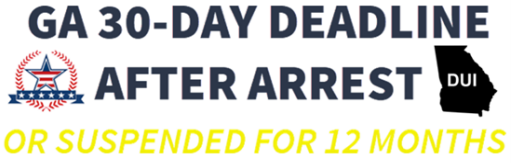
Important: Request an ALS hearing within 30 days of arrest to attack the administrative license suspension simultaneously.
Success rates climb with experienced counsel. In Fulton County alone, suppression wins dismiss 20-30% of otherwise solid DUI Per Se cases when field tests or implied consent violations surface.
Stage 1: Suppressing the Traffic Stop
Every Georgia DUI starts with a traffic stop. Without reasonable suspicion of a crime before the stop, all downstream evidence is at risk of being excluded. Common suppression wins here include:
-
No probable cause for weaving or speeding: Dashcam shows minor lane drift on a legal curve? Or radar calibration off? Courts suppress under Whren v. United States if the stop lacks articulable facts.
-
Checkpoints without protocols: Georgia DUI checkpoints must be publicized, supervised, and neutral (OCGA § 40-6-1.1). Random “roving” sobriety checks? Illegal—full suppression as in Michigan Dept. of State Police v. Sitz.
-
Pretextual stops: Cop follows you for miles without violation, then claims “nervousness”? Weak—Atlanta DUI lawyers attack with driving logs showing clean record.
Example: In a recent DeKalb County case, bodycam showed no swerving, just a slow right turn. Motion granted; entire DUI dismissed.
Stage 2: Challenging Field Sobriety Tests (FSTs)
Field sobriety tests sound scientific, but Georgia courts treat most as non-probable cause evidence. The gold standard NHTSA trio—Horizontal Gaze Nystagmus (HGN), Walk-and-Turn, One-Leg Stand—must be administered flawlessly on level ground.
Suppression triggers abound:
-
Improper administration: HGN with white headlights glare? Walk-and-Turn on sloped highway shoulder? State v. Calderin (2019) excludes unreliable FSTs.
-
Medical/age factors: Back injury, 60+ years old, or inner ear issues? FSTs get suppressed as biased under NHTSA guidelines.
-
No consent, no probable cause: Refusal FSTs politely (“I respectfully decline”)? Cops need independent probable cause (odor alone rarely suffices post-Phillips v. State).
Your Atlanta DUI attorney subpoenas the officer’s training certificates—many lack recertification, killing FST admissibility. Kohn & Yager offers free lawyer advice, and payment plan options. Ask attorney Larry Kohn questions at your free lawyer consultation before you make the decision to hire us to represent you in court.
Stage 3: Breathalyzer and Blood Test Suppression
Georgia’s “Per Se” DUI (BAC 0.08% or higher) hinges on chemical tests. But Implied Consent (OCGA § 40-5-67.1) has teeth—refusal carries penalties, yet illegal administration suppresses results.
Breath test violations:
20-minute observation failure: Simulator not used, room temperature off, or anti-jamming solution expired? Results excluded per GDLS Rule 892-2.
-
Calibration/maintenance logs missing: Intoxilyzer 8000 needs monthly checks; gaps mean suppression (State v. Parks).
-
Partition ratio issues: Breath assumes 2100:1 blood-breath ratio—rising blood sugar or GERD skews it low.
Blood draws demand a search warrant post-2013 Supreme Court (Missouri v. McNeely), or true exigency. Suppress for:
-
No warrant, no exception: Weekend blood draw without judge approval?
-
Chain of custody breaks: Phlebotomist not licensed, samples mishandled, or lab delays >2 hours.
-
Contamination: Mouth alcohol from burp, dentures, or recent drink—rising BAC defense wins.
Atlanta cases shine here: One Kohn & Yager client beat a 0.12 due to uncalibrated Intoxilyzer; blood suppressed on warrantless draw.
Miranda Rights and Statements
Did the cop question you pre-arrest without Miranda warnings? “Have you been drinking?” during FSTs counts as custodial interrogation. Suppress statements under OCGA § 24-8-802. Video often captures arrest procedure violations—attorney Cory Yager will watch the bodycam and police cruiser dashcam recordings of your stop and arrest, making note of any police officer errors.
Why Hire an Atlanta DUI Suppression Specialist Now?
Evidence suppression isn’t DIY—timelines are brutal, and prosecutors fight hard. Firms with 95+ years combined courtroom experience, like Kohn & Yager (authors of Georgia DUI books), file ironclad motions citing OCGA, GDLS rules, and fresh case law. They’ve suppressed BACs in Fulton, DeKalb, Cobb and Forsyth counties..

Don’t wait: Georgia DUI evidence weakens with time (calibration logs are deleted for example). Call 404-567-5515 and set up your free lawyer consultation with Larry Kohn or Cory Yager.