TOP-RATED
Atlanta Criminal Defense
Law Firm
Atlanta Criminal Defense
Law Firm





A roadblock is a temporary police checkpoint. Officers stop every vehicle that reaches the checkpoint, rather than singling out particular drivers, to check for signs of impairment. In Georgia, roadblocks are one of the most common tools law enforcement uses to enforce DUI, the state's impaired driving statute.
Most Georgia roadblocks operate during late-night and early-morning hours, typically between 11 p.m. and 4 a.m. Police departments often place them along routes near bars, restaurants, and entertainment districts. Holiday weekends – including the Fourth of July, Labor Day, and New Year's Eve – see a sharp rise in checkpoint activity. Officers choose these times and locations because they expect more impaired drivers.
Roadblocks set aside the usual rule that an officer needs individualized suspicion of a violation before pulling someone over. This raises serious constitutional questions. Many roadblock arrests can be challenged, and knowing your rights at a checkpoint could help your case.
Approaching a roadblock can be stressful. Knowing what to expect helps you stay calm and protect your rights.
When an officer approaches your window, hand over your driver's license, vehicle registration, and proof of insurance. Have these ready to keep the stop brief. Keep your hands visible on the steering wheel until you need to reach for documents.
The officer may ask where you are coming from, where you are headed, or whether you have been drinking. You are not required to answer these questions. Such questions could incriminate you. You may politely say, "I prefer not to answer that question." Most officers wear body cameras or microphones. These devices record the encounter back to a patrol car.
If an officer asks you to step out, you may be asked to perform field sobriety tests. Examples include the walk-and-turn or one-leg stand. These tests are generally voluntary at a Georgia roadblock. Officers may not use clear language when making the request, but you may decline. Field sobriety tests are scored by the officer's judgment. Factors like uneven pavement, medications, orthopedic conditions, or nervousness can affect your performance.
If the officer develops probable cause to arrest you for DUI, the situation changes. Under Georgia's implied consent law, the officer must read you the implied consent notice. The officer may then request a state test of your blood, breath, or urine. According to Georgia law, chemical testing refusal may result in suspension of your Georgia driver's license or driving privilege for at least one year. Your refusal to submit to blood or urine testing may also be used as evidence against you at trial.
This is a critical decision with serious consequences. Consult an attorney as soon as possible.
Do not agree to a search of your vehicle. If the officer asks for permission, you may politely decline. Without your consent, the officer generally needs probable cause or a warrant to search the vehicle.
A roadblock is a temporary, pre-planned police checkpoint set up on a public roadway. Officers stop every vehicle that approaches, with no discretion to choose among drivers. You may also hear roadblocks called DUI checkpoints, safety checkpoints, or sobriety checkpoints. These terms all describe the same enforcement tool.
Drivers write the word both ways, as one word and as two. Road blocks and roadblocks are the same thing under Georgia law, and the rules below apply either way. So what is a road block? It is a planned checkpoint where officers stop every car on a stretch of road to look for impaired drivers, unlicensed drivers, or uninsured vehicles. No officer has to suspect you of anything before waving you into the line. What makes a road block lawful, and what makes one vulnerable to challenge, are the court-made factors set out next.
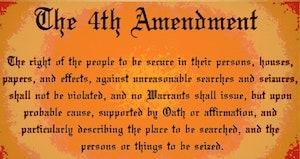
Roadblocks differ from ordinary DUI stops in one important way. In a typical traffic stop, the officer must have reasonable suspicion that a specific driver committed a violation. At a roadblock, no individualized suspicion is required. The checkpoint must still meet constitutional requirements.
Georgia courts evaluate roadblocks under the factors set out in State v. Golden and adopted by the Georgia Supreme Court in LaFontaine v. State. To pass constitutional review, a roadblock must satisfy each of these factors:
Georgia courts have upheld roadblocks for DUI enforcement and license verification. A checkpoint used as a pretext to search cars, or left to the discretion of the officers in the field, is open to challenge. When any of these factors is missing, the stop may be vulnerable to a legal challenge.
Georgia DUI roadblocks typically last between 30 minutes and a few hours. The factor Georgia courts apply is not the length of the operation, but whether the delay to each motorist stays minimal.
Several factors influence how long a checkpoint operates. Traffic volume plays a role. Heavy traffic may cause a roadblock to run longer or shut down earlier to prevent dangerous backups. The number of officers on scene, weather conditions, and the time of night can also affect duration.
The overall operation may span a couple of hours. But the stop of each individual vehicle should take only seconds. An officer may briefly check your license and look for signs of impairment. If the officer develops no reasonable suspicion, you should be waved through quickly. Holding a particular driver for a long period without reasonable suspicion may be challenged as an unreasonable delay under the LaFontaine framework.
A roadblock DUI arrest differs from a typical traffic stop in one critical way. The officer did not observe any bad driving before the encounter. No speeding, no weaving, and no traffic violation precedes the stop. You simply happened to be on the road where the checkpoint was set up. This absence of pre-stop evidence can significantly weaken the prosecution's case.
A Georgia DUI defense attorney will typically evaluate the roadblock itself against the factors Georgia courts drew from State v. Golden and applied in LaFontaine v. State:
If any of these factors fails, the defense may file a motion to suppress evidence obtained from the stop. The state bears the burden of proving the search and seizure were lawful.
Beyond the roadblock itself, defenses may also target what happened after the stop. Field sobriety test administration can be challenged if the officer failed to follow set procedures or conducted the tests on uneven ground. Chemical test results may be questioned if the testing instrument was not properly calibrated. Results may also be questioned if the implied consent notice was not read correctly. Each step in the process presents a potential point of challenge.

Yes, roadblocks are legal in Georgia when they meet constitutional requirements. Georgia courts evaluate roadblocks under the LaFontaine framework. The framework examines several factors. Did a supervisor approve the checkpoint in advance? Did it serve a lawful purpose? Did officers stop every vehicle? Was the intrusion on motorists minimal? A roadblock that fails any of these requirements may be ruled unconstitutional, and evidence from the stop could be suppressed.
Most Georgia DUI roadblocks last between 30 minutes and a few hours. Georgia's roadblock factors ask whether the delay to each motorist was minimal. Each individual stop should take only seconds unless the officer develops reasonable suspicion of impairment. Factors like traffic volume, the number of officers, and weather conditions may affect how long a checkpoint operates.
Georgia law requires you to show your driver's license on an officer's demand and to keep proof of insurance in the vehicle. You are not required to answer questions that could incriminate you. Examples include "Have you been drinking?" or "Where are you coming from?" You may politely decline to answer. Remaining calm and cooperative while exercising this right is important.
Turning around before reaching a roadblock is not illegal by itself. But if you make an illegal U-turn or commit a traffic violation while doing so, an officer may pull you over for that violation. Officers near checkpoints often watch for vehicles that suddenly turn away. A traffic violation gives them a lawful reason to stop you.
Roadblock DUI cases often turn on constitutional challenges that must be raised early through a pretrial motion to suppress. If the checkpoint did not meet Georgia's legal requirements, the evidence against you may not hold up in court.
Time matters. Under Georgia's implied consent law, you may have a limited window to request a hearing on the administrative suspension of your license. A request for a hearing must be submitted within 30 days along with a filing fee. If you do not submit by this deadline, the right to that hearing may be waived.
When you come in for a consultation, bring your citation and any bond paperwork. Also bring any notice you received about body camera or dashcam footage. These documents help your attorney evaluate your case from the start.

Call Kohn & Yager LLC at (404) 567-5515 or contact us online to schedule a free consultation. Every case is different, and results depend on the specific facts and circumstances involved.