TOP-RATED
Atlanta Criminal Defense
Law Firm
Atlanta Criminal Defense
Law Firm




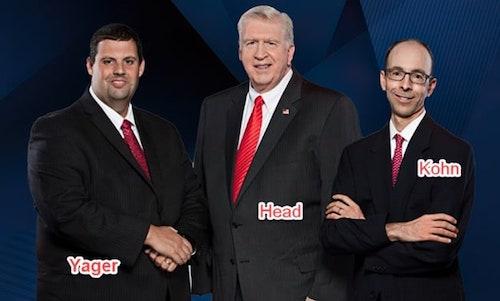
A federal defense lawyer is a criminal defense attorney who represents clients charged with federal crimes in federal district court. In Georgia, these cases are prosecuted across three federal judicial districts: Northern, Middle, and Southern. Each has its own courthouses and procedures. A federal law attorney handles matters that state criminal lawyers rarely encounter. These include guideline-driven sentencing, grand jury investigations, and pretrial detention hearings governed by the Bail Reform Act.
Federal charges differ from Georgia state charges. The prosecutor is an Assistant U.S. Attorney rather than a local district attorney. The court rules differ. Federal sentencing follows its own statutes and guidelines. The federal system has no parole. Federal exposure can reach defendants under 18 as well. Our Atlanta juvenile crime lawyers handle those cases alongside our federal practice.
Agents from the FBI, DEA, ATF, IRS Criminal Investigation, or Homeland Security Investigations often build these cases for months. That work happens before an indictment issues. The time to call a lawyer is when a target letter or an agent visit arrives. Waiting until arraignment costs options.
Congress added mandatory minimum sentences to many federal crimes. The goal was to limit how far a judge may go in showing leniency. A first offender or a person with strong mitigation may still face that floor. That is why a federal criminal defense attorney in Georgia reviews the charge for mandatory minimum exposure at the first meeting.

Federal sentencing starts with the United States Sentencing Guidelines. The guidelines pair an offense level with a criminal history category. That pairing produces an advisory range. After United States v. Booker, the range is advisory. A judge may vary above or below it.
A statutory mandatory minimum works differently. The judge cannot go below it except in narrow situations. Two exceptions matter in practice. The safety valve, a limit on statutory minimums, may let a qualifying defendant in a drug case fall below the mandatory minimum. A government motion for substantial assistance may also open that door. Only federal prosecutors may file it.
The court then weighs the statutory sentencing factors. Those factors include the nature of the offense and the defendant's history. Deterrence and public safety also count. In our work on federal cases in the Northern District of Georgia, one figure moves the range the most. Drug quantity in the presentence report drives it. That number can be contested. Whether any of this helps depends on the charge and the record.

The federal government has many resources at its command. The Federal Bureau of Investigation and the Drug Enforcement Administration are funded by federal tax revenue. Both draw experienced career investigators.
The Bill of Rights sets limits on what the federal government may do. Those limits are essential in building a case. The Fourth Amendment protects a person against unreasonable searches and seizures. A search generally requires a warrant, subject to recognized exceptions. That warrant must describe the place to be searched. It must also name the persons or things to be seized.

Defense work starts long before trial. A grand jury hears the government's evidence in secret. The grand jury then decides whether to return an indictment. A target letter tells someone that prosecutors view them as a target of that inquiry. That letter is a warning worth acting on.
The defense team then pushes for discovery. That request covers Rule 16 material and Brady evidence favorable to the accused. Giglio material on witness credibility and Jencks Act statements follow.
Where the record supports it, we litigate motions to suppress. Those motions target statements taken in violation of Miranda. They also reach evidence seized under a defective warrant. Cell-site location data and other electronic surveillance draw the same challenge.
Independent experts also matter. Forensic accountants test the government's loss figure in fraud cases. Digital forensics analysts examine devices. Chemists review drug testing.
Most federal cases resolve before trial. Leverage often comes from the one weakness that reshapes a plea talk.
Federal cases follow a predictable sequence. Most begin with an investigation. Agents interview witnesses, serve grand jury subpoenas, or send a target letter.
Charges bring the next step. The client is arrested or arranges to self-surrender. A U.S. Magistrate Judge holds the initial appearance. A detention hearing under the Bail Reform Act often follows. That hearing decides whether the client waits for trial in custody.
Arraignment comes next. The client enters a plea to the indictment. The discovery and motions phase comes next. Plea talks usually run alongside it.
A written plea agreement sets out the counts and the factual basis. Agreed guideline positions, forfeiture and restitution terms follow. Most agreements also include an appeal waiver.
At trial, the government must prove every element beyond a reasonable doubt. After a conviction or a plea, U.S. Probation prepares a presentence report. The district judge then imposes sentence.
Some decisions belong to the client alone. Whether to speak with agents is one. Whether to accept a plea is another. Whether to testify is also the client's choice. Counsel's job is to explain the tradeoffs so those choices are informed.
A federal law attorney who knows the Northern District of Georgia brings an edge. Knowing its Assistant U.S. Attorneys is one reason local federal experience matters.
Many clients do not know why their case is federal. Jurisdiction turns on a federal hook. Conduct that crosses state lines can supply it. Use of interstate wires or the mail can too. Drugs and firearms moving in interstate commerce count. Offenses on federal property, crimes against federal officials, and fraud against federally funded programs also qualify.
The systems differ in ways that matter. Federal cases rarely reach a jury, and most end in a negotiated plea. No parole exists in the federal system. A defendant serves the sentence imposed, less limited good conduct credit. Sentencing is guidelines driven rather than left to broad judicial discretion. Pretrial detention is also more common than in state court.
Dual sovereignty adds another layer. The state and federal governments are separate sovereigns. An acquittal or dismissal in a Georgia court does not always bar a federal case for the same conduct.
Federal cases can still be defended. The stakes are higher, which is why the choice of a federal crimes law firm matters.
Georgia falls within three federal judicial districts. The location of your case depends on where the alleged conduct occurred.
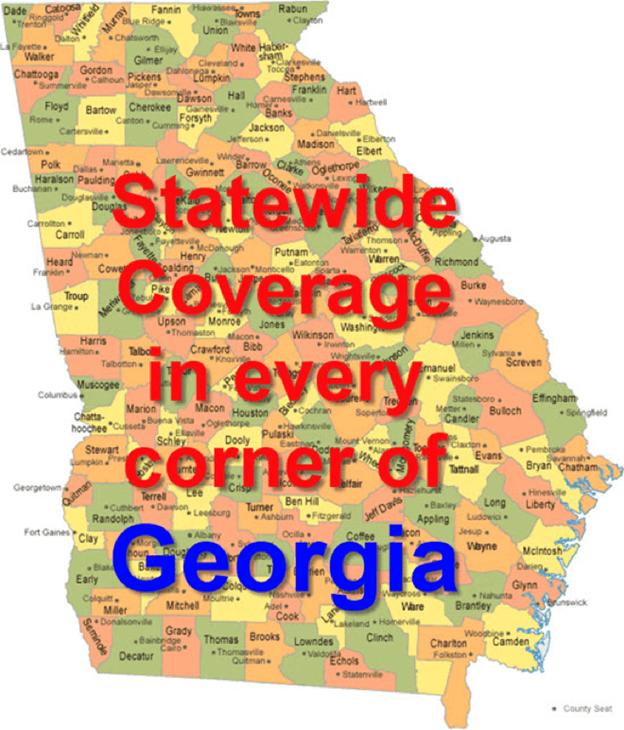
The Northern District of Georgia is the busiest. It includes four divisions – Atlanta, Gainesville, Newnan, and Rome. Most Atlanta-area federal cases are heard at the Richard B. Russell Federal Building in downtown Atlanta. The Middle District of Georgia covers central and south – central parts of the state. Its divisions are in Macon, Columbus, Albany, Athens, and Valdosta. The Southern District of Georgia sits along the coast and eastern border. Its courthouses are in Savannah, Augusta, and Brunswick.
Each district has its own U.S. Attorney's Office, its own judges, and its own local rules. Procedures that work in one district may not apply in another. A search for a federal criminal attorney near me will not sort for any of those differences. A federal defense lawyer familiar with these courts understands the differences. Judges handle detention hearings differently. Plea negotiations typically proceed differently too. Kohn & Yager LLC is familiar with Northern District of Georgia procedures and represents clients across Georgia's federal courts.
Federal charges come from many statutes. The defense changes with the offense.
Federal fraud. Wire fraud and mail fraud are the government's main charges. These white collar crimes reach bank fraud, health care fraud, and PPP loan cases. A federal fraud attorney's first job is usually attacking the proof of intent to defraud. The loss figure that drives the guidelines range comes next. Loss figures are estimates. Estimates can be contested. The government must prove that the defendant acted with specific intent. When financial records are unclear, the defense can challenge every dollar the prosecution attributes to the scheme.
Federal drug charges. Conspiracy and possession with intent to distribute fill much of the federal docket. The same conduct can also draw a Georgia drug charge. Those counts arise under federal drug distribution and drug conspiracy statutes. The drug conspiracy statute does not require the government to prove an overt act. It only requires proof of an agreement to violate federal drug law. Drug quantity, not conduct, triggers the mandatory minimum. Federal drug lawyers therefore focus early on the weight the government can attribute to a client. Challenging the quantity calculation and the reliability of cooperator testimony are often the strongest defense paths.
Federal gun and firearms offenses. Felon in possession is common. It often runs alongside a state gun charge. Using or carrying a firearm during a drug trafficking crime or crime of violence is more serious. That sentence runs consecutively to the underlying offense. It carries a mandatory minimum of five years for possessing the gun in furtherance of the crime. The minimum is seven years for brandishing. It is ten years for discharge. The Bipartisan Safer Communities Act of 2022 added a standalone federal charge for trafficking in firearms. Straw purchase cases and trafficking networks now face dedicated federal charges. Prosecutors may still bring the older false-statement charges as well.
Federal bribery and public corruption. Two statutes cover most federal bribery prosecutions. Under the federal bribery statute, the government must prove that something of value was offered, given, or promised to a federal official. The offer must be made with corrupt intent to influence an official act. Under the federal program bribery statute, federal program bribery reaches state and local officials. These officials work for agencies receiving more than $10,000 in federal benefits in any one-year period. That threshold captures most government agencies. A federal bribery defense lawyer often challenges whether the alleged payment was truly connected to an official act. It may have been simply a lawful campaign contribution or business transaction. The value threshold and the intent element are frequent battlegrounds.
Federal murder and violent crime. Federal murder applies when a killing occurs on federal property or in other special federal jurisdiction. Federal property includes military bases and national parks. Killing a federal officer or employee can carry the death penalty. Prosecutors also charge violent crimes in aid of racketeering, known as VICAR. These crimes include murder, assault, kidnapping, or threats undertaken to gain entry to or maintain position in a criminal enterprise. A federal murder defense lawyer works these cases from the forensic evidence. The credibility of cooperating witnesses matters just as much. Many VICAR cases rely on testimony from co – defendants who have agreed to cooperate in exchange for reduced sentences.
Federal conspiracy. The general federal conspiracy statute requires proof of agreement. At least two people must agree to commit a federal offense. At least one must take an overt act toward it. This charge appears in fraud, public corruption, and many other federal cases. Conspiracy liability extends to all reasonably foreseeable acts of co – conspirators. Even a minor participant may face serious exposure. The defense often focuses on whether the client actually agreed to the charged objective. The client may have been merely present during the conduct.
These are the categories our firm sees most often in the Northern District of Georgia. This list is not a complete catalog of federal crimes.
Federal agents may have already contacted you. A target letter may have arrived. Your next step matters.
Kohn & Yager LLC offers a free and confidential consultation and is reachable around the clock. The firm handles federal cases in all three Georgia federal districts – Northern, Middle, and Southern. The most valuable time to call is before charges are filed. While an inquiry is open, a lawyer may present information that shapes the charging decision. That information may affect which counts are selected. Once an indictment issues, those options narrow.
Speaking with federal agents before consulting counsel can harm a case. Agents are trained interviewers. A false statement can become its own federal charge. Many people begin with a search for a federal defense lawyer near me. The right filter is simpler than distance. Choose a federal criminal defense lawyer whose firm actually practices in federal court.
We make no promise about any result. Every federal case turns on its own facts. No article can assess yours.

A federal charge is prosecuted by the United States government in federal district court. A Georgia state charge is brought by a district attorney or solicitor in state court. Our Atlanta criminal defense lawyers handle those cases as well. Federal cases follow the sentencing guidelines and offer no parole. They also tend to follow long federal investigations. The same conduct can sometimes support charges in both systems. Ask a lawyer to review which sovereign is pursuing your case.
Yes, a target letter is one of the strongest reasons to hire counsel right away. The letter means prosecutors view you as a target of a grand jury inquiry, not just a witness. Nothing has been filed yet. A lawyer may still be able to respond before a charging decision. Calling the agent yourself is a mistake. The letter should go to a lawyer first.
Most federal cases in the Northern District of Georgia take several months to more than a year. That clock runs from indictment to resolution. Complex fraud, conspiracy and multi – defendant cases run longer. The discovery volume increases in those cases. A court may designate a case complex. That extends Speedy Trial Act deadlines. The investigation itself may have run for years before you learned of it. Timelines vary. Ask counsel about your case.
Sometimes, but only through narrow paths. The safety valve may allow a sentence below the mandatory minimum. That route applies to qualifying defendants in drug cases. A government motion for substantial assistance is the other common route. Only prosecutors may file it. Guideline arguments alone do not reach below a statutory minimum. Whether either applies depends on your record and the facts.
No, the federal system has no parole. Congress abolished it for offenses committed after November 1, 1987. A defendant serves the sentence the judge imposes. Limited good conduct credit is the main reduction. Earned time credits under the First Step Act may also apply to some people. That is one reason the sentencing hearing carries so much weight. A lawyer can explain how these credits may apply to you.