TOP-RATED
Atlanta Criminal Defense
Law Firm
Atlanta Criminal Defense
Law Firm





Nolle pros (short for nolle prosequi) means the prosecutor is formally choosing not to pursue the charge. The Latin term means "we shall no longer prosecute." In Georgia, the prosecuting attorney files an order of nolle prosequi with the court. This order ends prosecution of that specific count. The practical effect is that the charge goes away. However, under limited circumstances, the State may refile the same charge if the statute of limitations has not expired.
This legal term causes confusion because it sits in a gray area. It is not a full dismissal. It is not an acquittal. It is also not always the final word on a case. Understanding what nolle pros means – and what it does not mean – matters for anyone facing criminal charges in Georgia or trying to clear an arrest from their record.
General-reference sources describe the term the same way. Wikipedia treats a nolle prosequi as the prosecution's voluntary abandonment of a case before a verdict, and Dictionary.com defines it as an entry on the court's record that the prosecutor will proceed no further.
The sections below cover how a nol pros occurs, how it compares to a dismissal, what the formal order looks like in Georgia courts, common reasons prosecutors file one, and what steps to take to pursue record restriction.
A nol pros occurs when the prosecuting attorney files a formal written entry. The prosecutor declines to proceed with a criminal charge. Under Georgia law, the prosecutor may enter a nolle prosequi with the court's consent. This can happen at any point after the case is examined in open court and before a jury receives it.
This can happen at several stages of a criminal case:
Entering a nolle prosequi is not the prosecutor's only option. The same attorney can move the case to the dead docket, which suspends the charge without setting it for trial, or press forward toward a verdict. A dead-docketed charge is still pending rather than disposed of, so it does not yet qualify for the relief described on our Cherokee County record restriction page.
The prosecutor does not need the defendant's permission to enter a nol pros before trial. The judge must consent, but Georgia courts routinely grant these requests. See the related guide on a motion in limine for one pretrial tool that can pressure the State toward this outcome.
"Nolle prossed" is the past participle of nolle prosequi. When a charge has been nolle prossed, the prosecutor has formally entered a nolle prosequi on that count. The prosecutor is declining to prosecute it further. Readers who want the general legal-dictionary entry rather than Georgia practice can consult The Free Dictionary.
A common misconception is that a dismissed nolle prosequi charge and a court-ordered dismissal are the same. They share similarities – neither results in a conviction – but the procedures and consequences differ in important ways. A nolle prosequi comes from the prosecutor. A dismissal comes from the judge.
The distinction between nolle prossed vs dismissed is important enough that it deserves its own section. Readers who need to understand how these two dispositions compare on background checks and in terms of refiling risk should read the comparison below.

People often use "nolle prossed" and "dismissed" as if they mean the same thing. In everyday conversation, both signal that the case did not result in a conviction. But in Georgia's criminal courts, the two dispositions differ in meaningful ways.
Who acts. A nolle prosequi is filed by the prosecuting attorney. The prosecutor decides to stop pursuing the charge. A dismissal can come from the judge – for example, when the court grants a defense motion to dismiss for lack of probable cause or a speedy trial violation.
When it happens. A nolle prosequi typically occurs before trial. The case is still in the pre-trial phase. A judicial dismissal can happen at various stages, including during or after trial in some circumstances.
Whether charges can return. This is the distinction most defendants care about. A nolle prosequi generally permits the State to refile the same charge. This is allowed as long as the statute of limitations has not expired. For most misdemeanors in Georgia, that window is two years from the date of the offense. For most non-capital felonies, it is four years. A dismissal "with prejudice" bars the State from bringing the charge again. However, dismissals with prejudice are rare in criminal cases.
How it appears on a background check. Both show up as non-conviction dispositions on a Georgia Crime Information Center (GCIC) criminal history report. However, the language differs. A GCIC report may show "nolle prosequi" or "nol pros" as the disposition. A dismissed charge typically shows "dismissed" or "dismissed by court." Neither is a conviction, but employers and licensing boards may interpret them differently.
Here is a quick comparison:
In all three scenarios, the person is not convicted. But only a dismissal with prejudice fully closes the door on future prosecution for that charge.
An order of nolle prosequi is the formal written entry the prosecuting attorney files with the court. This entry terminates prosecution of a specific count. In Georgia practice, this entry is typically made on the accusation or indictment itself. The prosecutor signs it.
Georgia law governs how and when this order may be entered. Before a case has been submitted to a jury, the prosecuting attorney may enter a nolle prosequi with the court's consent. After the case has been submitted to a jury, a nolle prosequi requires the defendant's consent. The statute also requires the prosecuting attorney to notify the defendant and the defendant's attorney within 30 days. Notification may be in person or by regular mail.
With the order of nolle prosequi entered, the clerk of court dockets it. It becomes part of the permanent court file. The GCIC criminal history report updates to reflect the disposition as nolle prosequi rather than "pending" or "open."
Anyone whose charge has been nol prossed should request a certified copy of the order from the clerk's office. This document is useful for pursuing record restriction (expungement) and for correcting a criminal history report that still shows the charge as pending. Without the certified copy, the record restriction petition may be delayed or incomplete. If a background check still shows the arrest after a nol prosequi order, the certified copy serves as proof that no conviction resulted.
In Georgia practice, the prosecutor does not need a defense motion or a court order to initiate a nolle prosequi. The prosecuting attorney files a written entry – sometimes called a motion for nolle prosequi – stating why the State is declining to proceed. Common reasons include witness unavailability, evidentiary problems, completion of a diversion program, or the interests of justice.
While the defense cannot force a nol pros, a skilled criminal defense attorney can create the conditions that make it the prosecutor's best option. Filing targeted pretrial motions is the primary tool. A motion to suppress evidence based on Fourth Amendment violations can eliminate the State's key exhibit. A motion in limine can exclude prejudicial testimony. A Brady demand can force disclosure of exculpatory evidence the prosecutor may not have considered.
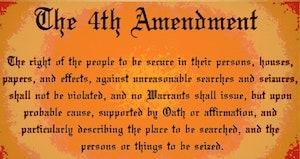
When pretrial motion hearings reveal that critical evidence will be excluded, prosecutors in Georgia courts often conclude that the remaining evidence cannot prove guilt beyond a reasonable doubt. At that point, filing a nolle prosequi is a practical decision. It conserves resources and avoids a trial the State is likely to lose.
The defense attorney's investigation matters too. Identifying alibi witnesses, obtaining surveillance footage, or hiring expert witnesses to challenge forensic evidence can all shift the prosecutor's calculus toward discontinuing the case.
In some cases, the prosecutor encounters problems with the evidence. A key or sole witness may disappear or become unavailable to testify. When this happens, the prosecutor may file a nolle prosequi in Georgia.
In other cases, the State's post-arrest investigation reveals new facts. The victim may be the instigator, or the victim's account may not be truthful. The prosecutor then decides not to continue the prosecution based on new information. Perhaps the property alleged to have been stolen actually belongs to the accused. The accused purchased it through Amazon using his name and credit card.
In criminal battery cases, the caller's version of events may lack support from eyewitnesses. Three independent witnesses may have seen the alleged victim throw hot coffee in the face of the person who was arrested.
In such cases, the prosecuting attorney can decline to continue the accusation or indictment. The attorney enters a Georgia nolle prosequi.
Under Georgia law, misdemeanor prosecutions generally must begin within two years of the offense. Most non-capital felonies have a four-year statute of limitations. Experienced criminal defense attorneys "calendar" these deadlines as soon as they are hired. They follow up to ensure that an expired limitation period is raised with the court when needed.
Nolle prosequi exists in other jurisdictions too, each under its own rules. The consent and notice requirements described on this page come from Georgia law and govern Georgia's criminal courts, which prosecute both misdemeanor and felony cases.
Prosecutors in Georgia courts file a nolle prosequi for many reasons. In about five percent of cases, pure luck helps. A key police officer witness may have lost POST certification. The officer may have been indicted, deployed overseas, or resigned. The officer may have died, become disabled, or moved outside the state. Our law firm makes it routine practice to obtain the report of the arresting officer's Georgia P.O.S.T. (peace officer's standards and training) record.
However, the skill level and hard work of your criminal defense lawyer typically obtains the good result. Your attorney investigates your case thoroughly. The attorney files many targeted pretrial motions. Your attorney conducts the motion hearing. The attorney may bring expert witnesses or fact witnesses. You may testify yourself. Most importantly, the criminal attorney will cross examine the law enforcement officers who gathered evidence against you.
The most common reason for the government not proceeding comes after testimony at pretrial motions. Critical evidence must be excluded from the State's case. The trial judge rules the evidence inadmissible. Such rulings show a weakness in the case. They can leave insufficient evidence to prove guilt beyond a reasonable doubt.
Different types of cases have a greater likelihood of being "revived" after a nolle prosequi is entered. Domestic violence cases in Georgia are the prime example. In State Court, over half of these cases receive a nolle pros. The victim does not show up for court. For two years from the date of the incident, the case may be revived if charged as a misdemeanor. For most felony charges, the case may be revived within four years.
A new incident between the parties may occur. An additional new crime may arise. Other new evidence may surface. For example, the prosecutor may learn that the defendant intercepted and destroyed the court notice sent to the victim. The victim missed court because of this.
The accused person cannot invoke a double jeopardy defense. The prosecution was withdrawn by means of the nolle prossed case.
This distinction between a nolle prosequi and an acquittal is critical. An acquittal occurs only when jeopardy has attached. This means a jury has been seated and sworn, or a judge has begun hearing evidence in a bench trial. The trier of fact then finds the defendant not guilty. Double jeopardy then bars the State from trying the defendant again for the same offense.
A nolle prosequi entered before jeopardy attaches carries no double jeopardy protection. The prosecutor can refile the same charges within the limitation period. Under Georgia law, the statute of limitations is generally two years for misdemeanors and four years for most non-capital felonies. Longer limitation periods apply to certain serious offenses. If the charge had already been indicted when the nolle prosequi was entered, Georgia law adds six months to the limitation period, measured from the date of entry.
However, if a nolle prosequi is entered after the case has been submitted to a jury, Georgia law requires the defendant's consent. Without that consent, the State cannot withdraw the case from the jury. This protection exists because jeopardy has attached at that point. Allowing the State to nol pros over the defendant's objection would let prosecutors avoid unfavorable verdicts and retry cases at will.
The practical takeaway is this: a nol pros is not an acquittal. In most situations, the State retains the option to bring the charges back. Defense attorneys track the statute of limitations from the date of the alleged offense. They also track the extra six months that follows the nol pros of an indicted charge before treating a case as closed.
Our law firm handles ninety percent of our cases in the 19 metro Atlanta counties. Our criminal lawyers in Atlanta also travel to every corner of the state of Georgia for clients who need our expertise and legal services.
In thousands of our prior cases, obtaining a nolle prosequi for some charges has been commonplace. However, obtaining a nol pros for all pending criminal charges is not common. Senior partner William Head successfully obtained a nolle prosequi in Georgia in a 2019 felony vehicular homicide case based on DUI drugs. The case was in southwest Georgia county. The case had been pending for over 13 months. The client now has no record of that offense.
Our Atlanta attorneys offer a free lawyer consultation. What are you waiting for? Request a personal meeting – face-to-face with social distancing – or via video conference or cell phone.

Whether you are trying to clean up incorrect information on a background check or trying to seal prior arrest records for which you were never convicted, call our law office. Please call today at (404) 567-5515. Our phones are answered 24 hours a day. Our law office partners will review your case with you for free. Contact us and let us review your case facts.
Additional Links to recent appellate decisions in other states:
Nolle Prosequi Virginia case interpreting Virginia laws
A 2020 nolle prosequi Florida case
Nol pros in Connecticut criminal case, as an example from Connecticut criminal lawyers
Missouri nolle prosequi in 1988 was dismissed "without prejudice" if additional evidence was later obtained.
Prosecutors in Georgia courts file a nolle prosequi for a range of practical and legal reasons. Understanding what typically motivates this decision can help defendants and their attorneys identify whether a nol pros is a realistic goal in a given case.
The most common reasons include:
Key witness unavailable or recanting. If the State's primary witness moves out of state, becomes uncooperative, or recants their original statement, the prosecutor may lack sufficient testimony to prove the case beyond a reasonable doubt.
Evidence suppressed on constitutional grounds. When a court grants a defense motion to suppress evidence obtained in violation of the Fourth, Fifth, or Sixth Amendment, the remaining evidence may be too weak to proceed. An illegal traffic stop that leads to a drug seizure can unravel the entire case if the stop is ruled unconstitutional.
Chain – of – custody or laboratory issues. Problems with how physical evidence was collected, stored, or tested can make that evidence inadmissible. Crime lab backlogs, contamination, or analyst misconduct may also undermine the State's forensic case.
Victim refusal to cooperate. This is especially common in domestic violence cases. When the alleged victim does not appear for court or refuses to testify, the prosecutor may have no viable path forward.
Completion of pretrial diversion or conditional discharge. Some defendants enter diversion programs. These require community service, counseling, or other conditions. Upon successful completion, the prosecutor files a nolle prosequi as agreed.
Exculpatory evidence surfaces. New evidence – alibi witnesses, surveillance footage, DNA results – may show the defendant could not have committed the offense.
Co – defendant cooperation. In multi – defendant cases, one defendant's cooperation with the State may make prosecution of another defendant unnecessary or redundant.
Resource prioritization. Prosecutors handle heavy caseloads. In some situations, the interests of justice favor dropping a minor charge. This allows the prosecutor to focus resources on more serious offenses.
Not every case qualifies for a nol pros. But defense attorneys who investigate thoroughly and file well – targeted pretrial motions increase the likelihood that one or more of these factors will come into play.
A nolle prosequi does not automatically disappear from your criminal record. Even though the charge did not result in a conviction, the arrest and the original charge remain visible on a Georgia Crime Information Center (GCIC) criminal history report. What changes after a nol pros is who is allowed to see them.
The GCIC report shows the disposition nolle prosequi next to the charge. Employers, landlords, and licensing agencies who run background checks can see this entry. While it confirms there was no conviction, many people misinterpret any criminal history entry as a negative mark.
Georgia law provides a path to restrict these records. Under Georgia's record restriction statute, access to the record is restricted once all of the charged offenses have been dismissed, nolle prossed, or reduced to a local ordinance violation after an indictment or accusation. This is commonly called expungement. Once restricted, the arrest and charge no longer appear on standard background checks.

Eligibility turns on the disposition: every charged offense must have been dismissed, nolle prossed, or reduced to a local ordinance violation. The statute sets no waiting period and does not require that the limitation period for refiling has run. It does set out exceptions: the record is not restricted if the prosecuting attorney states that the charge was nol prossed because of a plea deal on a related charge, because the State was barred from introducing material evidence, or because the conduct was prosecuted in another court. Arrests before July 1, 2013 follow a different route: a written request to the arresting agency, which the prosecuting attorney then reviews within 90 days. Restricted information stays available to courts and law enforcement; what stops is its release to private employers, landlords, and licensing agencies.
Sealing the court file is a separate step: the statute requires a petition to the court with jurisdiction over the offense, and the clerk then has 60 days to restrict the file. In some cases, you may need to appear for a hearing. Timelines vary by county, but many restriction petitions in metro Atlanta are processed within a few months.
The key point is that a nol pros alone does not clear your record. Restriction limits who may see the arrest, and the court file stays public until a judge orders it sealed. Anyone whose case ended with a nolle prosequi should consult an attorney to determine their eligibility and begin the process.
If you are facing criminal charges in Georgia, or if your case was recently nolle prossed and you want to pursue record restriction, Kohn & Yager LLC can help you understand your options.
For defendants with pending cases, the question is whether your case has features that commonly lead to a nolle prosequi. Evidentiary weaknesses, witness problems, and constitutional violations in evidence gathering are all factors that can pressure the State to discontinue prosecution. Targeted pretrial motions – including motions to suppress, motions in limine, and Brady demands – are the tools defense attorneys use to expose these problems. They move the prosecutor toward a nol pros.
For people whose charges have already been nol prossed, the next step is often record restriction. That arrest still appears on background checks until you take action. Georgia law provides a path to restrict these records. However, the process requires proper documentation and knowledge of eligibility requirements that vary depending on the charge and the timeline.
Outcomes depend on the facts of each case. No result is guaranteed. Every criminal case involves unique circumstances that affect what options are available.
Kohn & Yager LLC offers a free consultation to review your situation. Call to discuss your case with a Georgia criminal defense attorney. The attorney can evaluate your charges, explain the realistic possibilities, and outline the next steps. Consultations are available 24 hours a day, 7 days a week.
This page was written by Larry Kohn, a nolle prosequi and record restriction attorney in Atlanta, Georgia, and a legal book author of trial practice chapters published nationally.

Nolle pros means the prosecuting attorney has formally decided not to pursue a criminal charge. In Georgia, the prosecutor files an order of nolle prosequi with the court. This terminates prosecution of that specific count. It is not a conviction, but it is also not an acquittal. The charge may be refiled if the statute of limitations has not expired.
The main difference is who acts. A nolle prosequi is filed by the prosecutor, while a dismissal can come from the judge. Both result in non-conviction dispositions. However, a dismissal "with prejudice" bars refiling, while a nolle prosequi generally allows the State to refile within the statute of limitations. Both stay on the criminal history report until access to the record is restricted.
In most cases, yes. A nolle prosequi entered before a case is submitted to a jury does not trigger double jeopardy protection. The State can refile the same charge within the limitation period, and if the charge had been indicted, Georgia law adds six months from the entry of the nolle prosequi. The general timeline is two years for misdemeanors and four years for most non-capital felonies in Georgia. If the nol pros occurs after the case has been submitted to the jury, Georgia law requires the defendant's consent.
A nolle prosequi stays on your GCIC criminal history report, but Georgia's record restriction statute restricts access to it once every charged offense has been dismissed, nolle prossed, or reduced to a local ordinance violation. Restricted information still goes to courts and law enforcement, and the court file stays public until a judge orders it sealed. There is no waiting period, but the record is not restricted if the prosecuting attorney states the charge was dropped because of a plea deal on a related charge or because the State was barred from using material evidence.
The most common reasons include a key witness becoming unavailable or recanting, evidence being suppressed after a successful defense motion, chain – of – custody or lab problems with physical evidence, victim refusal to cooperate (especially in domestic violence cases), completion of a pretrial diversion program, and the discovery of exculpatory evidence. Prosecutors may also file a nolle prosequi when co – defendant cooperation makes the charge unnecessary or when resource priorities shift.