TOP-RATED
Atlanta Criminal Defense
Law Firm
Atlanta Criminal Defense
Law Firm




Breath testing is the main tool Georgia police use to check a driver for alcohol. Police alcohol testing happens at the roadside and again at the station after arrest. A breath test result does not guarantee a conviction. Many defenses may be open to challenge that evidence, and Georgia drunken driving case law shapes which ones work.
Georgia's current breath machine is the Intoxilyzer 9000. It measures the alcohol level in a driver's deep lung air. It prints a result that the state uses to bring charges under Georgia's driving under the influence statute. But breath test results are not bulletproof. Science, procedure, and the constitution all give ways to attack them.
Under Georgia's implied consent framework, drivers on Georgia roads are deemed to have consented to chemical testing. That consent applies once the driver is arrested for DUI. The arresting officer must read a specific implied consent notice before asking for a test. A misstep in those steps may give a defense lawyer grounds to attack the results. Flaws in the test itself may do the same. Drivers facing a drunk driving charge should know the breath test defenses Georgia law allows. Drivers arrested in Cobb County should consult our Cobb County DUI lawyers about these defenses. See our related guide: Do You Have to Take a Breathalyzer Test in Georgia?.
When Georgia police officers suspect a driver of impairment, they run a set series of tests for drunk drivers. A police drunk test can happen at the roadside, at the station, or both. Knowing each stage helps drivers and defense lawyers see where a challenge may arise.
Roadside watching and questions. The officer starts by noting driving behavior, the smell of alcohol, slurred speech, and other visible signs. The officer may ask whether the driver has been drinking. Georgia law requires a licensee to show a driver's license when an officer demands it. But a driver does not have to answer questions about drinking.
Standardized Field Sobriety Tests. Officers trained under NHTSA guidelines may ask the driver to perform sobriety tests. The sobriety test police use is the same across the country. It includes the Horizontal Gaze Nystagmus test (HGN), the Walk-and-Turn test, and the One-Leg Stand test. These tests are voluntary. They are scored by eye, so the officer's own read of them matters. Uneven pavement, health problems, or footwear can all skew the result.
Preliminary breath test at roadside. The roadside drunk test police carry is a small handheld screening device. This device, called a PBT, is used before arrest. Under Georgia case law, the alcohol level number from a PBT is generally inadmissible at trial. Only the positive or negative reading for alcohol may be used. The PBT is voluntary, and turning it down costs you nothing on your license.
Evidentiary breath test after arrest. If the officer arrests the driver, the state-administered test takes place at the station on the Intoxilyzer 9000. Before asking for this test, the officer must read the right implied consent notice in its entirety. The words need not be exact, so long as the substance is unchanged. Under Georgia law, the state must request two sequential breath samples. For either reading to be admissible in the state's case-in-chief, the two must not differ by more than 0.020 grams. The lower of the two results is the number used for the charge.
Blood or urine testing. When a driver refuses the breath test, or when officers suspect drugs, they may ask for a blood or urine sample. Under Georgia law, any person who drives on Georgia roads is deemed to have given consent to a chemical test of blood, breath, or urine. That consent applies if the driver is arrested for DUI or is in a crash causing serious injury or death. After taking the state's test, the driver may have more chemical tests done. Those tests must be by qualified people of the driver's own choosing, at the driver's own expense.
Georgia law creates two paths to a DUI conviction. The split explains why breath test defenses carry so much weight.
The first path is DUI less safe. Under this theory, the state must prove the driver was under the influence of alcohol. The alcohol must have made it less safe for the person to drive. The state leans on what the officer saw, how the driver did on the field tests, and other indirect proof. A breath test number may support this charge, but it is not required. Our guidance on hiring an attorney outlines what to look for in a DUI defense lawyer.
The second path is DUI per se. "Per se" means "by itself." Under this theory, the state need only prove the driver's alcohol level was 0.08 or more. The measurement must be taken within three hours after driving ended. The alcohol must have been consumed before driving ended. The state does not need to show impaired driving at all. For a driver in a commercial motor vehicle, the threshold drops to 0.04. For drivers under 21, the threshold is 0.02.
Breath test defenses matter most in per se cases. The breath test number is the whole case. If the defense can show that number is unreliable, wrong, or inadmissible, the per se charge may collapse. Even when the state also charges DUI less safe, knocking out that number takes away its strongest proof. Knowing the local court means knowing its trial calendar. Our guide to calendar calls in court explains what your lawyer announces on each court date.
Defense lawyers may raise many challenges to breath test evidence. Which ones are open depends on the facts. These defenses fall into four broad groups.
Scientific and physiological defenses. The Intoxilyzer 9000 assumes every person converts breath alcohol to blood alcohol at a fixed 2100 to 1 partition ratio. In real life, that ratio shifts from person to person. Health problems like acid reflux, GERD, or a hiatal hernia can push stomach contents and alcohol vapor into the throat. That can inflate the reading. Mouth alcohol left from recent drinking, belching, or vomiting during the watch period creates the same risk. Diabetic drivers in ketoacidosis may give off acetone, which can skew the machine's reading. Even breathing can matter. Fast breathing tends to lower results. Holding your breath may raise them. A defense lawyer may hire medical or toxicology experts to explain how these factors could have produced a bad result.
Machine defenses. Georgia requires the Intoxilyzer 9000 to work properly. All of its parts must be attached and in good working order. Defense counsel gets the machine's calibration and upkeep records. Those records show whether checks were on time and whether results fell within spec. If the two sequential breath samples differ by more than 0.020, the results may be inadmissible. Radio waves from nearby devices can skew a reading. Air blank failures – where the machine does not clear the sample chamber between tests – may taint results. Some defense lawyers have gone after the private source code of breath machines. They argue the defense has a right to see how the machine works out its result.
Officer and procedure defenses. The breath test operator must hold a valid permit from the Georgia Bureau of Investigation's Division of Forensic Sciences. A law enforcement officer without that permit cannot give the state's test. Before testing, the operator must follow that division's approved methods. Those methods include watching the driver for a set deprivation period. The watch makes sure nothing goes into or out of the mouth that could skew the result. If the officer skips or cuts short that window, the result may be challenged. The arresting officer must also read the right version of the implied consent notice. The notice differs for drivers 21 and over, drivers under 21, and drivers of commercial motor vehicles. The officer must read it in its entirety. The test must happen within three hours after driving ended for the result to support a per se charge. Gaps in the chain of custody, or lost test records, may also support exclusion.
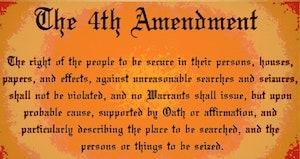
Constitutional defenses. If the traffic stop itself was illegal – lacking reasonable articulable suspicion – all evidence gathered after it may be suppressed. If the officer lacked probable cause to arrest the driver for DUI, the breath test result taken after that arrest could be excluded. Under the state constitution, Georgia case law bars the use of a driver's refusal of a breath test against them at trial. More on that rule below.
None of these defenses guarantees a result. Whether a challenge works depends on the facts of each case. Our published case results include a Georgia DUI in which the breathalyzer test exceeded a 0.20 BAC level. The jury returned a not-guilty verdict. Past results do not predict the outcome of any other case.
A breath test result does not have to be the last word in your DUI case. A Georgia DUI lawyer who knows breath test defense can take real steps to attack the state's evidence.
Defense counsel gets and reads the Intoxilyzer 9000's upkeep logs, calibration records, and check history. Your lawyer cross-examines the state's breath test operator about training, permit status, and whether the rules were followed. When the facts support it, your lawyer files motions in limine. Those motions ask the court to keep a bad breath test result away from the jury. Constitutional arguments add another layer. They include attacks on the legality of the stop, the arrest, and the implied consent process.
Were you arrested for DUI in Georgia? If a breath test is part of your case, call Kohn & Yager LLC for a free consultation. A breath test may be challenged in several ways. Your lawyer can weigh your options. Call (404) 567-5515 to discuss the breath test evidence in your case. Learn what defense options may apply to your situation.

Georgia appellate courts have issued several landmark rulings on breath test evidence. They shape how it is admitted, challenged, and excluded in drunken driving cases. Knowing this case law helps drivers see the defense angles open to them.
Elliott v. State, 305 Ga. 179 (2019). The Georgia Supreme Court applied the state constitutional right against compelled self-incrimination to breath tests. It bars the state from putting a defendant's refusal of a breath test into evidence. Before Elliott, prosecutors often told juries that the driver refused testing. That hinted at guilt. After this ruling, a driver's refusal of a breath test cannot be used against them at a criminal trial in Georgia. Refusal of blood or urine testing is treated differently and may still be offered into evidence. The case changed how refusal cases are tried.
Olevik v. State, 302 Ga. 228 (2017). The Georgia Supreme Court ruled that blowing into the Intoxilyzer is itself a search. The Georgia Constitution's right against self-incrimination covers it. The court found that forcing a breath test with no warrant and no valid consent could violate the driver's rights. Olevik laid the groundwork for Elliott. It opened the door to arguments that a breath test taken through coercion may be excluded. The same goes for a test taken after a badly read implied consent notice.
Cooper v. State, 277 Ga. 282 (2003). This ruling split following the implied consent statute from consent that is valid under the constitution. Reading the notice and hearing a "yes" does not by itself prove the driver agreed freely. Cooper also struck down the part of Georgia's implied consent law that required testing after a serious injury crash with no probable cause. The statute itself says the notice need not be read exactly, so long as its substance stays unchanged. A reading that is materially incomplete or wrong may make the test result inadmissible.
The foundation the state must lay. Georgia law also sets out what the state must show before an Intoxilyzer result comes into evidence. The state must show the machine was in proper working order. The operator must have held a valid permit. Approved methods must have been followed. Georgia law spells out each of those rules. If the state cannot lay this foundation, the court may keep the breath test number out.
The two-sample agreement rule also comes up again and again in Georgia drunken driving case law. Under Georgia law, two sequential breath samples must not differ by more than 0.020 grams. If they do, neither reading is admissible in the state's case-in-chief. When the samples fall outside that range, defense counsel has strong grounds to argue for exclusion.
Case law keeps moving. How these rulings apply depends on the facts of each case. A defense lawyer who knows Georgia's appellate rulings can tell which ones fit your case.
A preliminary breath test (PBT) is a small handheld device officers use at the roadside before arrest. Under Georgia law, the alcohol level number from a PBT is generally inadmissible at trial. Only the positive or negative reading for alcohol may be admitted. The Intoxilyzer 9000 is the state-run evidence machine used after arrest. Its results, when properly taken, are admissible to prove a set alcohol level under Georgia law.
Yes. Breath test results may be excluded if the defense shows a procedural, scientific, or constitutional violation. Common grounds include a skipped deprivation period, a badly read implied consent notice, a broken machine, or an illegal traffic stop. The court decides what comes in based on the facts. A skilled DUI lawyer reads the test records and the officer's conduct to see whether an exclusion argument fits.
Elliott v. State, 305 Ga. 179 (2019) is the key ruling. The Georgia Supreme Court applied the state constitution's protection against compelled self-incrimination to breath tests. The state may not use a driver's refusal to take a breath test as proof of guilt at trial. Olevik v. State, 302 Ga. 228 (2017) held that blowing into the Intoxilyzer is itself a protected act under the Georgia Constitution.
No. Field sobriety tests are voluntary. They include the walk-and-turn test, one-leg stand test, HGN eye test, and the portable breath test at roadside. Turning down these roadside exercises brings no license suspension and no legal penalty. The implied consent duty covers the state-run chemical test. An officer asks for that test after a DUI arrest or a crash causing serious injury or death. It does not cover roadside field sobriety exercises.