TOP-RATED
Atlanta Criminal Defense
Law Firm
Atlanta Criminal Defense
Law Firm





After an arrest for a Georgia drug crime, a person stays in custody until a judge sets bond. A Georgia drug lawyer can argue bond under the Ayala framework. Georgia courts ask four questions there. Is the accused likely to flee? Is the accused a threat to any person, the community, or property? Is there a real risk of a new felony before trial? Will the accused try to intimidate witnesses or obstruct the case? Bringing in a drug defense attorney before the bond hearing shapes how those questions get answered. Talking to a lawyer right after a drug charge also helps build the defense early.
When a person faces a VGCSA charge in Georgia, the bond hearing is usually the first court date. Georgia courts decide pretrial release using the test from Ayala v. State, 262 Ga. 704 (1993). The court must find that the accused poses no significant risk in four areas.
The first is risk of flight. The court looks at whether the accused has reason to leave. Ties to other states, open warrants, or a history of missed court dates all weigh against release.
The second is danger to a person, the community, or property. Judges weigh the nature of the alleged conduct and any history of violence.
The third is risk of committing a felony before trial. In VGCSA cases, prosecutors often argue that drug activity is ongoing. The type and amount of the substance shapes that argument.
The fourth is risk of intimidating witnesses or obstructing justice. In drug cases, witnesses may include co-defendants, bystanders, and officers. Courts tend to see officers as less open to pressure. Prosecutors may still raise the point when civilian witnesses are involved.
Community ties are not a separate factor, but they matter a great deal. Steady work, family in the area, a long-term address, and a clean record are the evidence a defendant offers on the first two questions. The defendant produces that evidence. The state then carries the burden of persuading the judge that release is not appropriate. A drug defense attorney can gather the proof and argue each point.
Where a VGCSA charge is heard depends on how serious it is. Georgia splits these cases among three levels of court.
Municipal courts handle minor drug offenses. Georgia lets them hear misdemeanor marijuana possession of one ounce or less. That authority runs alongside the courts that would otherwise hear the case.
State courts also handle misdemeanor drug cases. A person charged with simple marijuana possession under one ounce may appear in either court. It depends on where the arrest happened and on local practice.
Superior courts have exclusive jurisdiction over every felony drug case. That covers VGCSA felonies involving Schedule I, II, III, IV, and V substances. Charges such as possession with intent to distribute, manufacturing, and trafficking all belong there.
Felony VGCSA cases begin in one of two ways. A prosecutor may file an accusation, which moves the case forward without a grand jury, but only where the defendant waives indictment. Otherwise a grand jury returns an indictment after finding probable cause. The difference affects early timelines and defense strategy.
The first appearance usually comes within 72 hours of a warrantless arrest. A judge reads the charge, advises the accused of their rights, and addresses bond. For many felony drug charges, the judge at first appearance cannot set bond, and the case moves to a superior court judge instead.
A preliminary hearing may follow. That hearing tests probable cause. It is also the first real look at the state's evidence. An officer usually testifies, and defense counsel can cross-examine. If the grand jury indicts before the hearing happens, the right to that hearing goes away. That timing is one reason early representation matters.
Discovery comes next. In a drug case, the important material includes the arrest report, body camera and dash camera video, the search warrant and its supporting affidavit, the crime lab report, and any recordings of a buy. Video and audio often sit on short retention cycles, so a written demand needs to reach the agency quickly.
From there the case moves through motions, negotiation, and, if it does not resolve, trial. Most VGCSA cases end well before a jury is picked. What they end in depends heavily on what the motions practice produced.
An arrest in Georgia creates records right away. Fingerprints go into a national database. An entry appears in the National Crime Information Center system. In most cases the arrest stays on a person's criminal history for good.
A VGCSA arrest shows up even if the case is later dismissed. It shows up if the charge is reduced. It shows up after a diversion program too.
Georgia does offer relief. Under record restriction, a person may ask the court to restrict the record if the case ended in dismissal, acquittal, or nolle prosequi. Those who finish conditional discharge, Georgia's first-offender path for certain drug possession charges, may qualify as well. Restriction does not erase anything. It hides the record from employers, landlords, and schools, while law enforcement and the courts can still see it.
A felony VGCSA conviction that is not discharged carries lasting weight. Work gets harder to find. Some professional licenses become unreachable. Firearm rights are lost under both state and federal law. Those consequences are why early legal help matters in any VGCSA case.

VGCSA stands for Violation of the Georgia Controlled Substances Act. That is the state law that makes it a crime to possess, make, distribute, or sell a controlled substance in Georgia.
The Act covers a wide range of conduct. It bars possessing illegal drugs. It bars growing or making them. It bars selling them. It bars holding them with intent to sell. It also sets trafficking thresholds based on weight.
Prosecutors and courts use "VGCSA" as shorthand on warrants, charging papers, and dockets across the state. A person reading their charges may see "VGCSA – Possession of a Schedule II Controlled Substance" or something similar. That is not a separate crime from drug possession. It is the framework every Georgia drug charge sits inside.
VGCSA is an umbrella term. It covers everything from a small amount of marijuana to a large trafficking case. A VGCSA Georgia charge may be a misdemeanor or a felony. Which one depends on the substance, the amount, and the alleged conduct.
Knowing which type of VGCSA charge you face is critical. Each one has different elements and different sentencing exposure.
VGCSA Possession is the most common. The state must prove the accused knowingly held a controlled substance without a valid prescription. Possession of a Schedule I or II substance is a felony. Possession of marijuana under one ounce is a misdemeanor.
VGCSA Possession With Intent to Distribute requires two things. The accused held the substance, and the accused meant to sell or deliver it. Prosecutors usually build intent from circumstance. Packaging, scales, large amounts of cash, or a quantity beyond personal use all feed that argument. Georgia's drug distribution statute makes this a felony.
VGCSA Sale or Distribution applies when a transaction allegedly closed. The state must prove an actual transfer. Undercover buys and informant testimony are the usual evidence.
VGCSA Manufacturing covers making or growing controlled substances. That includes marijuana plants, methamphetamine labs, and processing raw material into finished drugs. These charges are felonies.
VGCSA Trafficking is the most serious drug charge in Georgia. Under the drug trafficking statute, trafficking turns on weight rather than proof of a sale. A person holding more than the statutory threshold faces mandatory minimum prison time, whether or not any sale occurred.
Georgia sorts controlled substances into five schedules. The schedule, and the weight involved, drive sentencing more than almost anything else.
Schedule I substances carry the highest exposure. Georgia treats them as having high abuse potential and no accepted medical use. A VGCSA Schedule 1 charge may involve heroin, LSD, MDMA, psilocybin, or GHB. Possession is a felony.
Schedule II substances also carry felony exposure. These drugs have high abuse potential but some accepted medical use under tight controls. Common examples are cocaine, methamphetamine, fentanyl, oxycodone, and amphetamines.
Schedule III substances have moderate abuse potential and accepted medical uses. Examples include anabolic steroids, ketamine, and certain barbiturates. Possession is still a felony, but the sentencing range is lower.
Schedule IV substances have lower abuse potential. These include benzodiazepines such as alprazolam (Xanax) and diazepam (Valium), plus some sleep aids.
Schedule V substances have the lowest abuse potential. These are mostly prescription cough medicines with small amounts of codeine.
Marijuana is handled on its own track. Less than one ounce is a misdemeanor. Larger amounts can become felonies.
Under Georgia law, VGCSA possession means a person knowingly had a controlled substance in their custody or control without legal authority. Georgia recognizes two forms.
Actual possession means the substance was on the person, in a pocket, bag, or hand. Constructive possession means it was somewhere the person controlled, such as a car, a home, or a storage unit. To prove constructive possession, the state must show the accused knew it was there and could control it. These cases often involve shared spaces, which opens real defense opportunities.
Sentencing for simple possession is not one flat range. For a Schedule I substance or a narcotic in Schedule II, a first offense is a felony, and the prison range depends on weight. Less than one gram carries one to three years. At least one gram but less than four grams carries one to eight years. At least four grams but less than 28 grams carries one to 15 years. Non-narcotic Schedule II substances follow the same ladder, with the first step set at less than two grams. Possession of a Schedule III, IV, or V substance is a felony punishable by one to three years.
Several defenses come up often in these cases. Chain of custody challenges ask whether the tested substance is the one seized. Lab issues arise when an analyst departs from proper procedure, or when the weight used to set the sentencing tier is disputed. Weight matters a great deal now, so the lab's measurement is worth close attention.
Fourth Amendment challenges test the warrant, the probable cause behind it, and any claimed exception to the warrant rule. Traffic stop cases turn on whether the stop was lawful and whether it was extended beyond its purpose. Consent searches turn on whether consent was freely given. In constructive possession cases, the defense often argues that mere presence near a substance proves nothing, especially in a shared car or a shared home.
Conditional discharge deserves its own mention. For eligible first-time drug possession defendants, Georgia allows the court to place the person on probation without entering a judgment of guilt. Complete the terms and the charge is dismissed, with no conviction. Fail them and the court can enter judgment and sentence. The benefit is available once, and eligibility depends on the charge and the record.
Every case turns on its own facts, so anyone facing a VGCSA possession charge should have an attorney review the evidence before making any decision.
A VGCSA charge in Georgia carries serious felony exposure. The process also moves fast. Bond hearings, preliminary hearings, and evidence deadlines can pass before a person understands the charge.
Early attorney involvement makes a difference at every stage. An attorney can argue for bond at the first hearing. An attorney can challenge the probable cause behind the arrest. An attorney can move to suppress evidence gathered improperly. An attorney can talk with prosecutors before indictment. The earlier that work starts, the more options remain.
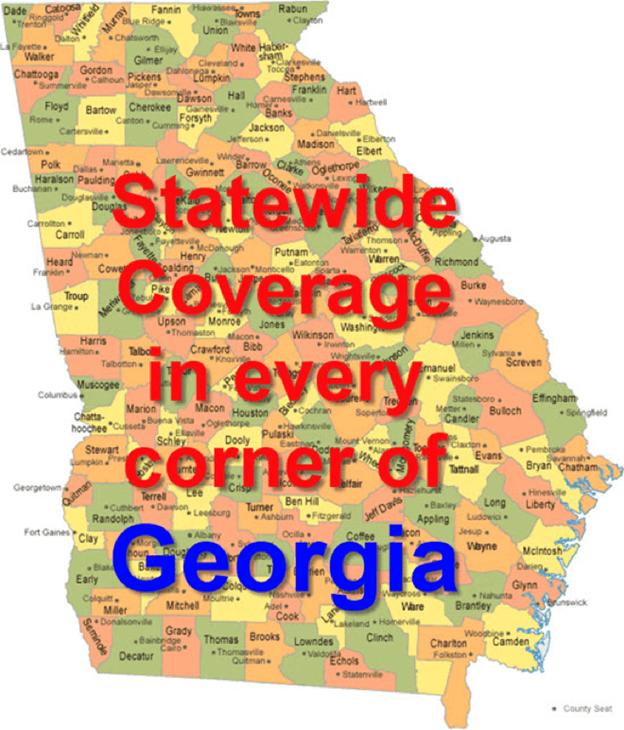
Kohn & Yager LLC handles criminal defense throughout Georgia's superior, state, and municipal courts. If you or someone you know is facing a VGCSA charge, contact our office for a free consultation. We are available 24 / 7 by phone. Every case is different, and results depend on the specific facts.

VGCSA stands for Violation of the Georgia Controlled Substances Act. It refers to any charge brought under Georgia's controlled substances law, which covers possession, manufacture, distribution, and sale. VGCSA is the shorthand prosecutors use on charging papers and dockets across the state.
Most VGCSA charges are felonies. Possession of a controlled substance is a felony under Georgia law. The common exception is possession of less than one ounce of marijuana, which is a misdemeanor. The sentencing range depends on the schedule, the weight, and the alleged conduct.
VGCSA possession means knowingly having a controlled substance in your custody or control without a valid prescription. It covers drugs found on your person and drugs found in a space you controlled, such as a car or a room. The state must prove you knew the substance was there.
For a Schedule I substance or a narcotic Schedule II substance, a first offense is a felony with a weight-based range: one to three years under one gram, one to eight years from one to four grams, and one to 15 years from four to 28 grams. Schedule III, IV, and V possession carries one to three years. A first-time offender may qualify for conditional discharge, which can end in dismissal after probation.
A VGCSA charge may be reduced or dismissed depending on the facts. Common paths include a successful suppression motion, a negotiated plea to a lesser charge, or completion of a conditional discharge program. An attorney can review the evidence and explain which options are realistic.
Schedule I substances such as heroin, LSD, and MDMA are treated as having high abuse potential and no accepted medical use. Schedule IV substances such as Xanax and Valium have lower abuse potential and recognized medical uses. Schedule I possession carries a weight-based range reaching 15 years. Schedule IV possession carries one to three years.