TOP-RATED
Atlanta Criminal Defense
Law Firm
Atlanta Criminal Defense
Law Firm




Pulling over for police in Georgia involves more than just stopping your car. When a law enforcement officer activates emergency lights or a siren, you must pull over safely and promptly. But where you stop, how you stop, and what you do next can affect both your safety and your legal rights.
This guide covers four key topics every Georgia driver should understand: (1) when and where to pull over, (2) Georgia's Move Over Law, (3) your Fourth Amendment rights during a traffic stop, and (4) what to do – and not do – once you are stopped. Knowing these rules helps you avoid unnecessary charges and preserves constitutional protections you might otherwise waive without realizing it.
A driver who sees a police car following without emergency lights flashing may feel the urge to pull over immediately. That instinct can work against you. Keep driving at or below the speed limit, obey all traffic laws, and stay within your lane. Use turn signals for every lane change or turn, no matter how minor. Stay off your cell phone and do nothing to distract your attention from the road. Do not abruptly stop or suddenly turn into a parking lot without signaling.
Courts across the country have upheld the right of officers to approach a stopped vehicle without any legal justification when the driver stopped voluntarily – without being commanded to do so. The "community caretaking" doctrine allows officers to investigate anything that appears amiss, including a car that pulls over for no apparent reason. Drivers often ask what happens if police pull me over on the side of the road. Once officers activate their lights or siren, the encounter requires a legal basis. A voluntary stop does not.
Georgia law is clear about when you must stop. A driver who willfully fails to stop for a pursuing police vehicle or officer commits the offense of fleeing or attempting to elude. The signal may be a hand signal, a voice command, an emergency light, or a siren. The officer must be in uniform with a visible badge, and the patrol car must be marked as an official police vehicle. A first conviction is a high and aggravated misdemeanor, and the fine of at least $1,000 cannot be suspended. Ignoring a lawful signal to stop turns a routine traffic citation into a criminal charge.
The key distinction is between an officer merely following you and an officer actively signaling you to stop. Until you see emergency lights, hear a siren, or receive a direct command, you are not required to pull over.
Once you see emergency lights, respond promptly but safely. Activate your hazard lights to show the officer you have seen the signal. Slow down, signal right, and move to the right side of the road as soon as you can do so safely.
On a highway, pull onto the shoulder as far right as possible. Avoid stopping on narrow bridges, blind curves, or in construction zones. If no safe shoulder exists, reduce speed and continue to the next exit or wide spot. On surface streets, look for a well-lit parking lot or a straight section of road with room for the patrol car behind you.
Officers understand that finding a safe location takes a few moments. Driving a short distance at reduced speed with hazards on will not be treated as evasion. However, continuing at full speed for an extended distance may raise suspicion.
How you behave in the first half-minute sets the tone for the entire encounter. Once stopped, take these steps:
Avoiding sudden movements helps keep the interaction calm and reduces the chance of misunderstandings.
The Move Over Law, also called the Spencer Pass Law, requires motorists to move over one lane away from a stopped authorized emergency vehicle displaying flashing lights. A second part of the same law places the identical duty on drivers approaching a stopped tow or recovery truck, a highway maintenance vehicle, or a utility service vehicle that is using flashing lights or traffic cones. If moving over is not possible because of traffic or road conditions, you must slow to a speed below the posted limit and be prepared to stop.
This law has expanded several times since its original passage. It now covers far more than police, fire, and EMS vehicles.
The law reaches two groups of stopped vehicles. The first is authorized emergency vehicles, including police cruisers, fire trucks, and ambulances. The second is tow and recovery trucks, highway maintenance vehicles, and utility service vehicles – the crews restoring electric, gas, water, cable, or phone service, and the Georgia DOT crews that assist stranded motorists on the highway. If you see flashing lights ahead on the shoulder, you must act.
On a single-lane road where no adjacent lane exists, the law does not require you to cross into oncoming traffic. Instead, you must slow to a reasonable and prudent speed below the posted limit. The same applies when heavy traffic makes a lane change physically impossible – slow down and be prepared to stop.
Georgia's move-over law requires drivers to give space to any stopped emergency vehicle, including a patrol car conducting a traffic stop. If you are the driver being stopped, pull as far right as possible to give passing traffic room to comply. If you are a driver approaching a stop in progress, move over one lane or slow down. Failing to do so puts both the officer and the stopped driver at risk.
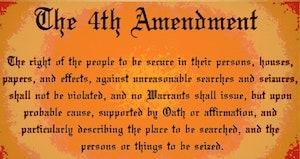
The Fourth Amendment protects you from unreasonable searches and seizures. In the context of a traffic stop, this means an officer needs reasonable articulable suspicion of a traffic violation or criminal activity to pull you over. A hunch is not enough.
If you pull into a parking lot before an officer activates emergency lights, the resulting encounter may be treated as a consensual contact rather than a formal stop. In a consensual encounter, the officer does not need any legal basis to approach you or ask questions. By contrast, when an officer uses emergency equipment to force a stop, that encounter is a seizure under the Fourth Amendment – and everything that follows must be legally justified.
This distinction matters. If police pull you over using lights and sirens, any evidence obtained during the stop can be challenged if the officer lacked reasonable suspicion. If you stopped voluntarily, that challenge disappears.
Even when a stop is legally justified, it has limits. The officer may address the reason for the stop – writing a ticket, checking your license and registration, running a warrant check. Once that purpose is fulfilled, the officer must let you go unless new reasonable suspicion arises.
The U.S. Supreme Court reinforced this principle in Rodriguez v. United States, 575 U.S. 348 (2015). The Court held that extending a completed traffic stop even briefly to conduct an unrelated investigation – such as a dog sniff – without reasonable suspicion violates the Fourth Amendment. Georgia courts apply this standard. If an officer finishes writing your warning or citation and then begins asking about drugs, weapons, or your travel plans without a new basis, any evidence found may be subject to suppression.
When a cop pulls you over, you must provide your license, registration, and proof of insurance. Beyond that, you have the right to remain silent. You do not have to answer questions about where you are going, where you have been, or whether you have been drinking.
You also have the right to refuse consent to a vehicle search. An officer may ask to search your car. You can politely decline. Without consent, the officer needs probable cause or a warrant to search. Saying no is not an admission of guilt, and courts have held that refusal to consent cannot be used against you.
Speeding stops are among the most common encounters with police. When an officer asks, "Do you know how fast you were going?" the best response is usually brief and noncommittal: "I'm not sure, officer." Admitting to a specific speed can be used against you in court. Arguing about the speed reading on the roadside accomplishes nothing and may escalate the encounter.
A routine traffic stop can turn into a DUI investigation quickly. If the officer smells alcohol, sees open containers, or observes slurred speech, bloodshot eyes, or unsteady movements, the encounter shifts. The officer may ask you to step out of the vehicle and perform field sobriety tests.
In Georgia, you have the right to decline field sobriety tests. These roadside exercises – the walk-and-turn, one-leg stand, and horizontal gaze nystagmus test – are voluntary. Declining them is not a crime and cannot trigger a license suspension.
However, Georgia's implied consent law draws a different line after arrest. Once you are placed under arrest for DUI, refusing a state-administered breath, blood, or urine test can result in an automatic license suspension. The officer must read the implied consent notice before requesting the test. A driver with no prior DUI conviction in the past five years has a second option: install an ignition interlock device and apply for a limited driving permit within 30 days, which waives the suspension hearing. Whether to submit or refuse after arrest is a decision with significant consequences, and consulting an attorney before making that choice – if possible – is strongly advisable.
Stay calm and be polite regardless of the circumstances. Do not volunteer information beyond what is legally required. Keep your hands visible. If you disagree with the officer's assessment, save that argument for court. Roadside confrontations do not resolve legal disputes – they create new ones.
The move over law fine depends on which vehicle you failed to give room. Failing to move over for a stopped emergency vehicle carries a fine of up to $500. Failing to move over for a tow truck, a highway maintenance vehicle, or a utility service vehicle carries a fine of up to $250. Court costs and state surcharges push the total higher. A conviction also adds points to your Georgia driver's license, which can affect insurance rates and, if points accumulate, lead to license suspension.
The statute itself sets no jail term. But a driver who causes a wreck while failing to move over can face separate charges, and those charges do carry jail exposure. Striking a stopped emergency vehicle or injuring a first responder can support counts well beyond the move over citation itself.
If you receive a citation for violating the Move Over Law, consult a Georgia attorney about your options. Defenses may exist depending on road conditions, traffic density, and whether the emergency vehicle's lights were visible in time to react.
If you were pulled over and cited, arrested, or charged with a DUI or traffic offense in Georgia, the way the stop was conducted may be your strongest defense. Officers who lack reasonable suspicion, exceed the scope of the stop, or fail to follow implied consent procedures create grounds for evidence suppression – and sometimes dismissal.
Kohn & Yager LLC focuses on Georgia DUI and criminal defense. The firm handles traffic stop challenges, suppression motions, and DUI defense across metro Atlanta and throughout the state. Every case is different, and results depend on the specific facts.

Contact Kohn & Yager LLC for a free consultation. Describe how the stop happened, what the officer said and did, and what charges you are facing. The details of your stop matter, and an experienced defense attorney can evaluate whether your rights were violated.
The Georgia move-over law requires motorists to change lanes away from any stopped authorized emergency vehicle with flashing lights. The same duty applies to a stopped tow truck, highway maintenance vehicle, or utility service vehicle. If a lane change is not safely possible, drivers must slow to a speed below the posted limit and be prepared to stop.
A violation involving a stopped emergency vehicle carries a fine of up to $500. A violation involving a tow truck, highway maintenance vehicle, or utility service vehicle carries a fine of up to $250. Court costs and surcharges raise the total owed, and the violation also adds points to your driving record. Causing a collision or an injury can support separate charges that carry far heavier penalties.
No. You are only required to pull over when an officer activates emergency lights, a siren, or gives a direct hand signal to stop. If an officer is simply following you without signaling, continue driving normally, obey all traffic laws, and wait for a clear command before stopping.
It depends on the officer's authority under Georgia law. Certified peace officers with POST certification can conduct traffic stops. Community service officers and some public safety officers may have limited authority depending on their jurisdiction. If you are unsure whether the person signaling you is a sworn officer, activate your hazards, drive to a well-lit public area, and call 911 to confirm.
Pull over safely, keep your hands visible, and provide your license, registration, and insurance when asked. Do not admit to a specific speed. Be polite and brief. If you believe the stop or citation was unjustified, challenge it in court rather than on the roadside.