TOP-RATED
Atlanta Criminal Defense
Law Firm
Atlanta Criminal Defense
Law Firm





No. Georgia charges a second DUI as a misdemeanor under the state DUI statute. A repeat offense within the lookback period stays a misdemeanor. But the statute sets its own mandatory penalties. These penalties create real exposure. They do not make the case a felony. Under the same Code section, a DUI becomes a felony only on a fourth conviction within ten years. A second conviction changes almost everything. It brings jail time, a long license suspension, an interlock requirement, and a permanent record. A Georgia DUI conviction cannot be removed from your record. It stays on your criminal history for life. This page covers what happens with a second DUI in Georgia: how the charge is graded, the punishment, the license consequences, and the aftermath.
When a driver is arrested for a second DUI in Georgia, two proceedings begin at once. The criminal case moves through state or city court. At the same time, the Georgia Department of Driver Services starts an state license suspension action.
The driver usually has 30 days from arrest to request an ALS hearing. Alternatively, the driver can opt into an interlock permit. Miss that window and the suspension starts on its own. On conviction, mandatory minimum penalties apply under the DUI sentencing statute.
The key second DUI penalties include:
Each of these is covered in detail below.
Georgia uses a 10-year lookback window to decide whether a drunk driving arrest counts as a second offense for criminal sentencing. The window is measured from arrest date to arrest date, not from sentencing dates. If both arrests fall within 10 years, the second case triggers higher penalties under the repeat offender tiers in the DUI statute.
A DUI older than 10 years still appears on the driving record permanently. It does not count toward the sentencing tier. However, prosecutors and judges may still consider it at sentencing. Drivers asking about a second DUI in 5 years or a second DUI in 10 years in Georgia should understand this distinction.
The state license rules use a separate five-year lookback. That shorter window governs DDS suspension rules but does not control the criminal charge level. A lawyer should pull the certified conviction records before any plea talk. The lawyer should also confirm the exact arrest dates. The lookback calculation drives the entire case.
The punishment for a second DUI conviction is not a single sentence. Georgia courts impose several penalties together. Most of them are mandatory. Judges have limited discretion to waive or reduce them.
Jail Time. The jail sentence may range from 90 days to 12 months. The driver gets credit for time served after the arrest. The judge may probate or suspend most of it. However, at least 72 hours must actually be served in jail. A sentence below that floor is illegal.
Fines and Surcharges. The base fine runs 600 to 1,000 dollars. Court add-ons can roughly double what the driver owes. Those add-ons include fees for the brain and spinal cord injury trust fund and for the crime victims fund.
Community Service. A second conviction within 10 years carries a minimum of 30 days of community service under Georgia law. Courts rarely cut this down.
DUI Risk Reduction School. The driver must complete a 20-hour Risk Reduction Program, sometimes called DUI school. This step is separate from any treatment the court orders.
Clinical Screening and Treatment. A licensed counselor screens the driver for a drinking problem. If the screening shows the driver needs treatment, the court can order it as a probation condition.
License Suspension. Under the license suspension statute, a second DUI conviction within five years triggers a three-year license suspension. The first 120 days are a hard suspension with no driving allowed. After that period, the driver may apply for an ignition interlock limited permit under Georgia law. The driver cannot ask for the license back until 18 months have passed.
Interlock Device. The interlock device is required for at least 12 months on any restricted permit. The driver pays to put it in, plus a monthly fee to check it and pull the data. Failed breath samples go to the state.
Probation. The driver serves the balance of the sentence on probation, usually 12 months minus any jail time served. The driver may have to report in, take random tests, and follow every court order.
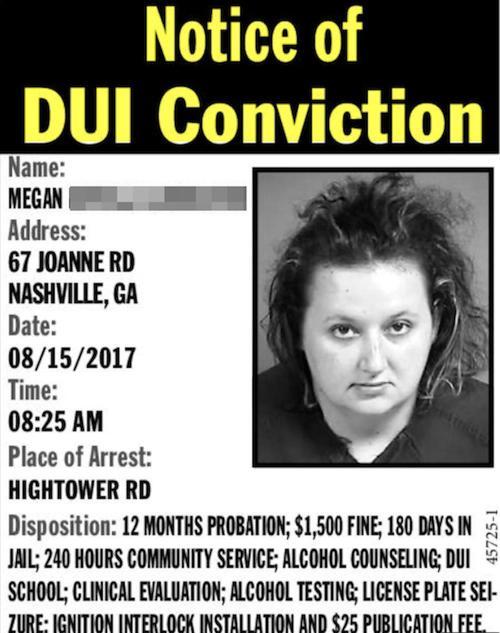
Vehicle License Plate Seizure and Publication. Georgia imposes two unusual penalties on a repeat offender. Under the notice of conviction rule, a second or later conviction within five years is published in the county legal organ with the arrest photograph, the name, and the case details, and the offender is assessed $25 for the notice. Under the license plate surrender statute, the court also orders the plates on every vehicle registered in that person's name to be surrendered. Both consequences surprise many drivers unfamiliar with the statute.
Sentences vary by county and by judge. Penalties increase with more prior convictions. Nothing on this page promises any particular result.

Is two DUIs a felony? In Georgia, a second DUI within 10 years is charged as a misdemeanor, not a felony. Specifically, the penalty subsection of the DUI statute classifies a second offense as a misdemeanor. The "high and aggravated" misdemeanor label does not apply until a third conviction within the lookback window.
Georgia law elevates a DUI to felony status in limited situations:
Drivers ask this in several ways. Is a 2nd DUI a felony in Georgia? No. What happens with a 2nd DUI is set by the misdemeanor tier in subsection (c) of the statute. What happens on a second DUI arrest for your license runs on its own track through Georgia DDS.
Some states treat a second DUI as a felony. Drivers who move to Georgia, or who face charges in more than one state, sometimes assume the rule is the same here. It does not. Georgia's second DUI remains a misdemeanor.
The misdemeanor label should not give false comfort. The mandatory minimum penalties are severe. Good-time credit does not cut the jail time the law requires. A driver facing a second DUI charge should consult an Atlanta DUI attorney about the facts and dates in their case.
In Georgia, the punishment for a second DUI conviction has several parts. Judges impose them together. Several parts are mandatory.
Jail. The sentence runs 90 days to 12 months, with credit for time served after arrest. The judge can probate or suspend most of it. However, at least 72 hours must be served in jail. Anything less is an illegal sentence. Pierce v. State, 278 Ga.App. 162, 628 S.E.2d 235 (2006).
Fines and Surcharges. The fine runs 600 to 1,000 dollars. Court add-ons roughly double that amount.
Community Service. At least 30 days of community service.
Clinical Screening. A licensed counselor screens for a drinking problem. The court may order any recommended treatment.
Risk Reduction School. A DUI Alcohol or Drug Use Risk Reduction Program, often called DUI school.
Probation. The driver serves the balance of the sentence on probation, with reporting and conditions.
Interlock. The device is both a sentencing condition and a requirement for any limited driving permit.
In many Georgia counties, prosecutors steer repeat cases toward a DUI Court program. These accountability courts trade close supervision and treatment for less jail time. The program is hard work. It also runs far longer than a normal sentence, so it does not fit every driver.
When two arrests fall close together, prosecutors rarely agree to cut the charge. Jail is hard to avoid on a repeat conviction. The main ways out are a dismissal, a win at trial, or a cut in the charge through plea talks. Sentences vary by county and by judge. Penalties increase with prior convictions. Nothing on this page promises any particular result.

How long do you lose your license for a second DUI? You cannot drive at all for at least 120 days. The suspension can run as long as three years. After that, you pay a fee to get the license back and seek a new license in Georgia. After 18 months, a driver may prove certain steps toward "rehabilitation" to seek a new Georgia license. The new license may be interlock-restricted.
The lookback calculation controls which rules apply. Georgia counts the window from the arrest dates, not from the date of sentencing. A conviction counts as a repeat offense when the arrest dates fall within 10 years of each other. That is why a plea entered years later can still bring the harsher rules.
The interlock limited permit is the only way most drivers get back on the road early. The driver pays for the device and installs it on one car for at least 12 months. The driver also blows into it to start the engine. The unit also asks for tests on the road. The driver comes in each month so the shop can check it and pull the data. The shop sends failed tests to the state.
The state license suspension can attach even when the criminal case resolves in the driver's favor. The license case runs on its own track. To get your license back early, follow the rules set by Georgia DDS, not the judge. The Georgia Department of Driver Services manages violations of the implied consent law in the state. This includes requesting breath alcohol or blood testing after an arrest. It also reinstates licenses and issues the temporary paper driving permit when the plastic license is taken after a drunk driving arrest.
A second DUI conviction brings effects that reach far beyond the sentence in court. Knowing what comes after the conviction helps a driver plan ahead.
Permanent Criminal Record. A Georgia DUI conviction cannot be removed from the record or restricted. The record restriction statute specifically excludes DUI convictions. The entry stays on the criminal history permanently and shows up in background checks for years.
Auto Insurance. An SR-22 filing is usually required for three years after reinstatement. Insurers treat repeat offenders as high risk. Rates often rise sharply and can stay high for five years or more.
Employment. Any job that involves driving a company car depends on fleet insurance coverage. A second DUI often ends that coverage. CDL holders face especially steep consequences. Two DUI convictions may trigger a lifetime CDL ban.
Professional Licensing. Nurses, teachers, real estate agents, and other licensed workers usually must report a conviction to their board. The board decides on discipline apart from the court.
Immigration. A DUI conviction may carry immigration effects depending on the charge, the record of conviction, and the individual's status. A non-citizen should talk with an immigration lawyer as well as a criminal lawyer before any plea.
Family Court. A conviction can surface in custody and divorce matters. A judge may weigh it when making parenting decisions. Drivers facing these overlapping issues should consult an attorney about the specific collateral risks in their situation.
Knowing what happens after a second DUI conviction matters as much as the sentence itself. Added effects outlast every day of probation.
A Georgia DUI conviction is not eligible for record restriction or removal from the record. It stays on the criminal history for good. It shows up in job and housing checks. This short Ted Talk from a formerly imprisoned person shows how long a conviction follows someone.
Insurers treat repeat offenders as high risk. Rates often jump for years. The state also wants proof of insurance before it gives the license back. Georgia's DUI statute adds a publication rule for a second or later conviction within a five-year window. The county legal organ prints the arrest photograph and the case details, and the offender is assessed $25 for the notice.
Licensed workers face a second review. Nurses, teachers, real estate agents, and others usually must report a conviction to their board. The board decides on discipline apart from the court.
A conviction can also surface in custody and divorce matters. A judge may weigh it in a parenting decision. Some countries turn away travelers with a recent conviction. Check the entry rules before you book.
Immigration effects deserve their own advice. A DUI conviction can carry immigration effects. These consequences depend on the charge, the record of conviction, and the individual's status. A non-citizen should hire an immigration lawyer as well as a criminal lawyer before any plea.

Commercial drivers face the steepest consequences of all. Two DUI or DWI convictions generally carry a lifetime CDL ban under commercial licensing rules. Drivers who have never held a commercial overlay ask whether they can get a CDL after a DUI at all. As a general rule, that question does not come up for 10 years. The clock runs from the conviction date of the second offense.
Legal eligibility is only half the problem. Many trucking companies will not employ a driver with that history. Their insurance carriers set hiring rules that are stricter than the law. A carrier may decline an applicant it could legally hire.
The same pattern reaches ordinary jobs. Any position that involves driving a company car depends on fleet insurance coverage. A repeat DUI often ends that coverage. Delivery, sales, home health, and building jobs often run a driving record check before they make an offer. The conviction never comes off the record. It appears in background checks years later, long after the sentence is complete.
Outcomes vary by employer and by insurer. These are general rules, not a forecast about any one person's job hunt.
A second drunk driving arrest in Georgia puts two deadlines in motion at once. The criminal case follows the court calendar. The state license suspension runs on a separate 30-day clock. A driver who misses the window to ask for an ALS hearing, or to opt into an interlock permit, can lose the right to drive. This loss can happen before the criminal case even reaches court.
A free consultation on a second DUI charge usually covers several things. The attorney reviews the arrest report and the stop itself. This includes what the officer said and what dashcam or bodycam footage shows. The breath or blood test procedure gets a close look. Testing errors can undermine the state's case. The validity of the prior conviction matters too. If the earlier plea was not entered correctly, it may not count as a prior offense under the lookback rule.
Kohn & Yager LLC focuses on Georgia DUI defense and handles repeat offense cases in courts across the state. The firm is familiar with local court procedures and the DDS license process. Attorneys Larry Kohn, Cory Yager, and William C. Head handle these cases statewide. Head has written DUI defense books for lawyers and drivers. This short video covers his first DUI book.
Call (404) 567-5515 for a free lawyer consultation. Our Atlanta criminal defense lawyers answer 24/7. If your arrest happened in another state, this national directory of DUI lawyers can help you find local counsel.

A second DUI within 10 years is charged as a misdemeanor under Georgia's DUI statute. Georgia does not elevate a DUI to felony status until the fourth conviction within the lookback period. Felony status also applies when the incident involves serious injury or death. The penalties are still severe even though the charge remains a misdemeanor.
The mandatory minimum is 72 hours of actual jail time. The total sentence may range from 90 days to 12 months. A judge can probate or suspend most of that time. The 72-hour minimum cannot be waived. Good-time credit does not cut the time the law requires.
The suspension period may last up to three years under the license suspension statute. The first 120 days are a hard suspension with no driving allowed. After that period, a driver may apply for an interlock-restricted limited permit. To get the license back for good, the driver must finish every DDS step.
Georgia uses a 10-year lookback measured from arrest date to arrest date. If the two arrests fall within 10 years, the second case triggers higher penalties. DUI convictions older than 10 years still appear on the record but do not count toward the sentencing tier.
A second DUI conviction cannot be removed from or restricted on your record in Georgia. Georgia's record restriction statute under Georgia law specifically excludes DUI convictions. A DUI conviction stays on the criminal history permanently. Only a dismissal, an acquittal, or a reduction to a non-DUI charge keeps the conviction off the record.
A second DUI conviction generally triggers a lifetime ban on holding a commercial driver's license under federal and state commercial licensing rules. The convictions may be in a commercial or personal vehicle. Some drivers may apply for reinstatement after 10 years. However, many carriers will not hire a driver with that history regardless of legal eligibility.
Georgia's driving under the influence practice area covers a range of issues beyond a second offense. Drivers facing a first-time charge deal with a different set of penalties and license rules. CDL holders face federal disqualification rules on top of state law. Questions about challenging the stop, the breath test, or the field sobriety instructions come up at every offense level. License reinstatement after any DUI conviction runs on its own timeline through Georgia DDS.
Attorney Bubba Head's statewide DUI practice covers the same second offense DUI rules, and his case report on DUI and child endangerment charges in Georgia shows how a repeat arrest can add separate counts. Before your first court date, watch this short video on your constitutional rights. For examples of what second DUI consequences have looked like in real cases, see our results page and the second page of sample results. Past results do not predict the outcome of any future case.